
Quick Answer
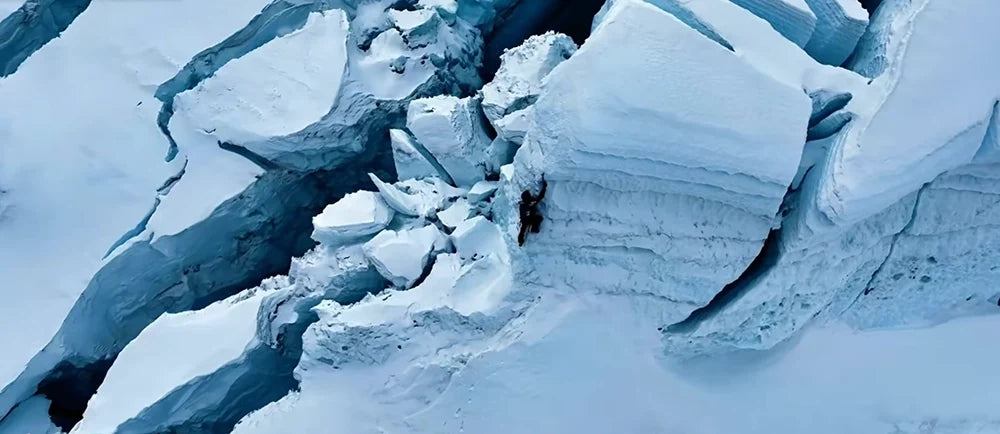
The Khumbu Icefall is dangerous because it is not a fixed mountain path. It is a moving, cracking and collapsing glacier route just above Everest Base Camp on the Nepal side. Climbers using the South Col route must pass through it to reach Camp 1 and the higher mountain.
The Icefall contains deep crevasses, unstable snow bridges, aluminium ladders, fixed ropes, huge ice towers called seracs and glacier movement that changes the route constantly. Even with professional Icefall Doctors building and maintaining the route each season, it remains one of the most dangerous parts of the Everest south side route.
In simple terms, why is the Khumbu Icefall so dangerous? Because climbers are moving through a frozen maze that is still alive.
Where Is the Khumbu Icefall
The Khumbu Icefall lies on the Nepal side of Mount Everest, above South Everest Base Camp and below the Western Cwm. It is part of the Khumbu Glacier and sits on the route between Base Camp and Camp 1.
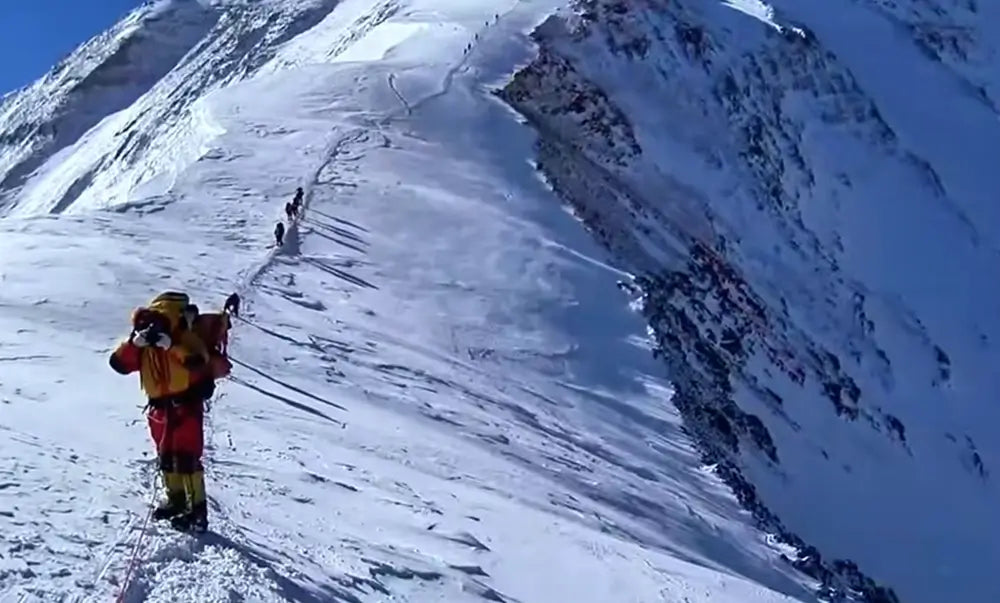
On a map, it may look like a relatively short section of the climb. In reality, it is one of the most psychologically intense parts of Everest. Other sections are dangerous because of altitude, cold and exhaustion. The Icefall is dangerous because the ground itself is moving.
It Is a Moving Glacier
The Khumbu Icefall is part of the Khumbu Glacier. A glacier is not dead ice. It flows slowly downhill. In the Icefall, the glacier drops through steeper terrain, causing the ice to break, twist, crush and open into crevasses.
This means a snow bridge that looked solid yesterday may be weaker today. A crevasse may widen. A block of ice may shift. A route that felt familiar in the morning may not be identical later.
On a normal mountain trail, experience and memory can reduce risk. In the Icefall, the route is never completely fixed.
Crevasses Are the Most Obvious Danger
The first thing many people notice in photos of the Icefall is the ladders. Beneath those ladders are often deep crevasses.
The Khumbu Icefall crevasses can be wide, deep and partly hidden by snow. Climbers wear crampons, clip into ropes and follow the fixed route. When a crevasse is too wide to step across, they may cross one or more aluminium ladders lashed together.
Walking a ladder in training is one thing. Walking a ladder at high altitude, in mountaineering boots, with gloves, carrying gear and looking down into a blue hole is another.
That is why Khumbu Icefall ladders have become one of the most famous images of Everest. They look frightening because they are frightening.
Seracs Can Collapse Without Warning
If crevasses are the danger below, seracs are the danger above and around you.
Seracs are large towers or blocks of glacier ice. Some can weigh many tons, and some are the size of buildings. The problem is that no one can perfectly predict when a serac will fall.
On 18 April 2014, a major ice avalanche killed 16 Nepalese climbing workers in the Khumbu Icefall area. Reports linked the disaster to a large serac collapse from Everest’s west shoulder. The tragedy remains one of the clearest reminders that the Icefall includes objective danger: hazards that no climber can fully control, no matter how skilled they are.
Why Climbers Cross Early in the Morning
Climbers usually try to move through the Khumbu Icefall before sunrise or early in the morning. The reason is temperature. Cold night conditions can make the ice relatively more stable.
As the sun rises, ice warms, melt increases and the glacier becomes more active. Crevasses, snow bridges and seracs may all become more unstable later in the day. Mid to late afternoon is generally considered a poor time to be in the Icefall.
Early travel does not make the route safe. It only reduces some of the risk. Climbers still move in darkness, cold and thin air, often by headlamp, while trying to move quickly but carefully.
What Are Icefall Doctors
Icefall Doctors are the specialist high-altitude workers who build and maintain the route through the Khumbu Icefall. Before and during the climbing season, they enter the Icefall, search for the best possible line, install ladders, fix ropes and adjust the route as the glacier changes.
Without Icefall Doctors, normal Everest south side expeditions would struggle to operate. Outside has reported local climbing workers describing their role as essential to Everest.
It is also one of the most dangerous jobs on the mountain. Ordinary climbers may cross the Icefall several times. Icefall Doctors return again and again to repair, replace and reroute the system.
Why Ladders and Fixed Ropes Do Not Make It Safe
Ladders and fixed ropes reduce some risks, but they do not stop the glacier from moving. They cannot prevent serac collapse, snow bridge failure or route changes.
They help climbers cross crevasses, stay on route and reduce the consequences of a slip. But they do not turn the Icefall into a controlled walkway.
Risks still include:
- Ladders shifting or icing
- Fixed ropes affected by moving ice
- Snow bridge collapse
- Serac fall
- Queues increasing exposure time
- Fatigue and footwork errors
- Temperature and weather changes
The strategy in the Icefall is not to eliminate danger. It is to move efficiently, reduce exposure time and accept that some risk remains beyond human control.
Why Expeditions Still Use the Icefall
If the Icefall is so dangerous, why do Everest expeditions still go through it?
Because it is the gateway from the south side Base Camp to Camp 1, Camp 2 and the South Col route. To climb the standard Nepal route, climbers must pass through the Icefall.
The south side remains popular because it has a mature expedition system, experienced Sherpa support, established logistics and relatively developed rescue infrastructure. But mature does not mean safe. The Khumbu Icefall is one of the costs of using the south side route.
Do Everest Base Camp Trekkers Cross the Icefall
No. Ordinary Everest Base Camp trekkers do not cross the Khumbu Icefall. The standard Nepal EBC trek ends around Base Camp and does not continue into the technical climbing route.
The people who enter the Icefall are Everest climbers, Sherpa teams, Icefall Doctors and high-altitude workers.
So travellers should not fear the Icefall if they are only trekking to Everest Base Camp. But anyone considering an Everest summit attempt must understand that the Icefall is not a photo opportunity. It is one of the most serious objective hazards on the mountain.
Final Thoughts
The Khumbu Icefall is dangerous because it is a moving glacier, not a stable trail. It contains crevasses, snow bridges, ladders, fixed ropes, seracs, temperature-driven instability and a route that changes constantly.
Icefall Doctors make passage possible, but they do not make it safe. The 2014 Everest ice avalanche showed how large and uncontrollable the risks can be.
Understanding the Khumbu Icefall is one of the first steps in understanding Everest itself. Everest is not dangerous only because it is high. It is dangerous because some parts of the mountain are still moving, breaking and reshaping while climbers pass through them.

Leave a comment
All comments are moderated before being published.
This site is protected by hCaptcha and the hCaptcha Privacy Policy and Terms of Service apply.