
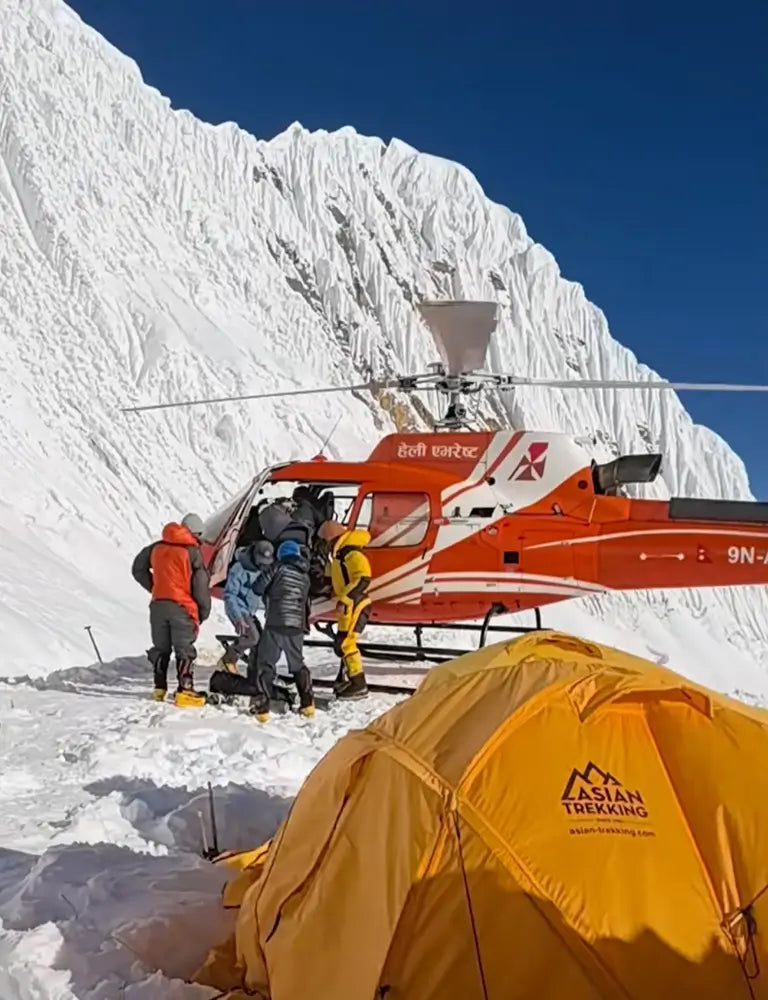
When people hear about an accident on Everest, the first questions are often simple: why not send a helicopter? Why not ask Sherpas to carry the climber down? Why are some bodies left on the mountain for years?
These are natural questions. At sea level, rescue sounds like a clear process: identify the problem, call for help, send rescuers and bring the person down. Everest does not work like that. Above 8000 metres, rescue is not just harder than normal. It often sits near the edge of human capability.
The cruel truth of Everest rescue is that when a climber truly loses the ability to move, everyone nearby is also dealing with thin air, cold, fatigue and risk. Rescues do happen, and people are saved. But the higher the accident occurs, the more rescue depends on weather, location, oxygen, team strength and luck.
Quick Answer
Everest rescue is difficult because:
- Above 8000 metres, the body cannot stay long
- If a climber cannot walk, descent becomes extremely hard
- Helicopters struggle to fly and hover safely at extreme altitude
- Wind, cloud and snow can stop air rescue completely
- Altitude illness, frostbite and hypothermia can worsen quickly
- Rescuers themselves face serious risk
- Oxygen, ropes, stretchers and manpower are limited
- Insurance, communication and expedition planning affect rescue speed
In simple terms, Everest rescue is not a service that begins when someone presses a button. It is a race against time in one of the harshest environments on Earth.
Why Rescue in the Death Zone Is So Hard
The area above 8000 metres is known as the death zone. At this altitude, the air is thin and the human body cannot properly adapt. Even with supplemental oxygen, climbers move slowly, get cold, lose coordination and think less clearly.
In that environment, a healthy climber may struggle to descend. Helping or dragging someone who cannot move is much harder.
If the injured climber can still walk slowly, there may be a chance. Teammates or Sherpa guides can provide oxygen, adjust equipment, support movement and guide descent. But if the climber cannot stand, the situation changes immediately. There are no wide paths, vehicles or normal stretcher routes. The route may involve fixed ropes, steep snow, narrow ridges, mixed rock and snow, and crevasse areas.
At lower altitude, several rescuers can carry someone. In the death zone, carrying another person may put the rescuers in danger too.
Why Helicopters Cannot Simply Fly to the Summit
Helicopters are important in the Everest region, especially around Base Camp, lower villages, trekking routes and some high-camp rescue situations. But they are not magic.
A helicopter needs air to generate lift. The higher it flies, the thinner the air becomes, reducing rotor lift and engine performance. Everest also brings strong wind, turbulence, cloud, snow and extreme cold. Even excellent pilots cannot ignore physics.
Outside reported in 2025 on high-altitude Everest rescue pilots, including a case where a pilot flew near 23000 feet, around 7000 metres, to rescue an ill climber. Stories like this show that modern mountain rescue is advancing. They also show how extreme such flights are. They are not routine guarantees.
A helicopter can save many people. It cannot promise to reach every altitude, every slope and every weather condition on Everest.
Why Many Rescues Still Depend on Descent by Foot
On Everest, the most important rescue principle is often simple: get the climber lower as quickly as possible. Altitude illness, frostbite, hypothermia, oxygen shortage and extreme exhaustion all improve only when the climber leaves the highest danger zone.
Wilderness Medical Society material on high-altitude emergencies emphasises that descent is critical for severe altitude illness. Helicopter evacuation can be life-saving when walking down is impossible, but the patient often still needs to reach a place where a helicopter can operate.
So Everest rescue often has two phases.
First, move the person from extreme altitude to a more reachable place.
Second, use helicopter, medical staff, stretcher, yak, porter or foot evacuation to reach proper care.
The first phase is usually the hardest.
Why Oxygen Matters in Rescue
Oxygen is not only for summit attempts. It is also a rescue tool. A struggling climber who receives oxygen may regain enough function to help with descent.
But oxygen is limited. High-camp supplies are planned around the expedition, not an unlimited emergency. A rescue may require oxygen for the injured climber and for the people helping them. If rescue takes longer than expected, oxygen becomes a major problem.
This is why summit-day timing matters. Late movement, queues and slow descent reduce oxygen reserves. If something then goes wrong on the way down, the rescue margin is much smaller.
Weather Can Stop Rescue Completely
Everest rescue depends not only on willingness, but on weather.
High wind can make fixed-rope movement dangerous and stop helicopter flights. Snow can cover the route and increase avalanche risk. Cloud can reduce visibility for pilots and ground teams. Extreme cold worsens frostbite and hypothermia.
Sometimes rescuers are not refusing to help. They are facing the reality that going higher may create more victims. Professional judgement on Everest often means balancing the desire to rescue with the need to avoid a second accident.
Why Body Recovery Is So Difficult
One of the hardest questions is why some bodies remain high on Everest.
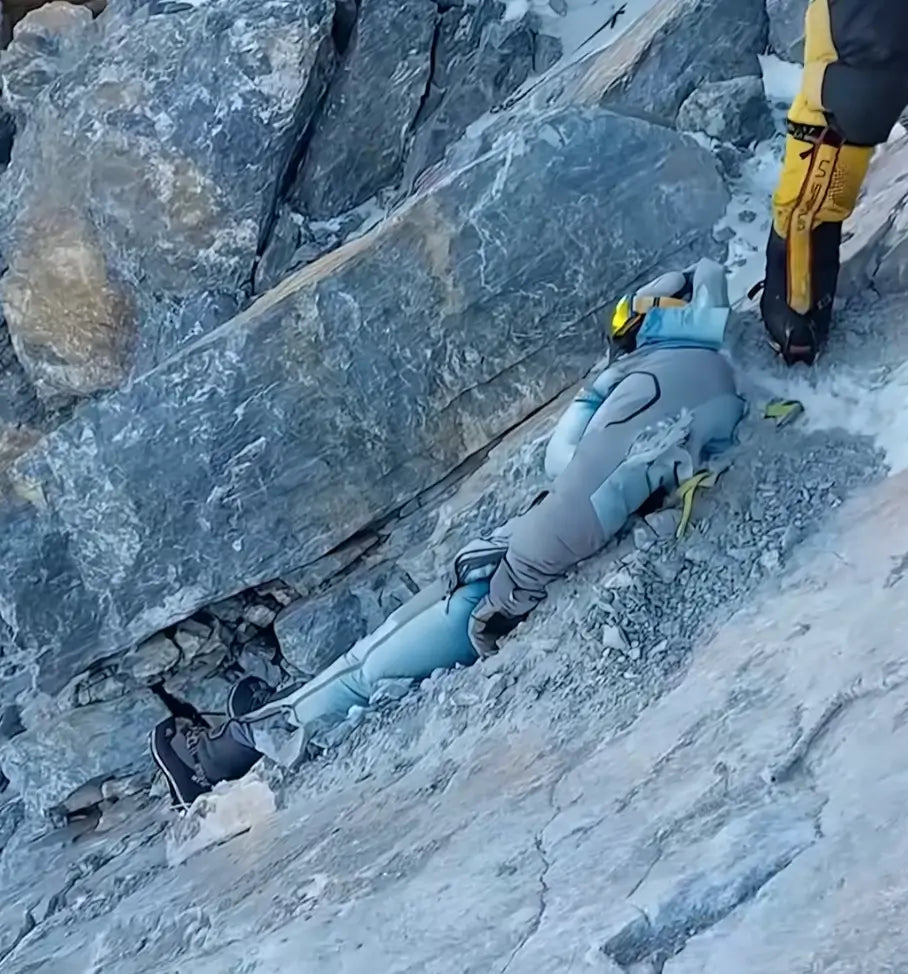
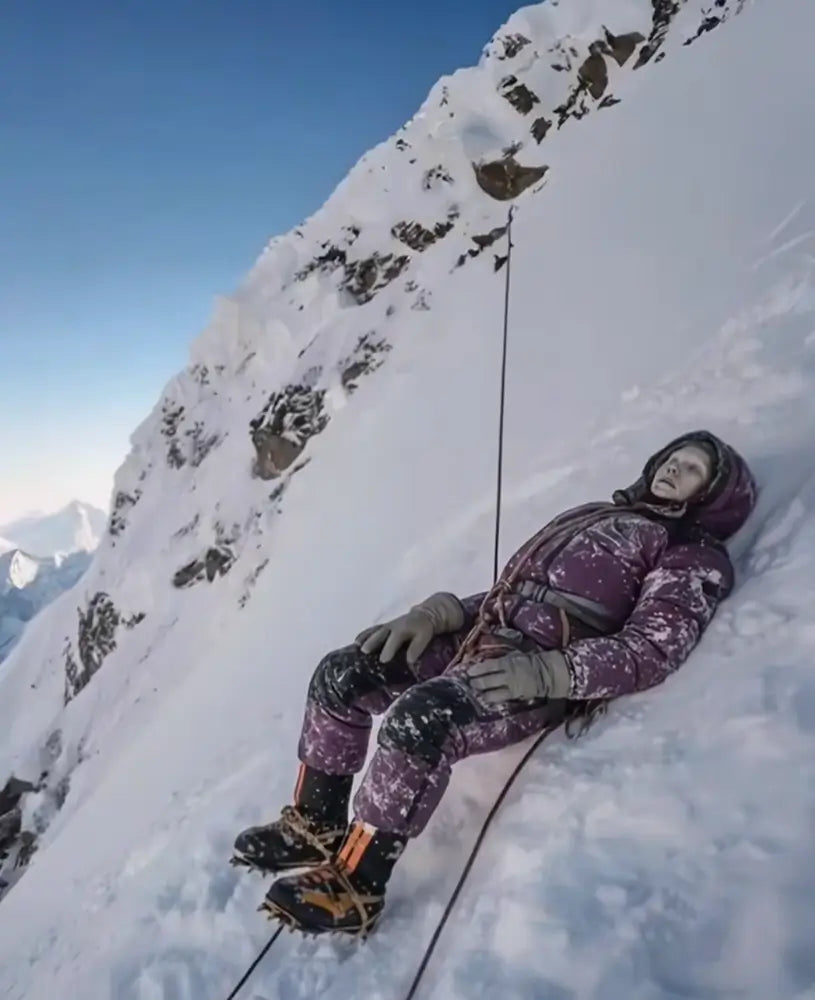
The reason is practical and painful. Body recovery can be harder than rescuing an injured climber, because the person cannot help move. The weight is fixed. Rescuers must work in low oxygen while securing, lowering and moving the body through technical terrain.
Some bodies are near the route. Others are on steep slopes, ridges, avalanche terrain or crevasse areas. Recovery may require several people, multiple days, rope systems, oxygen and unusually stable weather. The cost can be very high, and so can the risk.
A body left on Everest does not always mean nobody cares. Often it means bringing it down could kill more people.
Why Altitude Illness Rescue Must Happen Early
The previous article discussed altitude sickness. Rescue for altitude illness depends on early recognition and early descent.
If acute mountain sickness becomes high-altitude cerebral edema or high-altitude pulmonary edema, the situation can worsen quickly. A climber may lose coordination, become confused, struggle to breathe, cough badly or lose judgement.
If that happens high on Everest, waiting is dangerous. Helicopter evacuation lower down may be fast, but the decision to descend must happen early. The best rescue is often the one that begins before the situation becomes dramatic.
Why Insurance Matters
Many climbers focus on gear and operators but underestimate insurance. Normal travel insurance often does not cover high-altitude mountaineering, helicopter evacuation, search and rescue, medical evacuation or body recovery.
Everest insurance should be checked carefully:
- Does it cover mountaineering?
- Does it cover the target altitude?
- Does it include helicopter rescue?
- Does it cover Nepal or Tibet?
- Does it include altitude illness?
- Does it cover medical repatriation?
- Does it require specific rescue providers?
- Does it exclude rope, crampon or technical climbing?
- Does it include body recovery or family-related costs?
Wilderness Medical Society has also discussed helicopter evacuation fraud in Nepal, which is a reminder that insurance must be both adequate and honestly used. Real rescue needs funding, but the rescue system also needs trust.
What a Good Expedition Rescue Plan Should Include
When choosing an Everest operator, do not only ask about summit success. Ask about rescue planning.
A reliable team should be able to explain:
- Whether Base Camp has medical support
- Whether high camps have spare oxygen
- Guide and Sherpa ratios
- How altitude illness is handled
- Whether turnaround times are enforced
- Satellite phone or communication systems
- Helicopter rescue contacts
- Who coordinates with insurance
- Descent routes and backup plans
- What happens if a climber cannot move
A professional team will not avoid these questions. Rescue planning is not bad luck. It is expedition safety.
What Climbers Can Do for Themselves
Climbers cannot control every risk, but they can reduce the chance of needing rescue.
Report Symptoms Early
Headache, cough, confusion, vision problems, numb fingers, poor coordination and unusual weakness should be reported. Many accidents become worse because help is requested too late.
Respect Turnaround Times
If the team reaches a turnaround time without making the required point, descend. The summit will still be there another year.
Manage Oxygen and Water
Do not change oxygen flow casually. Drink regularly. Eat before you are empty. Small mistakes accumulate high on Everest.
Know Your Equipment
If you can manage your ascender, carabiners, descender, crampons and headlamp, guides can focus on real emergencies instead of basic tasks.
Choose the Right Team
Price is not the only factor. A team’s rescue experience, descent culture and safety transparency matter more than luxury food at Base Camp.
Should Everest Base Camp Trekkers Care About Rescue
Yes. Everest Base Camp trekkers do not enter the death zone, but they are still in a remote high-altitude region. Above Lukla, many places have no road access. Severe altitude sickness, fractures, infections or other emergencies may require helicopter evacuation.
Trekkers should buy insurance that covers high-altitude trekking and helicopter evacuation, and they should check altitude limits carefully. “Only trekking” does not mean “no rescue risk”.
Conclusion
Why is Everest rescue so difficult? Because rescue happens in a place where humans already struggle to survive. The death zone is cold, windy, oxygen-starved and narrow. Helicopters are limited by thin air and weather. Rescuers are not machines with unlimited strength.
The best Everest rescue is not always the dramatic one from the highest possible place. It is the early descent before a problem becomes fatal, the turnaround before oxygen runs low, and the conservative decision before weather closes in.
Everest rewards courage, but it respects clear judgement more. A mature climber does not treat rescue as the final safety net. They treat avoiding the need for rescue as the first rule.

Leave a comment
All comments are moderated before being published.
This site is protected by hCaptcha and the hCaptcha Privacy Policy and Terms of Service apply.