
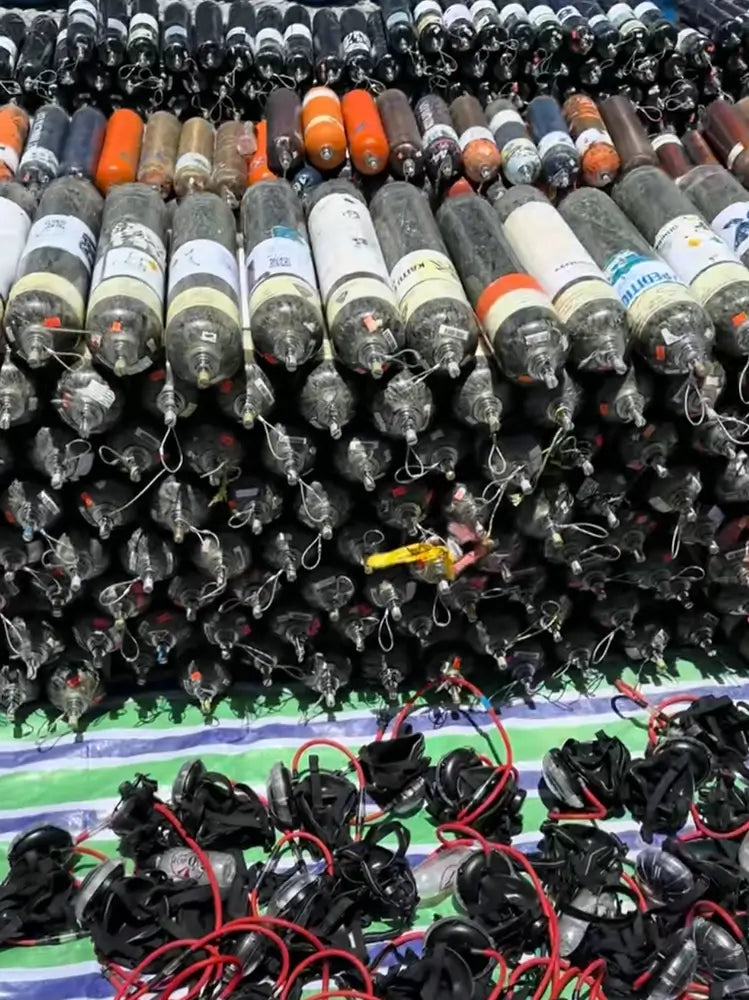
One of the most recognisable images from Everest is a climber wearing an oxygen mask, carrying a bottle and moving slowly along a windy ridge. For people new to high-altitude climbing, this raises an obvious question: if mountaineering is about climbing under your own power, why do Everest climbers use oxygen?
It is a fair question. In everyday life, oxygen usually suggests hospitals, illness or emergency care. On Everest, supplemental oxygen is different. It is not used for comfort, and it is not a shortcut that makes the mountain easy. It is a tool that helps climbers keep enough movement and judgement to survive in an extremely low-oxygen environment.
Everest is over 8848 metres high. At that altitude, the percentage of oxygen in the air is still about 21%, just like at sea level. What changes is air pressure. The air is much thinner, so every breath delivers less usable oxygen to the body.
Quick Answer
Climbers need oxygen on Everest because:
- The mountain enters the death zone above 8000 metres
- The human body cannot properly acclimatise at that altitude
- Lack of oxygen reduces strength, judgement and reaction time
- Supplemental oxygen improves the chance of safe descent
- Most commercial climbers are not capable of no-oxygen Everest climbs
- Oxygen is part of the high-altitude logistics system
In simple terms, oxygen does not make Everest easy. It helps ordinary expedition climbers stay functional long enough to climb and descend through the death zone.
Is There Less Oxygen on Everest
Technically, the oxygen percentage in the air remains roughly the same. The problem is lower air pressure.
As altitude increases, air becomes thinner. Near the summit of Everest, the amount of usable oxygen available to the body is far below sea level. Alan Arnette’s Everest oxygen guide notes that usable oxygen at the summit is roughly one third of what is available at sea level.
That is why climbers may take a few steps and then stop to breathe. At lower altitude, you can recover quickly after climbing stairs. Above 8000 metres, recovery is slow. Standing still, clipping a carabiner, drinking water, changing gloves or replacing an oxygen bottle can all feel difficult.
What Is the Death Zone
The death zone usually refers to altitude above 8000 metres. The phrase sounds dramatic, but it is not just a slogan.
In the death zone, the human body cannot truly adapt. Weeks of acclimatisation can help climbers perform better at 5000, 6000 and 7000 metres, but above 8000 metres the body still deteriorates. Sleep becomes poor, digestion slows, judgement weakens, muscles lose power, body temperature is harder to maintain and the risk of high-altitude cerebral edema or pulmonary edema increases.
This is why Everest summit attempts depend on weather windows. Climbers cannot wait casually at high altitude. If the weather, route and body are good enough, they move up and then descend as soon as possible. The goal is not to spend time on the summit. The goal is to get back down alive.
What Does Supplemental Oxygen Do
Supplemental oxygen does not turn Everest into a normal mountain. It increases the effective oxygen available to the climber and helps the body function at extreme altitude.
It can help by:
- Reducing the dullness caused by severe hypoxia
- Improving movement and climbing efficiency
- Helping climbers stay warmer and more alert
- Reducing physiological stress during high-altitude exposure
- Improving the safety margin during descent
- Buying time during emergencies
Many people focus on the summit, but oxygen is often most important on the way down. After summiting, climbers are exhausted. Weather may change, queues may form and darkness may arrive. If oxygen runs low at that moment, risk rises quickly.
How Many Oxygen Bottles Do Climbers Use on Everest
The number varies by operator, route, flow rate and individual plan. Many commercial Everest climbers may use around 4 to 7 bottles, while some premium operators provide more. Companies that advertise more oxygen or higher flow rates are usually offering greater comfort and safety margin at altitude.
Oxygen use often begins at higher camps, such as Camp 3, Camp 4 or during the summit push. Some operators use oxygen earlier, especially for sleeping, recovery or climbers who are struggling.
More oxygen is not simple, though. Every bottle must be carried up the mountain. Bottles, masks, regulators and spare parts all need management. A generous oxygen plan requires strong logistics and high-altitude support.
What Does Oxygen Flow Rate Mean
Oxygen flow rate is usually measured in litres per minute, such as 1L/min, 2L/min, 3L/min or 4L/min. A higher flow gives the climber more oxygen but uses the bottle faster.
Lower flow conserves oxygen, but it may not help enough during hard movement. Higher flow can make a climber feel stronger, but it requires more bottles and better support.
In practice, flow rates may change by stage. Sleeping, slow climbing, steep sections, summit push and descent may have different needs. A mature expedition plans bottle locations, spare supplies, changeover points and personal usage before the climb, not by guesswork at high altitude.
What Is Included in an Everest Oxygen System
An Everest oxygen system is more than a bottle. It usually includes:
- Oxygen bottle
- Mask
- Regulator
- Oxygen tube
- Carrying system
- Spare fittings and small parts
- High-camp storage plan
- Bottle change strategy
- Training and troubleshooting
Small problems can become serious. A frozen mask, loose tube, faulty regulator, wrong flow setting or misplaced bottle can affect safety.
In 2018, Outside Online reported that oxygen regulator failures forced many Everest climbers to abandon summit attempts. It was a useful reminder that oxygen is not an abstract resource. It is a technical system that must work reliably.
Is Climbing Everest Without Oxygen More Impressive
As a pure mountaineering achievement, climbing Everest without supplemental oxygen is extraordinary. In 1978, Reinhold Messner and Peter Habeler made the first ascent of Everest without supplemental oxygen, a landmark in climbing history. Since then, only a small number of elite climbers have done the same.
But ordinary climbers should not treat a no-oxygen climb as a way to save money.
No-oxygen Everest requires exceptional altitude ability, years of training, deep experience, strong judgement and high risk tolerance. Even professional climbers do not take it lightly. For most commercial climbers, avoiding oxygen does not make the climb purer. It makes it more dangerous.
Saying “I want to rely only on myself” may sound noble at sea level. In the death zone, biology has the final vote.
Can Oxygen Create False Confidence
Yes, and this is one of the dangers of supplemental oxygen.
Oxygen can help, but it can also make climbers overestimate themselves. With oxygen flowing, a climber may feel strong enough to continue upward. But if the bottle empties, the flow is too low or the equipment fails, their condition can worsen quickly.
Oxygen is not a guarantee. It is only a tool. Safety still depends on:
- Real high-altitude experience
- Strict turnaround times
- Spare oxygen planning
- Recognition of altitude sickness
- Reliable expedition support
- Willingness to give up the summit when needed
The most dangerous climber is not always the one who is afraid. It is often the one who believes oxygen, guides and fixed ropes have solved Everest.
Sherpas and Oxygen Logistics
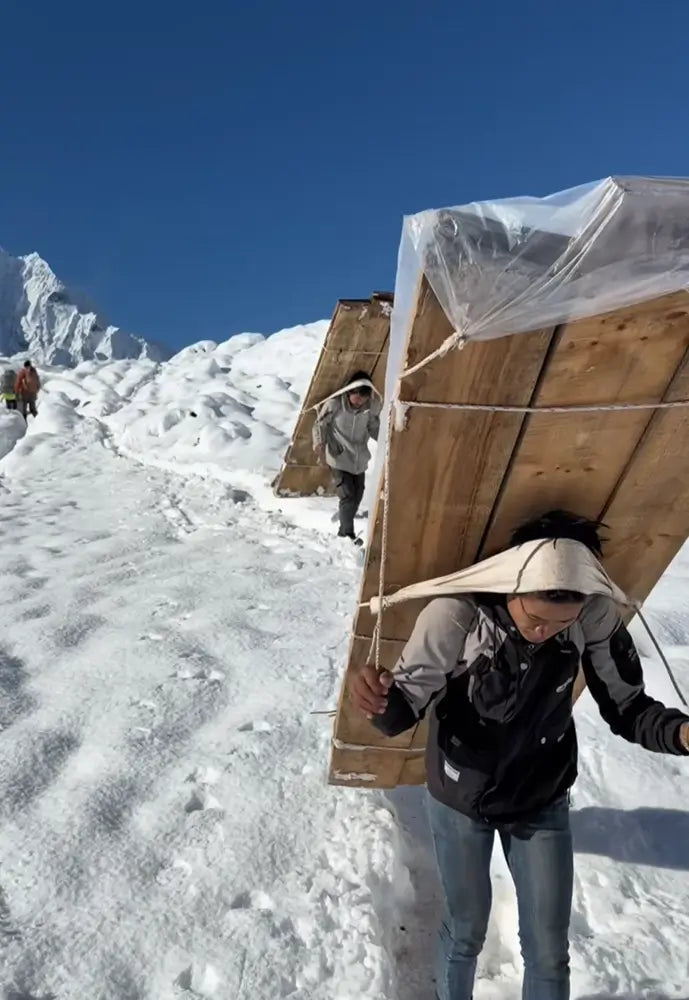
Sherpa climbers and high-altitude workers carry much of the practical burden behind Everest oxygen use.
Bottles have to be transported to high camps and sometimes repositioned depending on weather, route conditions and team plans. When a client changes bottles smoothly on summit day, that moment may depend on days or weeks of earlier load carrying.
So when a climber says, “I used five bottles of oxygen,” there is another story behind the sentence. Those bottles did not appear at Camp 4 by themselves.
How Ordinary Climbers Should Think About Oxygen
If Everest is a future goal, do not treat oxygen as an ego issue. Treat it as part of high-altitude risk management.
Ask your expedition operator:
- How many bottles are provided per climber?
- From which camp is oxygen used?
- Is oxygen used while sleeping?
- What flow rate is recommended on summit day?
- Is there spare oxygen?
- Do Sherpa staff have adequate oxygen too?
- What mask and regulator system is used?
- What happens if equipment fails?
- Is oxygen included in the quoted price?
These questions are more useful than asking whether the company can “guarantee the summit”. A responsible operator should explain the oxygen plan clearly.
Conclusion
Climbers need oxygen on Everest because the upper mountain is not simply tiring. It is an environment where the body steadily deteriorates under extremely low pressure and low oxygen availability. Supplemental oxygen does not remove risk, but it helps climbers keep enough strength, judgement and time to descend.
No-oxygen Everest ascents deserve respect, but they belong to a small group of elite climbers. For most people, using oxygen is not weakness. It is realism.
Good Everest preparation is not about proving you need no help. It is about knowing which systems help you come home.
On Everest, the summit is the goal. Returning safely is the real result.

Leave a comment
All comments are moderated before being published.
This site is protected by hCaptcha and the hCaptcha Privacy Policy and Terms of Service apply.