
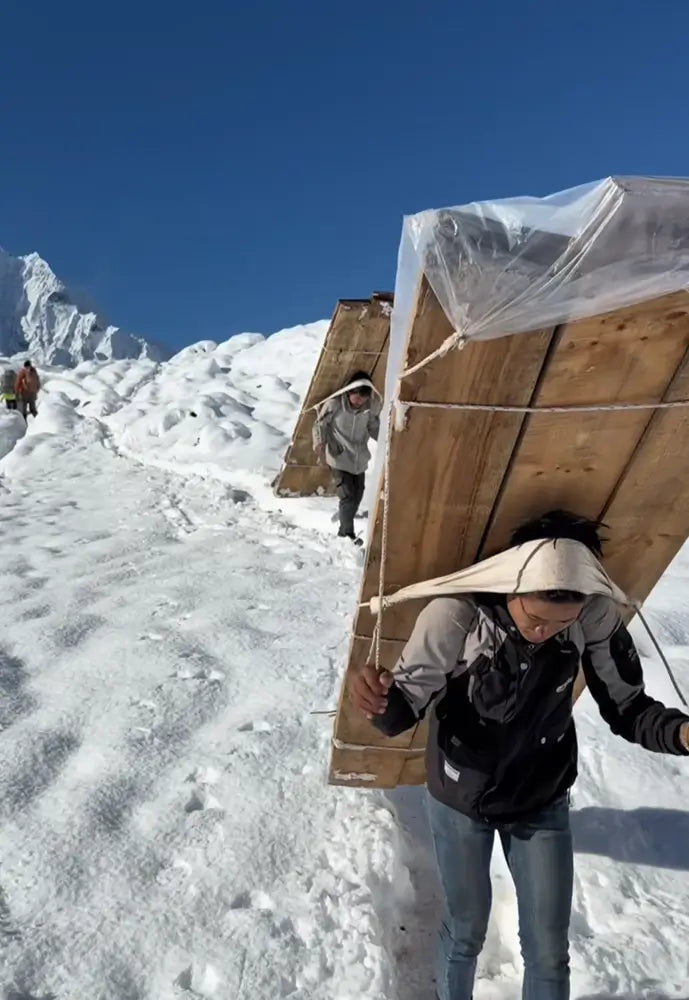
Anyone who begins reading about commercial Everest expeditions will soon meet the word “Sherpa”.
Some articles describe Sherpas as porters. Some videos describe them as people who take clients to the summit. Both descriptions are too simple. On Everest, Sherpa climbers, high-altitude workers and guides are part of a complex and dangerous operating system. They are not background characters. They are some of the people who make a modern Everest expedition function.
A client may remember summit day most clearly. A Sherpa team sees the whole season: opening the route, carrying loads, building camps, checking conditions, stocking oxygen, handling emergencies and moving again and again through dangerous ground.
Quick Answer
Sherpa guides and high-altitude workers on Everest often help with:
- Route opening and fixed rope work
- Carrying tents, oxygen, fuel and food to high camps
- Building and maintaining Camps 1, 2, 3 and 4
- Supporting acclimatisation rotations
- Managing oxygen bottles, masks and regulators
- Assisting with pace, safety and turnaround decisions on summit day
- Helping with rescue or evacuation when possible
- Clearing equipment, waste and camps at the end of the climb
But one point matters: Sherpas do not climb Everest for the client. The climber still has to move, climb and descend under their own power. A strong Sherpa team can improve safety, but it cannot turn an unprepared person into a qualified climber.
What Does “Sherpa” Mean
Sherpa is first of all the name of an ethnic group from the Himalayan region of Nepal. Many Sherpa people have lived for generations at high altitude and are known for strong adaptation to thin air. Over time, because many Sherpa people worked in Himalayan expeditions, the word “Sherpa” became widely used in mountaineering to describe high-altitude support workers.
Strictly speaking, not every Nepali high-altitude worker is ethnically Sherpa, and not every Sherpa person works in mountaineering. More accurate terms include Sherpa climber, high-altitude worker, mountain guide or Nepali expedition worker.
It is fine to use “Sherpa guide” in a general article, but it is worth remembering that a people should not be reduced to a job title.
High-Altitude Workers Are Not Ordinary Porters
A trekking porter may carry luggage from one village to another. Everest high-altitude work is very different.
The workplace may be the Khumbu Icefall, the Lhotse Face, the South Col or even the death zone above 8000 metres. The load may include oxygen bottles, tents, fuel, rope, food and spare client equipment. The hazards include crevasses, avalanches, falling ice, high wind, cold and severe lack of oxygen.
This is not simply “carrying things”. It requires altitude experience, route judgement, technical movement, gear skill and calm decision-making.
Do Sherpas Fix the Ropes on Everest
Modern commercial Everest climbing relies heavily on fixed ropes. Fixed ropes allow climbers to use ascenders, safety lines and carabiners on steep or exposed terrain, reducing the risk of a fall.
Project Himalaya’s explanation of Himalayan job roles notes that the Everest Operators Association has coordinated rope fixing from Camp 2 toward the summit, with climbing Sherpas paid for this work. Alan Arnette has also written about the process of building the Everest climbing route, including the transport and placement of ropes, anchors and protection.
Fixed ropes do not appear by magic. Someone has to move the rope, ice screws, snow stakes and protection gear up the mountain. Someone has to install them in wind, cold and thin air. To clients, the rope may look like the route. To the people fixing it, it is labour and risk.
Why Oxygen Carries Matter So Much
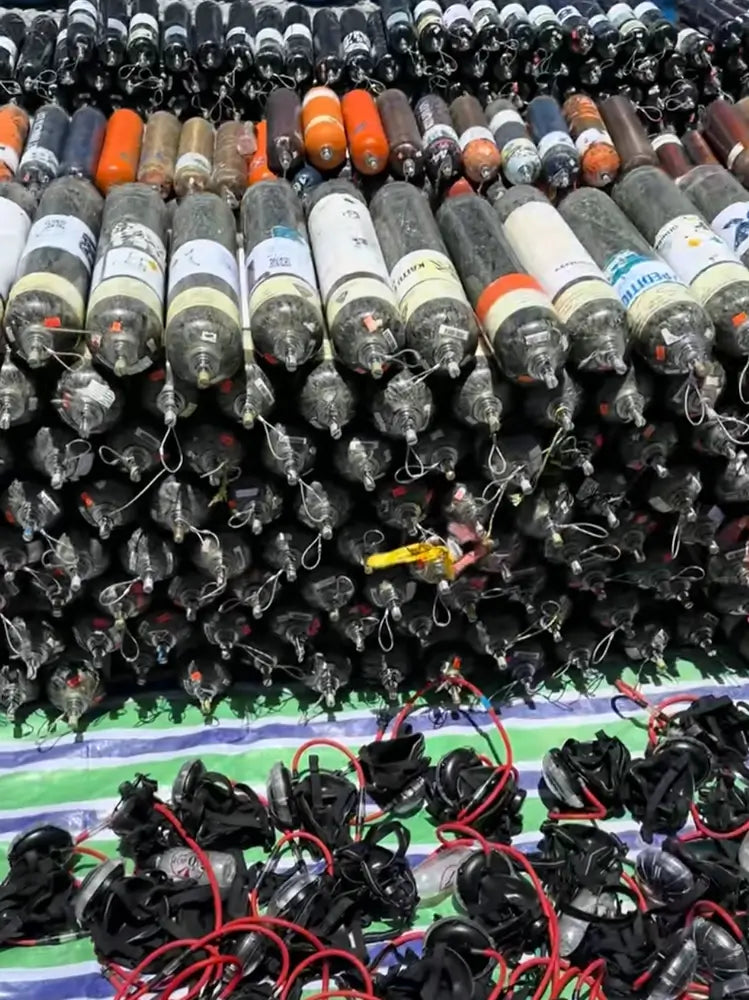
Most commercial Everest clients use supplemental oxygen. Those oxygen bottles are not simply waiting at Base Camp. They have to be carried to higher camps before the summit push.
Sherpa and high-altitude teams often move oxygen to Camp 2, Camp 3 and Camp 4, then adjust supplies depending on expedition plans. On summit day, oxygen bottle count, flow rate, spare supply, mask fit and regulator condition can all affect whether a climber descends safely.
Many people see the summit photo with an oxygen mask. Fewer people think about how each bottle reached that altitude.
Do Sherpas “Take You to the Summit”
Yes and no.
Yes, because a good Sherpa guide may help control pace, check oxygen, remind a client to drink, manage safety clips, assess weather and give advice at key points. For many commercial climbers, that support is critical.
No, because Sherpas cannot lend you fitness, skill or judgement. You must still move your own body, cross ladders, climb fixed ropes and stay functional when tired. On descent, if a climber becomes completely unable to move, rescue can become extremely difficult.
Experienced Everest observers often say that oxygen and Sherpa support can help you, but they cannot guarantee that you will come home. It sounds harsh, but it is true.
Why Sherpas Often Carry More Risk
Clients usually make scheduled acclimatisation climbs, then rest while waiting for a summit window. High-altitude workers may move more often. They may cross the Khumbu Icefall repeatedly, carry oxygen and supplies to high camps, repair equipment and keep working while clients recover.
Risk does not come only from altitude. It also comes from exposure. The more often someone passes through dangerous ground, the more chances there are for icefall collapse, avalanche, rockfall or crevasse accidents.
A BMJ article using Himalayan Database information discussed the ethics and risk of hiring Sherpas on Everest, noting the serious danger faced by Sherpa workers over the history of the mountain. This is an important reminder: commercial Everest should not only measure client summit success. It must also consider worker safety.
How Good Expedition Companies Should Treat Sherpa Teams
When choosing an Everest operator, climbers should look not only at client comfort, but also at how the company treats its high-altitude workers.
Useful questions include:
- Do Sherpa and high-altitude workers have proper insurance?
- Are workers given adequate oxygen and equipment?
- Is the Sherpa-to-client ratio reasonable?
- Does the company reduce unnecessary dangerous carries?
- Is there a clear rescue plan?
- Are workers’ safety decisions respected?
- Are pay, tips and safety arrangements transparent?
- Does the company avoid pushing workers into extra risk for client vanity?
A responsible Everest expedition does not treat Sherpas as disposable support. Professional service should protect both clients and workers.
How Climbers Should Work With Sherpa Guides
If you ever join an Everest or Himalayan expedition, do not think of Sherpa support as insurance you have purchased. Think of it as a working partnership.
Respect Professional Judgement
If a high-altitude guide says you are too slow, too cold, low on oxygen or need to turn around, that is not poor service. It may be the decision that saves your life.
Do Not Hide Symptoms
Headache, nausea, blurred vision, poor coordination, worsening cough and unusual weakness should be reported. At altitude, pretending to be fine is dangerous.
Manage Your Own Basic Gear
You should know how to use your gloves, headlamp, oxygen mask, ascender and descender. Do not hand every small task to someone else.
Tip Fairly and Say Thank You
Everest high-altitude work is hard and risky. Tipping is not charity; it is recognition of labour. Even more important is choosing a company that already provides good pay, insurance and working conditions.
Do Sherpas Make Everest Too Commercial
This is a common debate. Some people argue that fixed ropes, oxygen and Sherpa support have taken away the old mountaineering spirit. Others argue that without modern support systems, most clients should not be high on Everest at all.
There is no simple answer. But one thing is clear: climbers should not enjoy the convenience of the commercial system while dismissing the people who make it possible.
For most modern clients, an Everest summit is not a solo heroic act. It is the result of a whole team: Sherpa climbers, rope fixers, cooks, doctors, weather forecasters, transport staff, Base Camp workers and expedition leaders.
A summit story that says only “I conquered Everest” is missing half the truth.
Conclusion
So, what do Sherpa guides do on Everest? Far more than carry loads. They help build the route, fix ropes, stock camps, move oxygen, manage high-altitude logistics, support summit pushes, judge risk and respond to emergencies. Modern commercial Everest expeditions depend deeply on their work.
But that does not mean clients can arrive unprepared and expect others to solve everything. A Sherpa guide can help you climb more safely, but cannot remove the consequences of poor preparation.
A better question is not “Will a Sherpa take me up Everest?” It is: am I prepared enough to be a responsible member of the team whose work and risk make my climb possible?
Everest’s height is not only measured in metres. It is also measured in how people treat each other on the mountain.


Leave a comment
All comments are moderated before being published.
This site is protected by hCaptcha and the hCaptcha Privacy Policy and Terms of Service apply.