
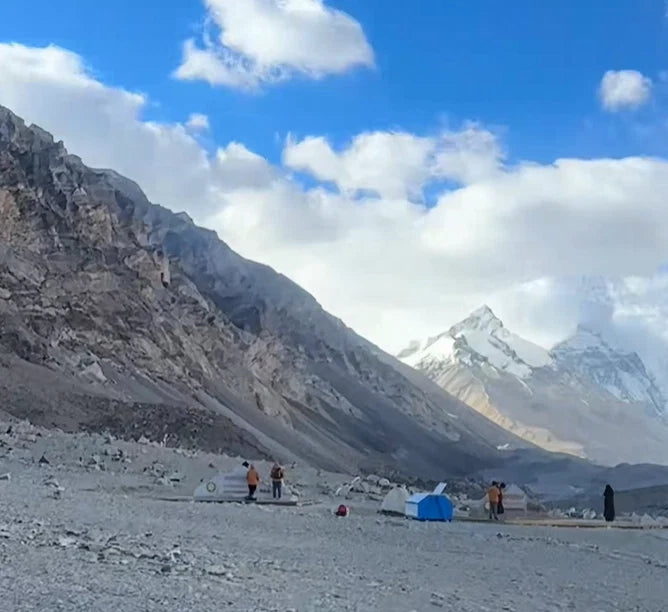
Many trekkers dream of walking to Everest Base Camp alone. The reasons are easy to understand: freedom, quiet, flexible pacing and no need to match another person’s speed. For experienced hikers, a solo trek can feel like the purest way to travel.
But Everest Base Camp is not an ordinary trail. Base Camp sits around 5364 metres, and many trekkers climb Kala Patthar at around 5545 metres. The route involves altitude sickness risk, changing weather, Lukla flight delays, busy teahouses, communication gaps, insurance details and emergency decisions. Trekking alone does not simply mean “no companion”. It means every decision rests with you.
Quick Answer
Whether you can trek to Everest Base Camp solo has two answers.
From a safety perspective: if it is your first EBC trek, a fully independent solo trek is not recommended. Hiring a licensed guide or at least a porter-guide is safer.
From a rules perspective: as of 2026, online information is inconsistent. Some sources say the Everest region still allows independent trekkers because Khumbu has its own local permit system. Others say foreign trekkers must be accompanied by a licensed guide. Before departure, confirm current rules with a registered Nepal trekking agency, local Khumbu authorities or official tourism sources.
In simple terms, even if solo EBC is permitted when you travel, that does not mean it is suitable for everyone.
Why Solo EBC Appeals to Trekkers
A solo Everest Base Camp trek has real attractions:
- More control over pace
- No need to match group speed
- Quieter experience
- Freedom to choose tea stops and lodges
- Potentially lower cost
- Stronger sense of independence
Some people feel most awake when walking alone. The sound of boots, wind, suspension bridges and distant mountains can make a solo Himalayan trek unforgettable.
But on EBC, freedom has to be weighed against altitude risk. Without experience, freedom can quickly become stress.
Is a Guide Mandatory for EBC in 2026
This is the confusing part.
Since 2023, Nepal has strengthened guide requirements for foreign trekkers in many national parks and conservation areas. The Everest region is somewhat different because the Khumbu Pasang Lhamu Rural Municipality has its own local permit system. In 2026, sources such as View Nepal Treks and Attentive Holidays state that independent trekking in the Everest region remains possible with the correct permits. Other trekking companies claim that solo trekking is no longer allowed and that licensed guides are required.
The lesson is simple: do not rely on old blogs or one article.
Before travelling, confirm:
- Are foreign trekkers currently allowed to trek independently in the Everest region?
- Is a licensed guide required?
- Must you book through a registered agency?
- Have permit rules changed?
- Does your insurance require a guide?
- How are rules enforced at local checkpoints?
The most reliable answer is the one that matches current local enforcement.
Biggest Risks of Solo EBC
Altitude Sickness
This is the main risk. Himalayan Glacier’s altitude sickness guidance for EBC stresses that rapid ascent above 2500 metres can trigger symptoms, and prevention depends on slow acclimatisation, extra nights in Namche and Dingboche, and the walk-high-sleep-low principle.
When trekking alone, the danger is misreading your own condition. Headache, nausea, slower walking and mental dullness may feel like normal tiredness. A guide may notice earlier that something is wrong.
No One to Push the Descent Decision
Altitude illness often affects judgement. A solo trekker may refuse to admit they should descend. There is no guide saying clearly: “We are not going higher today.”
Route and Weather Judgement
The EBC main route is mature, but it is not a city park. Fog, snow, side trails, moraine, yak trains and fatigue can make simple decisions less simple.
Accommodation Uncertainty
Peak-season teahouses can fill, especially in Lobuche and Gorak Shep. Solo trekkers may be flexible, but a guide often has better lodge contacts.
Emergency Communication
If you fall, become seriously ill, lose phone power or have no signal, getting help is harder alone. Insurance and emergency planning matter more.
Is Solo EBC Cheaper
Usually, yes, because you do not pay guide, porter or agency service fees. But the saving may not be as large as expected when risk is included.
You still pay for:
- Lukla flights
- Permits
- Teahouse accommodation
- Meals and hot drinks
- Charging and WiFi
- Gear
- Insurance
- Delay buffer costs
- Emergency expenses
If trekking without a guide leads to poor pacing, altitude problems, missed flights or accommodation issues, the money saved can disappear quickly.
For a first EBC trek, hiring a guide is not just buying service. It is buying local judgement and risk management.
Who Can Consider Solo EBC
If rules allow it, solo EBC is more suitable for trekkers who:
- Have previous high-altitude trekking experience
- Have been above 4000 or 5000 metres
- Understand altitude sickness and descent rules
- Communicate well in English
- Can manage permits, lodges and flights
- Use offline maps confidently
- Keep luggage light
- Have enough buffer days
- Carry high-altitude and helicopter evacuation insurance
- Will descend immediately if symptoms worsen
If this is your first Nepal trek, first 5000 metre trip or first long-distance trek, solo EBC is not ideal.
Who Should Not Trek Solo
A guide is strongly recommended if:
- It is your first high-altitude trek
- You do not understand altitude sickness well
- Your fitness is moderate
- Communication is difficult
- You get anxious under uncertainty
- Your schedule is tight
- You have heart, lung, blood pressure, knee or chronic health issues
- You do not want to manage daily logistics
- Your insurance requires a licensed guide
- You are trekking in monsoon, winter or unstable weather
Solo trekking is not proof of courage. Choosing support can be the more mature decision.
Solo vs Guided Experience
Solo
You have more freedom and silence. You choose departure times, tea stops, walking speed and lodges. You spend more time with yourself and may notice more small details.
Guided
You remove many daily problems. A guide helps with permits, lodges, flights, pacing, altitude symptoms and local decisions. You can still walk quietly, but not every judgement rests only on you.
Many people fear that hiring a guide removes freedom. A good guide does not turn you into a package tourist. They are more like a knowledgeable mountain companion.
How to Prepare If You Trek Solo
If rules allow independent trekking and you choose solo EBC, preparation must be thorough.
Do Not Rush the Itinerary
Use at least 12 to 14 days. Do not skip Namche or Dingboche acclimatisation days.
Download Offline Maps
Use Maps.me, Gaia, AllTrails or another offline mapping tool. Do not rely on mountain internet.
Share Your Location Daily
Send your route and daily destination to family or friends whenever you have signal.
Buy the Right Insurance
Your policy must cover above 5500 metres, altitude sickness, helicopter evacuation and independent trekking. If it requires a licensed guide, it is not suitable for solo travel.
Carry Enough Cash
ATMs are unreliable in the mountains. Carry enough Nepalese rupees for rooms, food, water, charging, WiFi and delays.
Pack Light but Complete
Do not skip sleeping bag, down jacket, gloves, rain shell, headlamp or medicine to save weight. But do not bring excess city clothing.
Do Not Push Through Symptoms
Worsening headache, repeated vomiting, poor coordination, breathlessness at rest or severe cough are not “wait and see” signs. Descend or seek help.
Solo EBC Safety Checklist
Before departure, confirm:
- Current rules
- Permits
- Insurance covers solo EBC
- Buffer days included
- Namche and Dingboche acclimatisation days
- Offline maps downloaded
- Family knows your route
- Phone and power bank ready
- Sleeping bag and down jacket warm enough
- Enough cash
- Altitude sickness descent rules understood
- Lukla delay plan ready
If several answers are unclear, do not trek fully independently.
Is Solo EBC Safe for Women
For women, solo EBC involves both normal solo travel risks and high-altitude risks. The main-season teahouse route is busy and established, but caution is still wise.
Practical steps:
- Stay in well-reviewed teahouses
- Do not walk alone after dark
- Avoid sharing detailed plans with too many strangers
- Keep regular contact with someone at home
- Choose main seasons
- Consider a female guide or reliable local guide
- Avoid heavy alcohol use
- Ask for help early if unwell
Experienced solo female trekkers may find EBC manageable. For a first high-altitude trek, a guide gives a larger safety margin.
My Advice
If you ask whether you should trek EBC solo, my practical advice is:
First EBC trek: hire a guide.
First Nepal trek: hire a guide.
First time above 5000 metres: hire a guide.
Tight schedule: hire a guide.
Want less physical strain: hire a porter.
Experienced and rules allow: solo is possible with serious preparation.
The point of EBC is not proving you can walk alone. It is completing the journey safely and clearly.
Conclusion
Can you trek Everest Base Camp solo? Legally, you must check the current local rules for your travel year. Practically, it depends on your experience, fitness, altitude knowledge, emergency planning and insurance.
Solo EBC offers freedom, but it also carries real responsibility. It suits experienced trekkers who prepare well, understand altitude and are willing to descend early. For most first-time EBC trekkers, hiring a guide is not an unnecessary extra. It makes the journey safer, calmer and easier to manage.
The Himalaya is not a place to prove loneliness. Whether you walk alone or with a guide, what matters is respecting altitude, weather and your body, then returning safely.

Leave a comment
All comments are moderated before being published.
This site is protected by hCaptcha and the hCaptcha Privacy Policy and Terms of Service apply.