
The Question Most Solo Backpackers Eventually Ask
The one person vs two person tent for backpacking debate usually starts in a very ordinary way. Someone looks at a one person tent and thinks, “Where does the rucksack go?” Then they look at a two person tent and think, “Do I really want to carry the extra weight?”
There is no perfect answer, which is probably why the same question appears again and again on Reddit, backpacking forums and gear blogs. Some hikers love the neatness of a small solo shelter. Others would rather carry a few hundred extra grams and have space to sit out rain, sort wet clothing and keep their pack inside.
For UK backpackers, the decision matters even more because the weather is rarely kind. A tent is not only a place to sleep. On a wet evening in Scotland, Wales, Dartmoor or the Lake District, it becomes your bedroom, drying room, changing room and morale shelter.
Quick Answer
Choose a one person tent if you care most about low weight, small packed size, easier pitch selection and efficient solo travel.
Choose a two person tent if you want more comfort, space for gear, better liveability in bad weather and flexibility for trips with a partner, friend or dog.
For many UK solo campers, a lightweight two person tent is the more comfortable long term choice. For fast trips, big mileage days and ultralight setups, a good one person tent still makes a lot of sense.
Why Choose a One Person Tent
A one person tent does one thing well: it keeps your shelter system compact. It is usually lighter, packs smaller and needs less flat ground. That last point is easy to overlook until you are trying to pitch on uneven moorland, a narrow forest clearing or a small patch of grass above a valley.
In the Backcountry Post discussion, several experienced hikers pointed out that they use a one person tent when the weather is predictable or when they mainly need a place to sleep. That feels right. If you walk long days and spend little time awake in camp, a compact solo tent can be enough.
The Main Advantages
A one person tent is usually better for:
- Lower pack weight
- Smaller packed size
- Smaller pitch footprint
- Fast solo trips
- Tight wild camping spots
- Hikers with compact gear
- People who do not mind a cosy shelter
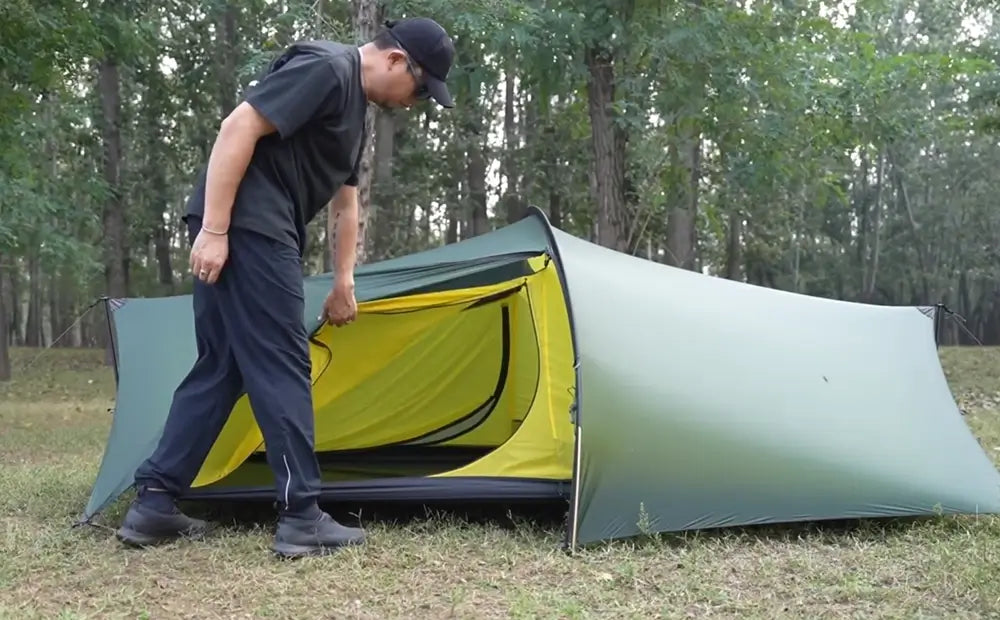
For a solo backpacking tent UK setup, a one person tent can work well if it has a decent vestibule. Your boots, wet waterproofs and rucksack can stay outside the inner but under cover.
The Downsides of a One Person Tent
The problem is comfort. Some one person tents feel fine on a dry summer night, then suddenly feel tiny when rain keeps you inside for twelve hours.
The common complaints are familiar: not enough space to change clothes, brushing against wet walls, awkward storage, condensation near the sleeping bag and nowhere sensible to spread out damp kit. In the Reddit thread, several users mentioned that a true one person tent can feel tight, especially if you want your backpack inside rather than in the vestibule.
A small tent is also less forgiving if you are tall, broad shouldered, use a wide sleeping pad or have a winter sleeping bag with more loft. The label “one person” does not tell the whole story.
Why Choose a Two Person Tent
A two person tent gives space. That sounds obvious, but on a wet backpacking trip it changes the feel of the whole evening. You can bring your pack inside, keep clothing away from the tent walls, sit up more easily, sort food, read, or wait out bad weather without feeling packed into the shelter.
Gossamer Gear makes the case that a two person tent for solo camping can improve comfort, gear storage, versatility and sometimes even condensation control because there is more airflow and less chance of your sleeping bag touching wet fabric.
That is the part many UK hikers will recognise. In damp weather, space is not luxury. Sometimes it is what keeps your quilt or sleeping bag dry.
The Main Advantages
A two person tent is better for:
- Gear storage inside the tent
- Wet weather comfort
- Changing clothes
- Sitting out long rain
- Wider sleeping pads
- Taller or larger hikers
- Bringing a dog
- Occasional trips with another person
- Better long term flexibility
Several Reddit users made a similar point: if the weight difference is small, the extra comfort often feels worth it.
The Downsides of a Two Person Tent
A two person tent is not automatically better. It usually costs more, weighs more and needs a larger pitch. On rough UK ground, that can matter. A bigger footprint may be harder to place discreetly when wild camping.
There is also a naming problem. Some “two person” tents are really comfortable for one person and tight for two. If two hikers both use wide sleeping pads, a narrow two person tent can feel optimistic. One forum user summed up the issue well: it is more of a spectrum than a simple one person or two person label.
So do not shop by capacity alone. Check floor width, length, peak height, wall angle and vestibule size.
UK Weather Changes the Decision
For dry climates, a one person tent can be easier to justify. In the UK, the case for a slightly bigger shelter becomes stronger.
Rain means wet waterproofs. Wet grass means damp socks. Condensation means you want space between your sleeping bag and the flysheet. Wind means you may spend more time inside than planned. A small solo tent can still work, but it gives you less room for error.
For a lightweight backpacking tent for wet weather, ask these questions:
- Can I keep my sleeping bag away from the walls?
- Is there room for a wet jacket or trousers?
- Can my pack fit in the vestibule or inside?
- Can I sit up to change layers?
- Will I be comfortable if rain keeps me inside for an evening?
If the answer is no, a two person tent may be worth the weight.
Do You Really Need Space for Your Backpack
This is where many debates begin. Some hikers happily leave their pack in the vestibule. Others want everything inside.
A vestibule is usually enough for boots, poles and a rucksack, but not all vestibules are equal. A small vestibule may keep gear mostly dry, while a larger one lets you cook carefully in bad weather, store wet kit and avoid cluttering the inner.
If you like having all your gear inside, choose a larger one person tent or a two person tent. If you are comfortable keeping the rucksack outside the inner, a good one person tent with a useful vestibule may be enough.
A Useful Middle Ground
The best answer is not always “1P or 2P.” Some tents sit in the middle. A roomy one person tent, a 1.5 person shelter, or a narrow two person trekking pole tent can offer a good compromise.
Look carefully at:
- Interior floor area
- Usable headroom
- Side entry vs front entry
- Vestibule size
- Wall slope
- Packed weight
- Pole structure
- Inner width
- Condensation clearance
A well designed one person tent can feel better than a cramped two person tent. A lightweight two person tent can feel worth every gram if it lets you sleep dry and relaxed.
Final Verdict
The one person vs two person tent for backpacking choice depends on what annoys you more: carrying extra weight or feeling cramped at camp.
Choose a one person tent if you want a lighter, smaller shelter and you mostly use the tent for sleeping. It is the efficient choice for solo backpackers who value low pack weight and compact pitching.
Choose a two person tent if comfort matters more, if you camp often in wet weather, or if you want room for gear, a dog, a partner or simply a less restricted evening. For many UK hikers, that extra space is not indulgent. It is practical.
A good rule is this: if you are counting grams, go one person. If you are imagining a rainy night with wet socks, a damp pack and ten hours until morning, go two person.

Leave a comment
All comments are moderated before being published.
This site is protected by hCaptcha and the hCaptcha Privacy Policy and Terms of Service apply.