
The Honest Answer Is Speed and Order
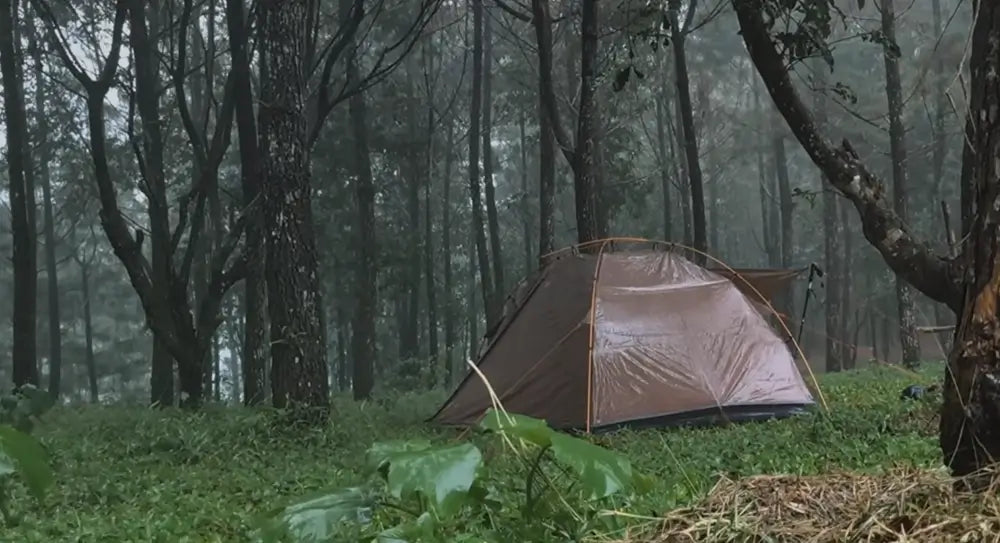
Most campers eventually have to learn how to pitch a tent in heavy rain the hard way. You arrive tired, the light is fading, the ground is already wet, and every item you take out of the pack seems to collect rain instantly.
The trick is not to stay perfectly dry. In real UK weather, that is often impossible. The aim is simpler: get the shelter up quickly, keep the inner tent and sleeping gear as dry as possible, and avoid turning the whole pack into a wet mess before you have even made dinner.
In a Reddit discussion about pitching tents in heavy rain, the most common advice was very practical: pitch fast, use a fly first tent if possible, pack the fly so it comes out first, practise before the trip, and carry a small towel for wiping the floor. None of that sounds glamorous, but it is exactly the sort of advice that works at 8pm in Scottish rain.
Choose the Pitch Before You Open the Bag
Before pulling out the tent, spend one minute looking properly at the ground. It feels tempting to stop at the first flat patch, but heavy rain makes bad pitches obvious very quickly.
Avoid hollows, old water channels, stream edges, boggy dips and ground where water is already pooling. A slight rise is often better than a perfect flat patch. Chris Townsend also recommends looking for shelter from wind, but warns that damp hollows can fill with water. In woods, remember to look up as well. Dead branches above a tent are not worth the shelter.
For camping in heavy rain UK, the best pitch is usually:
- Slightly raised
- Draining well
- Sheltered from the worst wind
- Away from streams and water channels
- Large enough to pitch without fighting the ground
- Not under unsafe branches
If the rain is fierce but trees offer temporary cover, The Big Outside suggests setting up under a thick canopy if possible, then moving or staking the tent properly afterwards. That does not always work with every tent, but it can buy you a drier start.
Pack Your Tent for Rain Before the Trip
Rain pitching starts at home. If your tent is buried under food, spare clothes and cooking gear, you will lose the first battle before the flysheet is even out.
Pack the tent where it can be reached quickly. Keep stakes easy to grab. If your tent allows fly first tent pitching, pack the fly separately or at least so it comes out first. Several Reddit users said they keep the fly separate from the inner for exactly this reason.
A small packing routine helps:
- Stakes in an outer pocket
- Flysheet easy to reach
- Inner protected in a dry bag if separate
- Footprint or groundsheet accessible
- Microfibre cloth near the top of the pack
- Headtorch available before dark
It sounds fussy at home. In heavy rain, it feels sensible.
If Your Tent Pitches Fly First
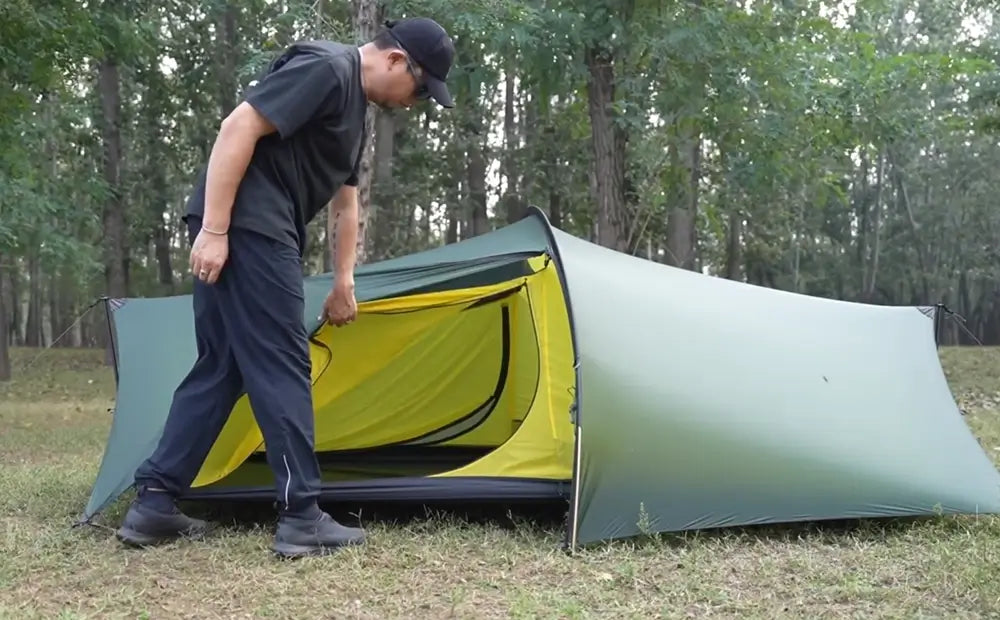
A fly first tent is a gift in rain. Many tunnel tents, some trekking pole tents and some double wall designs allow the outer to go up before the inner. This gives you a covered space before exposing the sleeping area.
A practical order is:
- Keep waterproofs on and close your pack.
- Stake one windward corner or end first.
- Spread the fly low and controlled.
- Insert poles or trekking poles.
- Stake and tension the fly enough to create shelter.
- Put the footprint down if used.
- Attach or spread the inner underneath the fly.
- Tighten guylines and final tension.
Do not aim for a perfect pitch in the first minute. Get shelter first, then adjust. If wind is also strong, peg one end securely before inserting poles, as Chris Townsend advises. The tent should never become a sail.
If Your Tent Pitches Inner First
Inner first tents are harder in heavy rain, but they are not hopeless. The Big Outside recommends spreading the inner, immediately pulling the rainfly over it, then working under the fly to insert poles and finish the setup. It is awkward, but it can keep the worst of the rain off the floor and mesh.
Another method is to keep the fly ready in one hand or placed on top of the inner before the poles go in. Once the frame is up, pull the fly into position quickly and clip it down. The inner may still get damp, but it should not become a bathtub.
If water does get inside, do not panic. Wipe it out with a microfibre towel before opening your sleeping bag or dry clothes. Several Reddit users said this is simply part of the routine when a tent cannot pitch fly first.
Use a Tarp If It Makes Sense
Some campers carry a small ultralight tarp for exactly this situation. Pitching a tarp first can create a dry working area, then the tent goes up underneath. It can also help with cooking, packing and gear sorting.
But this is not always the answer. In strong wind, especially on exposed UK hills, a tarp can become more trouble than it is worth. It needs trees, poles or good anchors, and it adds another thing to manage in the rain.
A tarp is useful in woodland, sheltered campsites and cycle touring situations. On a windy Scottish ridge, a tent that pitches outer first is often simpler.
Keep the Inner Tent Sacred
Once the shelter is standing, do not immediately drag everything wet inside. The inner tent should stay as dry and clean as possible.
Before getting in:
- Fill water bottles if needed
- Secure guylines
- Check pegs
- Put wet waterproofs in the porch
- Keep boots outside the sleeping area
- Wipe your hands before touching sleep gear
- Keep the sleeping bag packed until the floor is dry
Chris Townsend’s advice here is very human and very right: do outside chores before entering the tent, strip wet outer clothing in the porch, and keep damp gear out of the inner. A small sit mat helps when kneeling in the vestibule.
Secure the Tent Properly Before You Relax
Rain often arrives with wind. A half-pitched tent that is “good enough for now” can become noisy or unstable later.
Use guylines. Check stake angles. Tighten the fly so it does not sag onto the inner. Chris Townsend recommends pegs at about a 45 degree angle leaning away from the tent, and carrying different pegs for different ground. Slower Hiking makes the same point in more detail: poor anchors and missing guylines are common reasons tents fail in strong weather.
Before sleep, step outside once more if it is safe. Wet fabrics can stretch, especially nylon, so a tent that looked tidy at 7pm may sag by 10pm.
Packing Down in Rain
The next morning can be worse than the evening. If there is a short dry window, take it. If not, pack from dry to wet.
A good wet morning order:
- Pack sleeping bag first.
- Pack dry clothes and electronics.
- Put wet walking clothes back on.
- Pack the inner tent while still protected if possible.
- Pack the wet flysheet last.
- Store the wet fly separately or outside the main dry gear.
- Dry everything properly at home.
The Big Outside also recommends loading most of your kit inside the tent before dismantling the shelter, then keeping the wet fly separate from the dry inner where possible.
Final Thoughts
Learning how to pitch a tent in heavy rain is mostly about routine. Choose ground carefully, keep the fly accessible, pitch fast, protect the inner, wipe any water before unpacking sleep gear, and secure the shelter properly before calling it done.
There will still be wet sleeves, muddy knees and a moment where you wonder why you did not book a B&B. That is normal. But if your sleeping bag stays dry and the tent is stable, the night is usually fine.
In British weather, that counts as a win.

Leave a comment
All comments are moderated before being published.
This site is protected by hCaptcha and the hCaptcha Privacy Policy and Terms of Service apply.