
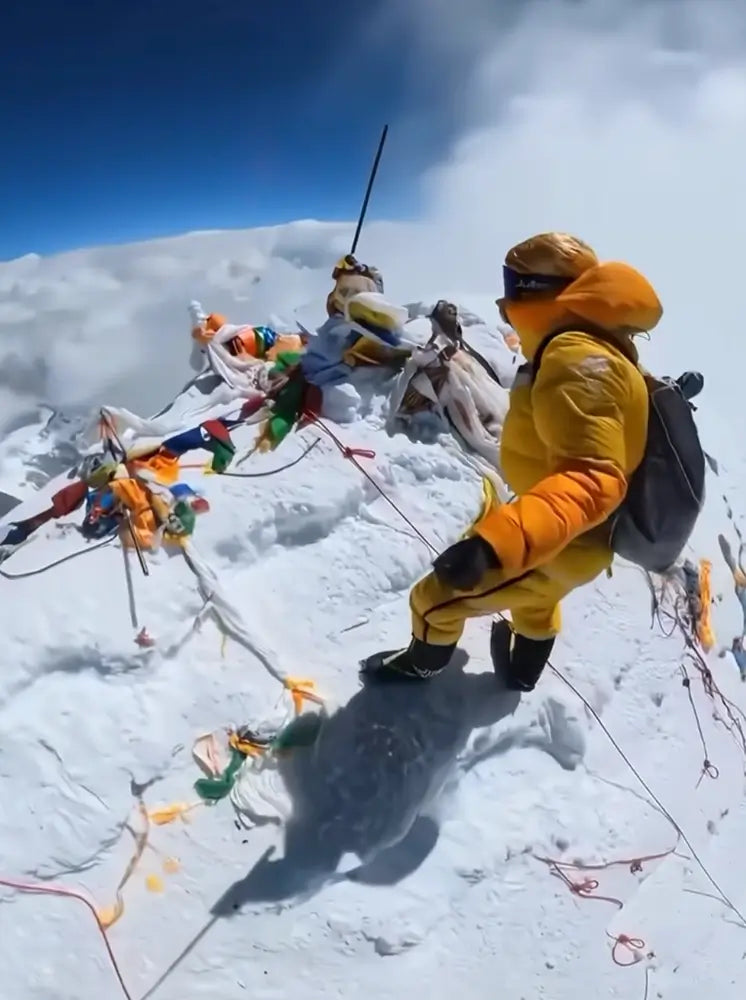
One of the first questions people ask about Everest is simple: what is the Mount Everest summit success rate?
It sounds like an easy question, but it is not. “Success rate” can be measured in several ways. Do we count every attempt, or only climbers who reached Base Camp? Do we count clients only, or include Sherpa and high-altitude workers? Are we looking at all history, or only recent decades? Are the Nepal south side and Tibet north side combined, or separated?
So Everest success rate should never be reduced to one careless number. The figure matters, but the definition matters just as much.
Quick Answer
According to Alan Arnette’s 2026 summary based on sources including the Himalayan Database, by the end of 2025 Everest had recorded about 13737 summits across all routes, representing an overall summit success rate of about 43%. That figure is based on summits divided by attempts above Base Camp.
Modern commercial Everest success rates are usually higher than the historical average. In recent decades, improved weather forecasting, fixed ropes, supplemental oxygen, Sherpa support and stronger logistics have allowed many commercial teams to report client success rates around 50% to 70%, with some strong teams doing better in good years.
But a higher success rate does not mean Everest is safe. It tells us how many people reached the top. It does not reveal every case of frostbite, rescue, oxygen trouble, exhaustion or difficult descent.
Why Everest Success Rate Numbers Differ
Online, you may see Everest success rates listed as 43%, 50%, 60%, 65% or more. That does not always mean someone is wrong. It often means they are measuring different things.
Common methods include:
Overall Historical Success Rate
This includes all routes, all seasons and all eras. Early expedition decades bring the average down because equipment, route knowledge, weather forecasting and oxygen systems were far less developed.
Modern Commercial Success Rate
If you look only at recent commercial expeditions on the normal spring routes, success rates are usually higher. Routes are more established, logistics are stronger and oxygen use is common.
Client Success Rate
This counts paying climbers only, excluding Sherpa and high-altitude workers. It is often closer to what ordinary future Everest climbers want to know.
Operator Success Rate
This is the success rate for a specific expedition company. It may look impressive, but it depends on weather, client screening, operator style, team size and whether struggling climbers were turned around early.
Summit Counts vs Unique People
Some statistics count total summits. Others count unique summiters. A Sherpa climber with many Everest ascents increases the summit count many times, but is still one person.
When you see an Everest success rate, the first question should be: how is this number defined?
Why Success Rates Have Increased
Early Everest climbing was true exploration. Before 1953, nobody had successfully reached the summit. Route knowledge, clothing, tents, oxygen, forecasting and medical understanding were all limited.
Success rates rose over time because of:
- More mature fixed rope systems
- Better experience on normal routes
- More reliable supplemental oxygen
- Improved weather forecasting
- Better Base Camp medical and communication support
- Stronger Sherpa and high-altitude worker systems
- More experienced commercial operators
- Warmer and more reliable gear
Follow Alice’s Everest statistics page notes that summit success has risen significantly over recent decades, with modern figures often described near 60%. The trend is broadly true: Everest is more climbable now than in the early expedition era.
But more climbable does not mean easy. Modern Everest is still a high-risk objective supported by a large and powerful system.
Why 2026 Saw Record Summit Numbers
The 2026 spring season produced record numbers on the Nepal side. Alan Arnette’s 2026 season summary reported about 1008 summits from the Nepal South Col route, including around 274 in a single day. Times of India reported similar figures and noted that Nepalese lawmakers were discussing a proposal requiring Everest climbers to first summit a 7000 metre peak in Nepal.
This shows how strong the modern Everest system has become. With suitable weather, a mature route, concentrated teams and the Tibet north side closed, the Nepal side can produce very large summit numbers.
But record success also raises another issue: crowding. The 2026 numbers show logistical strength, but they also remind us that short weather windows, narrow routes and high climber numbers remain serious safety challenges.
South Side vs North Side Success Rate
Everest has two main commercial routes: the Nepal south side and the Tibet north side.
South Side
The south side enters from Nepal and passes through the Khumbu Icefall, Camp 1, Camp 2, the Lhotse Face, Camp 3, Camp 4 at the South Col and the summit route. It has a very mature commercial system.
Its advantages include strong logistics, many operators, good medical support and established route knowledge. Its challenges include the Khumbu Icefall, crowding and weather-window congestion.
North Side
The north side enters from Tibet. It avoids the Khumbu Icefall and has different access, but includes high ridges, the North Col, the Northeast Ridge and technical steps. Access for foreign climbers has varied in recent years depending on policy and route opening.
Some online sources estimate higher success on the Nepal side than the Tibet side, but yearly differences can be large. Access, weather, team numbers, route condition and statistical method all affect the comparison.
It is too simple to say “south is easy, north is hard”. They have different risks, different management systems and different yearly patterns.
Why Commercial Operators Improve Success
Commercial teams improve success through systems, not magic.
Stronger Logistics
Food, tents, fuel, communication, oxygen, transport and camp management all affect whether climbers remain functional.
Established Routes
Fixed ropes, ladders, camp locations and repeated route knowledge make the normal routes more manageable.
Sherpa Support
High-altitude workers carry oxygen, build camps, support summit pushes and assist descent. They are central to modern success rates.
Supplemental Oxygen
Most commercial clients use oxygen, which improves function in the death zone.
Weather Forecasting
Better forecasting helps teams choose safer summit windows.
Client Screening
Good operators screen clients, reject those not ready and turn around climbers whose condition is poor.
A high operator success rate is usually not about “guaranteeing the summit”. It is about managing people, risk and logistics well.
Why People Still Die When Success Rates Are High
This is one of the most important points. Success rate and safety are not the same thing.
A season may have many summits and still include:
- Frostbite
- Altitude illness
- Oxygen failures
- Helicopter evacuations
- Dangerous descents
- Route crowding
- Forced turnarounds
- Heavy exposure for high-altitude workers
Not every incident becomes public. Operators may not announce every frostbite case, evacuation or near miss. Alan Arnette’s 2026 season summary noted that frostbite and helicopter evacuations often remain unpublished.
So success rate is an outcome number. Safety is the process behind it.
How to Judge an Operator’s Success Rate
If you are choosing an Everest expedition, do not only ask, “What is your summit success rate?” Ask better questions:
- Does the success rate count clients only?
- Are guided staff included?
- How are turnarounds counted?
- Does the operator accept inexperienced clients?
- Are turnaround times enforced?
- How much oxygen is provided?
- What is the Sherpa-to-client ratio?
- Has the team had serious accidents?
- Are rescues and frostbite cases discussed openly?
- Does the company treat descent as success, not failure?
A team with a high success rate but a reckless summit culture is not impressive. A more conservative team may have a lower summit number and still be more responsible.
What Success Rate Means for Ordinary Climbers
For ordinary climbers, Everest success rates show that the mountain is no longer an almost impossible expedition like it once was. But it has not become ordinary tourism.
If modern commercial client success rates often sit around 50% to 70%, that means a large number of paying, trained, supported climbers still do not summit. Reasons may include weather, health, route problems, operator decisions, oxygen issues, family emergencies or simple bad luck.
A serious Everest plan should include failure:
- Could the time be spent without a summit? Yes
- Could the money be paid without reaching the top? Yes
- Could years of training end in a turnaround? Yes
- Is turning around always failure? No
From a safety perspective, turning around at the right time may be one of the best decisions a climber ever makes.
Will Everest Success Rates Keep Rising
Everest success rates may remain high in good years, but they will not rise forever.
Positive factors include:
- Better forecasts
- Improved oxygen systems
- Stronger expedition logistics
- Stricter experience requirements
- Better medicine and communication
Negative factors include:
- Climate change affecting ice and snow
- More climbers causing crowding
- Large differences in client experience
- Commercial pressure
- Policy changes affecting route access
- Unpredictable extreme weather
Everest success rates depend not only on technology, but also on management and restraint.
Conclusion
So, what is the Mount Everest summit success rate? Across all history and all routes, the overall rate is roughly in the low 40% range. On modern commercial spring expeditions, many operators may achieve client success rates around 50% to 70%, sometimes higher in good seasons. The record 2026 Nepal-side summit numbers show how powerful the modern Everest system has become.
But success rate is not a safety certificate. It does not tell you who got frostbite, who was evacuated, who nearly failed on descent or whether next year’s weather will cooperate.
A rational climber looks beyond the number. They ask how the operator screens clients, manages oxygen, enforces descent decisions, treats Sherpa workers and handles crowding or bad weather.
Reaching the summit of Everest is a real achievement. But on Everest, the most important success rate is still the chance of coming home safely.

Leave a comment
All comments are moderated before being published.
This site is protected by hCaptcha and the hCaptcha Privacy Policy and Terms of Service apply.