
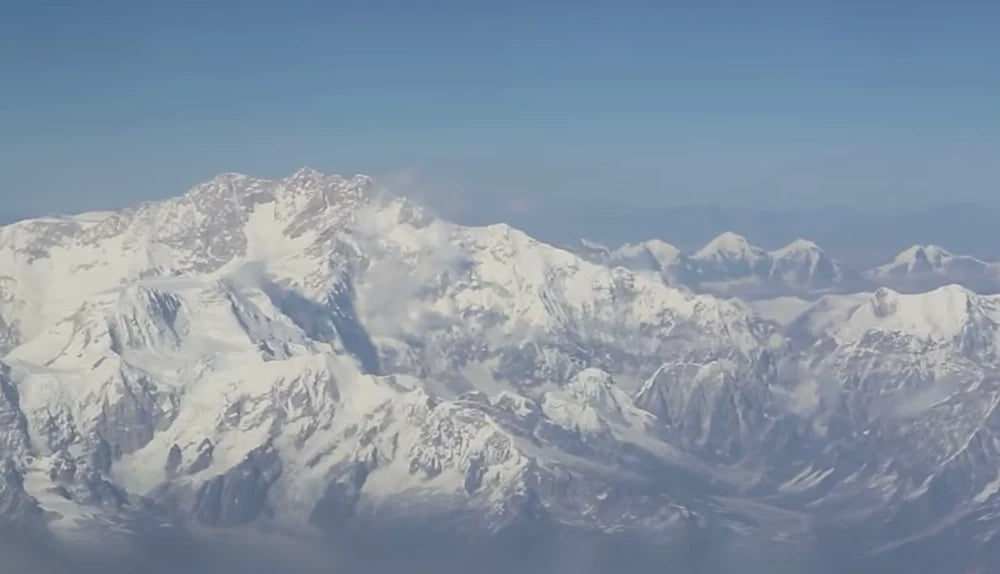
A Great Himalayan Giant
The world’s third highest mountain rises in the eastern Himalaya, where Nepal meets the Indian state of Sikkim. At approximately 8,586 meters / 28,169 feet, it stands among the most impressive peaks on Earth.
For many climbers and trekkers, this mountain feels different from better-known Himalayan names. It is remote, sacred, visually vast, and still remarkably wild. Kangchenjunga is not just another high summit on a list. It is a mountain that carries history, meaning, and a very real sense of distance.
Where Is It Located?
This giant sits in the border region between eastern Nepal and India. On the Nepal side, access often begins through Taplejung District. On the Indian side, the mountain is strongly associated with Sikkim.
Its location matters because it shapes the entire experience. Reaching the region usually takes time. Roads are long, trails are remote, and the landscape shifts gradually from low valleys to forests, alpine slopes, and glacial terrain.
That remoteness is part of the appeal. Visitors do not simply arrive at a viewpoint. They travel through a full Himalayan environment before they finally stand beneath the mountain.
Height and Rank
The peak is generally listed at 8,586 meters, making it the third highest mountain in the world.
Its ranking is simple, but its scale is not. The massif contains several summits and broad ridgelines, so it often appears less like a single peak and more like an entire mountain kingdom.
That physical presence is one reason people remember it. Even from a distance, it dominates the horizon.
What the Name Means
The name is often translated as “The Five Treasures of the Great Snow.” That meaning reflects the mountain’s five principal summits and its sacred status in local tradition.
The “treasures” are usually understood in symbolic terms, linked to values such as gold, silver, gems, grain, and holy texts. The exact interpretation can vary, but the spirit of the name is consistent: this is a mountain meant to be respected.
That reverence still shapes how many people think about the summit today.
A Short Climbing History
The first successful ascent took place in 1955, when a British expedition reached the summit area from the southwest side. Out of respect for local beliefs, the climbers stopped just short of the very highest point.
That decision gave the mountain a unique place in Himalayan mountaineering history. It became a symbol not only of achievement, but also of restraint.
Since then, the mountain has remained far less commercialized than many famous 8,000-meter peaks. That relative quiet has helped preserve its serious, almost old-world character.
Why It Appeals to Climbers
The climbing appeal comes from several things at once.
It is high, remote, and technically demanding. It offers serious expedition terrain without the crowds found on more heavily trafficked peaks. It also carries a strong sense of identity, both cultural and geographic.
For experienced mountaineers, that combination is powerful. It promises challenge without noise, grandeur without overdevelopment, and a summit experience that still feels meaningful.
Why It Appeals to Trekkers
You do not need to climb to appreciate the mountain. The trekking routes in the region are among the finest in Nepal.
The north and south base camp areas offer dramatic views, village encounters, forests, high passes, and long glaciers. These routes are remote enough to feel special, but accessible enough for committed trekkers.
For many visitors, the trek is the real reward. The mountain is not only a summit objective. It is a landscape to move through slowly.
Why It Feels So Different
What sets this mountain apart is the balance of majesty and silence.
It is massive, but not crowded. Famous, but still distant. Sacred, but still climbable for the right people. That tension gives it a rare atmosphere.
The journey to it matters as much as the destination. Roads, rivers, trails, villages, weather, and altitude all build the experience before the mountain fully reveals itself.
That is one reason the region stays in people’s memory long after they leave.
Quick Facts
- Height: 8,586 meters / 28,169 feet
- World rank: Third highest mountain
- Location: Eastern Himalaya, Nepal-India border region
- First ascent: 1955
- Meaning: “Five Treasures of the Great Snow”
- Known for: Sacred status, remoteness, large massif, serious climbing challenge
Final Thoughts
This is one of the Himalaya’s great names for a reason. It combines altitude, beauty, cultural meaning, and mountaineering seriousness in a way few mountains can match.
For trekkers, it offers one of the most rewarding remote journeys in Nepal. For climbers, it represents a high-stakes alpine challenge that still demands humility.
And for anyone who loves mountains, Kangchenjunga remains a reminder that the most powerful peaks are not always the most crowded ones.
FAQ
Where is it located?
It lies in the eastern Himalaya, between Nepal and India’s Sikkim region.
How high is it?
It rises to about 8,586 meters, or 28,169 feet.
Is it open to trekkers?
Yes. The base camp regions are popular trekking destinations.
Is Kangchenjunga suitable for beginners?
No. Summit climbing requires advanced mountaineering experience.
Why is Kangchenjunga important?
It is a sacred Himalayan peak, a major mountaineering objective, and one of the most remote high mountains in Asia.

Leave a comment
All comments are moderated before being published.
This site is protected by hCaptcha and the hCaptcha Privacy Policy and Terms of Service apply.