
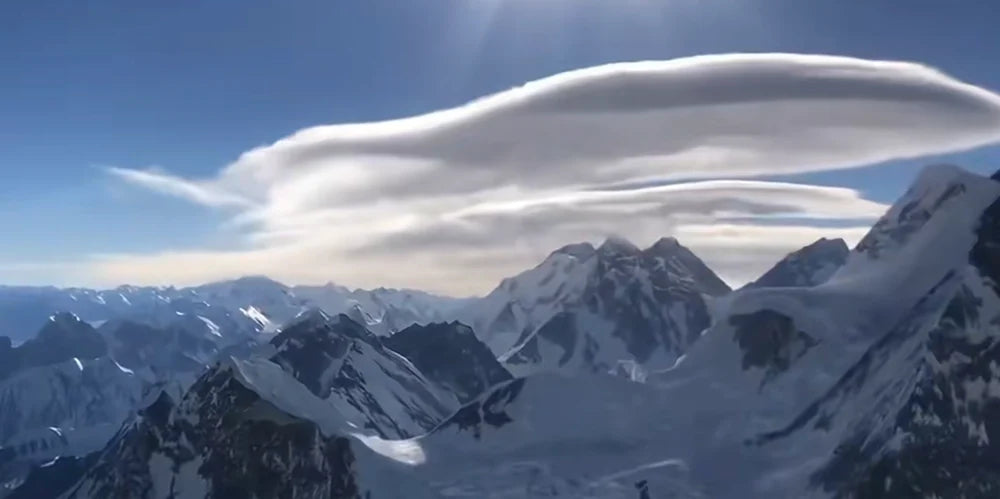
The mountain stands in one of the most remote and dramatic regions on Earth.
It is located in the Karakoram Range, near the border region between Pakistan-administered Gilgit-Baltistan and China’s Xinjiang region. Most expeditions approach from the Pakistani side, traveling through Skardu, then Askole, and finally into the glacier country that leads toward base camp.
This is not a mountain you simply drive up to. The location is part of its identity. Remote access, long approaches, and severe terrain all shape the experience long before climbing begins.
Quick Location Facts
- Mountain range: Karakoram Range
- Region: Gilgit-Baltistan, Pakistan, near China
- Common access point: Skardu
- Last major village before the trek: Askole
- Key glacier route: Baltoro Glacier
- Major landmark: Concordia
- Primary approach: From the Pakistani side
Why the Location Matters
The mountain’s location is one reason it is so respected.
The Karakoram is not a soft introduction to high mountains. It is a vast, glaciated, rugged landscape with strong weather, huge ice systems, and very limited easy access. Even reaching base camp requires days of travel and trekking.
That means the expedition begins long before any technical climbing. You have to cross valleys, move through glacier terrain, and adapt to an environment where scale alone can feel overwhelming.
Skardu: The Gateway
Most journeys begin in Skardu, the main logistical hub for expeditions heading into the high Karakoram.
Skardu is where teams usually arrange:
- transport
- supplies
- porters
- weather checks
- permits
- final gear preparation
For many climbers and trekkers, Skardu is the last place that feels like a normal town before the expedition world takes over.
Askole: The Last Village
From Skardu, the route usually continues by road and jeep to Askole.
Askole is often described as the final village before the long walk into the mountains. Once you leave Askole, the route becomes much more remote. Roads fade away. The journey becomes a true expedition.
This is also where the pace changes. The mountain is no longer something you are visiting casually. It becomes something you are entering.
The Baltoro Glacier
The Baltoro Glacier is one of the most famous glacier systems in the world, and it is central to the route.
This is not a flat ice highway. It is a long, broken, demanding glacier valley with rough surfaces, moving ice, rocky moraine, and constant elevation gain. Walking here requires patience and stamina.
The Baltoro approach is also one of the most spectacular trekking routes anywhere. Towering peaks rise on all sides, and the scale of the landscape becomes harder to describe the farther you go.
For many people, the glacier journey is one of the most memorable parts of the entire expedition.
Concordia: The Great Meeting Point
One of the most important places on the route is Concordia.
Concordia is a legendary glacier junction where some of the world’s great peaks gather into one overwhelming view. It is often described as one of the finest mountain viewpoints on Earth.
From here, the landscape feels enormous. The peaks dominate the horizon, the glacier fields stretch in every direction, and the sense of remoteness becomes even stronger.
If the Karakoram had a cathedral, Concordia would be one of its central chambers.
From Concordia to Base Camp
After Concordia, the route continues toward the upper glacier and base camp area.
This final stretch is where the mountain begins to feel close and serious at the same time. The terrain becomes colder, more exposed, and more clearly tied to expedition climbing rather than trekking.
By the time climbers arrive, they have already completed a demanding journey through some of the wildest mountain country on the planet.
Why This Region Is So Special
The route matters because it is part of the mountain’s character.
This is not a peak with easy roadside access or a crowded village trail. It is a remote high-altitude system of glaciers, valleys, and peaks where every step deeper into the region increases the feeling of scale and isolation.
That is one of the reasons the mountain is so powerful in the imagination. Its location is not incidental. It is central to its identity.
Final Thoughts
So, where is it located?
It stands in the Karakoram Range, in Gilgit-Baltistan, Pakistan, near the border with China. Most routes begin in Skardu, continue to Askole, then cross the Baltoro Glacier and pass through Concordia before reaching base camp.
The answer is geographic, but it is also emotional. This is a mountain located far from ordinary life, in a landscape where distance, glacier travel, and scale shape everything about the journey.
That remoteness is part of why it remains so legendary.
FAQ
Where is the mountain located exactly?
It is located in the Karakoram Range, in Gilgit-Baltistan, Pakistan, near the China border.
How do you reach base camp?
Most expeditions go from Skardu to Askole, then trek across the Baltoro Glacier through Concordia.
What is Concordia?
Concordia is a famous glacier junction and one of the main landmarks on the route.
Is the area remote?
Yes. It is one of the most remote mountain regions in the world.
Is K2 on the same route?
Yes, this is the main approach region for the mountain commonly known as K2.

Leave a comment
All comments are moderated before being published.
This site is protected by hCaptcha and the hCaptcha Privacy Policy and Terms of Service apply.