
A Trek for People Who Want the Wild Part
You do not need to climb the summit to experience the mountain properly. In fact, for many trekkers, the base camp journey is the best way to meet it.
The Kangchenjunga Base Camp trek is one of Nepal’s most remote Himalayan trips. It is quieter than Everest, less polished than some famous routes, and far more committed in feel. That is exactly why people love it.
You can trek to both the north and south base camp areas without any summit climbing. For most visitors, that is already a huge Himalayan experience.
North Side or South Side?
There are two main trekking approaches.
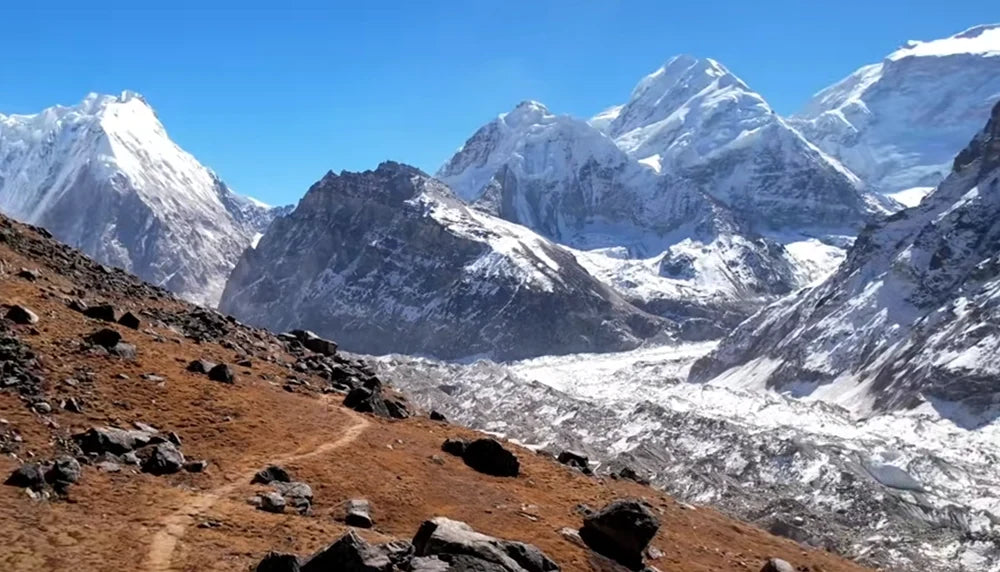
The north side leads to Pangpema, the north base camp area. It is known for huge glacier views, a strong sense of isolation, and dramatic alpine scenery.
The south side leads to Oktang, the south base camp viewpoint. This route has a different landscape, with a mix of valleys, forest, and high mountain views.
Both are excellent. The better one depends on what kind of experience you want.
Why This Trek Stands Out
This is not a crowded tea-house highway. It feels remote from the start and gets even quieter as you go higher.
What makes it special:
- Fewer trekkers
- Bigger wilderness feel
- Strong mountain views
- Village and cultural variety
- Access to both north and south base camp areas
- A true sense of distance from city life
For people who want a trek that still feels wild, this is one of the best choices in Nepal.
What the Trek Is Like
The route usually begins in eastern Nepal, with access commonly through Taplejung. From there, the journey continues on foot through villages, valleys, forests, and high alpine terrain.
According to Nepal Tourism Board information, the area is reached through the Kanchenjunga Conservation Area, which supports trekking and mountaineering and offers tea houses and camping.
You should expect:
- Long days on foot
- Basic facilities in some sections
- Variable trail conditions
- Real altitude gain
- Remote villages
- Big weather changes
This is a trek that rewards patience.
North Base Camp: Pangpema
The north base camp is often considered the more dramatic side.
NTB lists Pangpema at about 5,140 meters. The scenery here is open, vast, and strongly glacial. It is one of those places where the mountains feel bigger than the map.
Trekkers often choose this side for:
- Strong glacier views
- A quieter, more remote feel
- High mountain scenery
- A real sense of arrival at the edge of the world
If you want the most isolated-feeling base camp experience, this is probably the side to choose.
South Base Camp: Oktang
The south base camp viewpoint, often referred to as Oktang, sits at about 4,620 meters.
This side has a different mood. The approach can feel greener and more varied before it opens into big mountain views. It is still a serious trek, but the landscape changes in a more gradual way.
Trekkers often like the south side for:
- Varied scenery
- Strong views of the massif
- A less stark approach than the north side
- A beautiful balance of forest and high mountain terrain
It is not easier in the casual sense. It is just a different kind of beauty.
Permits and Guide Rules
This is important: Nepal’s tourism board says the Kanchenjunga region routes require a licensed trekking guide and a TIMS card issued by a trekking agency.
That means this is not a route to improvise alone.
You should also expect park or conservation area entry requirements. NTB lists the region under protected-area trekking with special permits and park entry fees. For foreign trekkers, the Kanchenjunga Conservation Area entry fee is listed by NTB as NPR 2,000 per person per entry.
Rules can change, so always check the latest official guidance before departure.
Best Season to Go
According to Nepal Tourism Board, the best season for the conservation area is generally:
- March to May
- September to November
That matches the usual Himalayan trekking pattern.
Spring brings clearer weather and blooming lower slopes. Autumn often gives crisp visibility and dry trails after the monsoon.
Monsoon is usually too wet. Winter is colder and more demanding.
What You Will See
The trek moves through a remarkable range of landscapes.
You may pass:
- Forested hills
- Farming villages
- Suspension bridges
- High alpine meadows
- Glacial valleys
- Snow-covered viewpoints
The area is also rich in wildlife. NTB notes species such as snow leopard, red panda, Himalayan black bear, musk deer, and blue sheep in the conservation area.
This is not just a mountain route. It is a full ecological journey.
Tea Houses or Camping?
NTB notes both tea houses and camping as accommodation options in the conservation area.
That said, trekkers should not assume the same level of lodge comfort found on more popular routes. In some sections, support is basic, and camping may still be part of the plan depending on itinerary and operator.
If you value comfort, ask detailed questions before booking. If you value remoteness, that basic feel may be part of the appeal.
Is It Difficult?
Yes, but in the right way.
This trek is hard because it is long, remote, and high. It is not technically difficult like a summit climb, but it does ask for fitness, patience, and tolerance for basic conditions.
You should be comfortable with:
- Long walking days
- Remote terrain
- Basic facilities
- Cold weather at altitude
- Slow acclimatization
If you want an easy mountain holiday, this is not that. If you want a real Himalayan trek, it absolutely is.
Who Should Do It?
This trek is a great fit for:
- Experienced trekkers
- Fit travelers who want a remote route
- People who prefer wilderness over crowds
- Travelers who want to see both village life and high alpine terrain
- Anyone who wants a serious Nepal trek without summit climbing
It is less suitable for people who want short days, luxury lodges, or easy access.
Final Thoughts
You do not need to stand on the summit to have a meaningful experience here. The base camp trek gives you the scale, silence, and atmosphere of one of Nepal’s great mountain regions.
Whether you choose the north side or the south side, the journey is powerful. You walk into a landscape that still feels far from busy modern life, and that is part of the magic.
For many trekkers, that is enough. For some, it is even better than climbing.
FAQ
Can I reach the base camps without summit climbing?
Yes. Both north and south base camp areas are trekking objectives, not climbing objectives.
Which side is more scenic?
The north side often feels more dramatic and remote, while the south side offers a different mix of forest, valley, and mountain views.
Do I need a guide?
Yes. NTB says licensed trekking guide support and a TIMS card are mandatory on the main Kanchenjunga trek routes.
What is the best season?
Spring and autumn are usually best.
Is this trek crowded?
No. It is one of Nepal’s quieter and more remote trekking regions.

Leave a comment
All comments are moderated before being published.
This site is protected by hCaptcha and the hCaptcha Privacy Policy and Terms of Service apply.