
If someone asks how to train for Mount Everest, the honest answer is this: do not think of Everest training as a short fitness challenge. Everest is not a mountain you prepare for with a few months of motivation. It is a long-term project, often built over years, then sharpened with 6 to 12 months of specific training.
Alpine Ascents and Uphill Athlete both suggest that specific Everest preparation needs at least six months, with eight to twelve months being better and three years being ideal. That is realistic. Everest does not test whether you can suffer for one day. It tests whether you can keep moving for weeks in cold, thin air, poor sleep and constant fatigue.
Quick Answer
Training for Everest usually includes:
- Long-term aerobic endurance
- Weighted uphill hiking, stair climbing or mountain walking
- Leg, core and back strength
- Crampon, ascender, descender and fixed-rope skills
- Real high-altitude experience
- Recovery after long low-intensity efforts
- Mental resilience and turnaround decision-making
- Nutrition, sleep and injury management
In simple terms, Everest training is not about making yourself exhausted. It is about becoming durable, steady and able to recover.
Aerobic Endurance Is the Foundation
The base of Everest fitness is aerobic endurance. You need to move at low intensity for a long time, not only perform short hard efforts.
High-intensity intervals and hard gym sessions have value, but they do not replace long aerobic work. Most movement on Everest is slow and continuous. Summit day may last well over twelve hours from Camp 4 to the summit and back.
Useful aerobic training includes:
- Long hikes
- Easy running
- Incline treadmill walking
- Stair machine sessions
- Cycling
- Trail running
- Long low-heart-rate workouts
For most climbers, much of the work should sit in Zone 1 and Zone 2: easy enough to speak, but not effortless. It may not feel dramatic, but it builds the engine Everest requires.
Weighted Uphill Training Must Progress Gradually
Everest climbers do not just walk. They move uphill with equipment through snow, fixed ropes and uneven terrain. Weighted uphill training is essential.
Options include:
- Mountain hikes
- Stair climbing with a pack
- Stair machine workouts
- Incline treadmill sessions
- Hill repeats
- Long weekend pack carries
The goal is not to carry huge weight immediately. Alpine Ascents recommends increasing time, distance and elevation gradually to reduce injury risk. Many people fail in training not because they lack effort, but because they add load too quickly and injure knees, Achilles tendons, hips or lower back.
A better method is to build 4 to 8 weeks of basic aerobic fitness first, then slowly add pack weight and vertical gain. In the final phase, training should look more like climbing: boots, pack, gloves, water, food and long steady uphill movement.
Strength Training Still Matters
Everest is not bodybuilding, but strength matters. Leg strength helps with uphill travel and protects knees during descent. Core strength helps with pack carrying, ladder crossings and fixed-rope movement. Back and shoulder strength reduce fatigue during long days.
Key exercises include:
- Squats
- Lunges
- Step-ups
- Deadlifts or hip-hinge movements
- Calf raises
- Anti-rotation core work
- Planks
- Rows
- Shoulder stability exercises
Strength training does not need to happen every day. Two or three sessions per week can be enough. The priority is good form and consistency. For Everest, strength is not about appearance. It is about staying functional when tired.
Train for Descending Too
Many climbers train uphill but neglect descent. On Everest, descent is often where danger grows. After the summit, legs are tired, attention is weaker and oxygen is lower, but climbers still have to descend steep snow, fixed ropes and mixed terrain.
Descent training may include:
- Long mountain descents
- Controlled stair descents
- Lunges and single-leg strength
- Eccentric leg training
- Hiking downhill in mountaineering boots
If you live far from mountains, stairs, ramps and gym equipment can help. But real mountain terrain is still best when available, because uneven ground, foot placement and ankle stability are hard to fully simulate indoors.
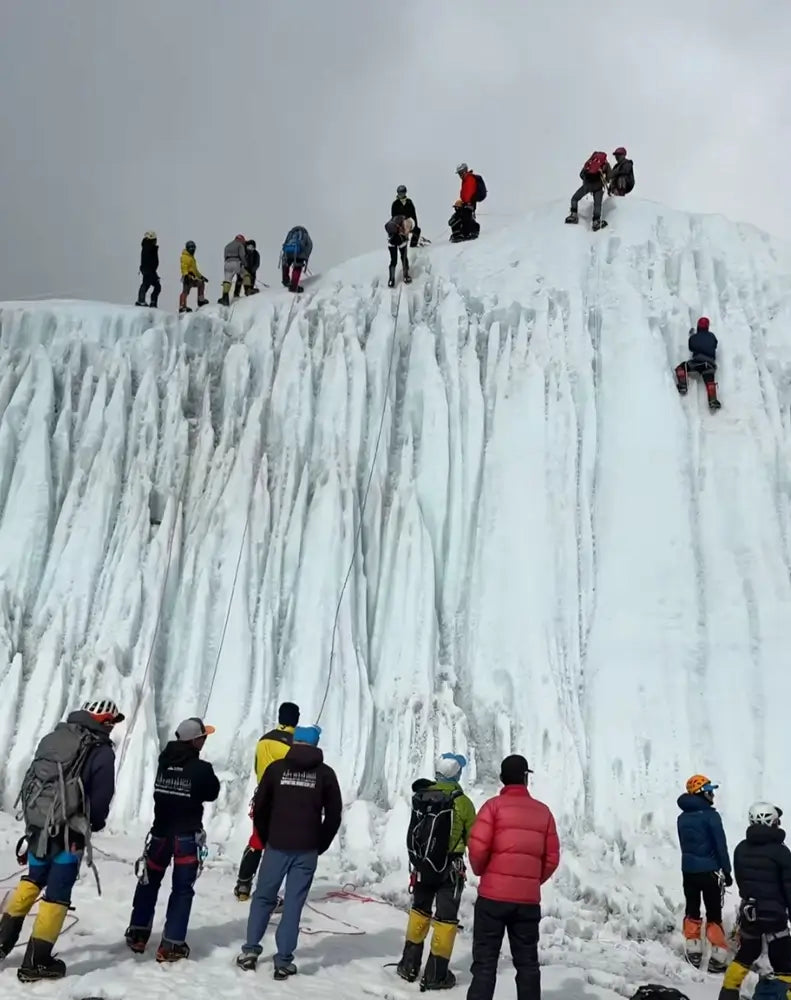
Technical Skills Cannot Be Learned at the Last Minute
The standard commercial Everest routes use fixed ropes, but that does not remove the need for skill. At minimum, climbers should be comfortable with:
- Walking in crampons
- Basic ice axe use
- Ascender use
- Descender use
- Changing safety clips
- Moving up and down fixed ropes
- Crossing ladders
- Rope team movement
- Glacier travel
- Handling equipment in thick gloves
These actions should become almost automatic. Above 7000 metres, people slow down. Fingers become clumsy. Thinking becomes dull. A task that takes one minute at low altitude may take much longer high on the mountain.
A formal mountaineering course, glacier travel course or alpine skills course is far better than learning only from videos.
Altitude Experience Is One of the Best Forms of Training
No gym can fully simulate 7000 metres. Hypoxic tents and altitude tools can help, but they do not replace real high-altitude experience.
A sensible progression before Everest might include:
- 4000 to 5000 metre high-altitude treks
- 5000 to 6000 metre snowy peaks
- 6000 metre technical or semi-technical climbs
- 7000 metre peaks
- Another 8000 metre peak or similar expedition experience
These climbs teach things a training plan cannot: how you sleep at altitude, whether you can eat, how bad your headaches are, whether you stay calm when hypoxic, and whether you can look after yourself in the cold.
Everest should not be the first place you discover your altitude response.
Mental Training Is Practical
Alan Arnette notes that physical training is also a chance to work on the mental side. That is true. Everest pressure is not abstract. It includes:
- Long waits at Base Camp
- Fatigue from repeated rotations
- Anxiety before the summit push
- Pressure when others succeed
- The possibility of expensive failure
- Turning around in bad weather
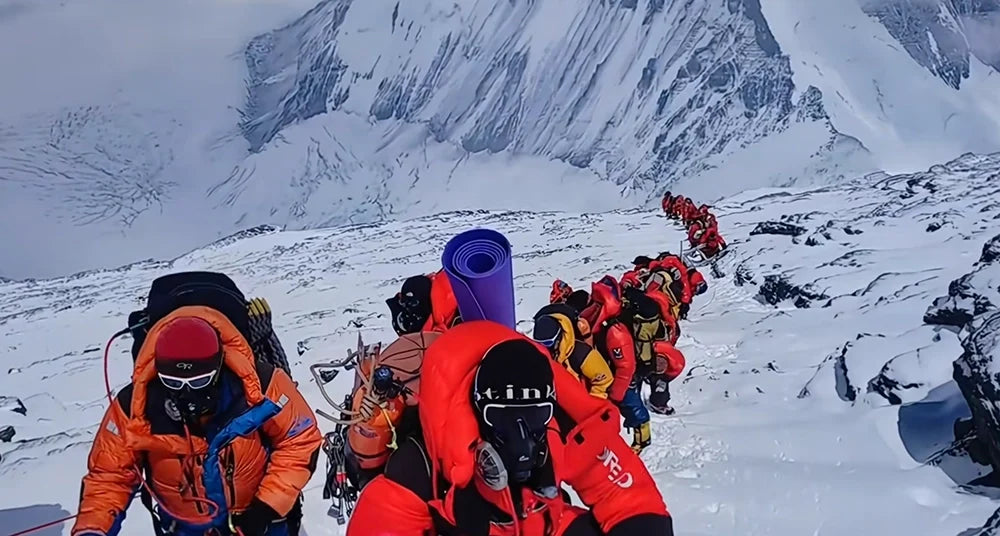
- Queues and delays high on the mountain
- Teammates becoming ill
Training can build patience deliberately. Long, steady days teach you to keep moving when bored and tired. Safe outings in poor weather teach discomfort management. Adjusting a disrupted training plan teaches flexibility.
Everest does not reward the most excited climber. It rewards the most stable one.
Recovery Is Part of Training
Some people know how to increase training but not how to recover. They arrive at the expedition already injured.
Recovery includes:
- Enough sleep
- Easy days each week
- Recovery weeks inside training cycles
- Attention to knee, Achilles, hip and back pain
- Enough protein and carbohydrate
- Mobility and flexibility work
- Avoiding hard training while sick
Uphill Athlete’s approach strongly values long-term consistency. One heroic workout does not matter much for Everest. Months of progressive training without serious injury matter far more.
A Realistic 12 Month Training Framework
This is not medical advice or a fixed plan for everyone, but it gives a useful structure.
12 to 9 Months Before
Build aerobic base. Train 4 to 5 times per week with easy running, hiking, cycling or stairs. Add basic strength work for legs, core and back.
9 to 6 Months Before
Increase weighted uphill work. Use weekends for long mountain days and slowly increase pack weight. Begin formal technical training if needed.
6 to 3 Months Before
Move into more specific preparation. Add long uphill sessions, back-to-back training days, weighted descents and boot training. Use one or more altitude climbs as tests if possible.
3 to 1 Month Before
Maintain quality but avoid injury. Complete key long days, check gear systems and continue technical refreshers. Do not suddenly increase training volume.
Final Weeks Before Departure
Reduce training volume and arrive healthy. Keep light aerobic work and mobility. Sleep well. This is not the time to make up for missed months.
Common Everest Training Mistakes
Only Running
Running helps, but Everest needs weighted uphill work, descent control and technical movement. A marathon runner is not automatically ready for Everest.
Starting Too Late
If serious training starts three months before departure, it is usually too late. Specific Everest preparation should be planned over 6 to 12 months.
Ignoring Strength
Strong aerobic fitness with weak legs and core can break down on descent or under a pack.
Skipping Technical Practice
Leaving fixed ropes, crampons and descenders entirely to guides is dangerous. You must perform basic tasks yourself.
Avoiding Altitude Testing
Low-altitude fitness must be tested in real altitude before Everest.
Conclusion
How do you train for Mount Everest? Not by finding the hardest possible workout, but by building a long-term, progressive and complete system. Aerobic endurance is the base. Weighted uphill movement is the core. Strength protects the body. Technical skills reduce mistakes. Altitude experience reveals the truth. Mental training keeps you steady under pressure.
The most important quality in Everest training is not madness. It is consistency. You build week by week, knowing when to increase load, when to rest and when to admit you are not ready yet.
Good Everest training does not simply make a climber look strong. It helps them stay clear, stable and willing to descend safely when tired.

Leave a comment
All comments are moderated before being published.
This site is protected by hCaptcha and the hCaptcha Privacy Policy and Terms of Service apply.