
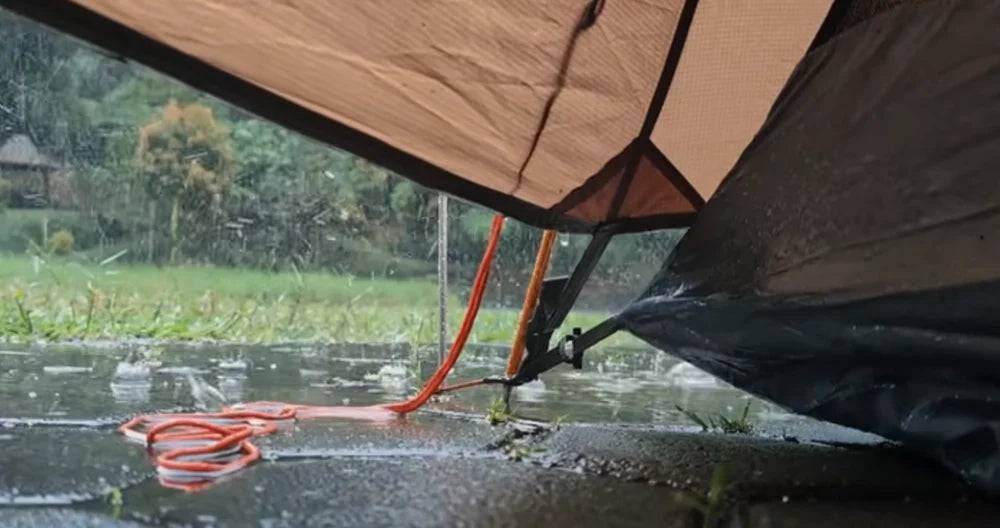
Accept That Some Things Will Get Wet
The first rule of how to keep camping gear dry in heavy rain is slightly annoying: you probably will not keep everything dry. In the UK, especially in Scotland, Wales, the Lake District or Dartmoor, rain can last long enough that boots, socks, waterproofs and tent flysheets all become damp eventually.
Experienced backpackers tend to stop fighting this too hard. The aim is not to keep every item perfect. The aim is to protect the things that matter most: sleeping bag, sleep clothes, insulation, electronics and anything you need to stay warm overnight.
That shift in thinking makes wet weather camping much easier. Some kit is allowed to be wet. Some kit must stay dry. The job is to keep those two worlds separate.
Start with a Pack Liner
A rain cover helps, but it is not enough on its own. Wind can lift it, water can run down your back, and rain often finds its way around the edges. A proper pack liner is more reliable.
Many hikers use a waterproof rucksack liner, a nylofume liner or a heavy duty bin bag inside the pack. Then they add dry bags for the most important items.
Keep these protected first:
- Sleeping bag
- Dry base layer
- Sleep socks
- Down or synthetic jacket
- Electronics
- First aid kit
- Spare gloves or hat
This is one of the simplest rainy camping tips UK hikers can use. Even if the outside of your rucksack is soaked, the inside system stays controlled.
Use a Wet and Dry Clothing System
The Reddit discussion on rainy camp routines had one very useful idea repeated in different ways: create a strict wet and dry system.
Your wet clothes are for walking. Your dry clothes are for sleeping. Do not blur the line.
That means if it is still raining and you need to leave the tent at night, you put the wet layers back on. It feels grim for a minute, but it protects the dry sleep kit. Once the sleeping clothes become damp, a wet multi-day trip becomes much harder.
A Simple Clothing System
For backpacking in heavy rain, a basic clothing system might look like this:
- Walking base layer
- Waterproof jacket
- Waterproof trousers
- Wet hiking socks
- Dry sleep base layer
- Dry sleep socks
- Warm layer kept in a dry bag
Some hikers carry three pairs of socks: one wet pair for walking, one dry pair for sleeping, and one spare or drying pair. It sounds fussy until the third day of rain, when dry socks feel like luxury.
Pitch the Shelter First
When you arrive at camp in heavy rain, do not unpack everything at once. The shelter comes first.
If your tent can pitch fly first, that is a big advantage. It lets you create a covered space before exposing the inner tent. If your tent pitches inner first, keep the flysheet easy to reach and move quickly. Some campers lay the fly over the inner while setting up to reduce rain falling into the bathtub floor.
Once the tent is up, put the rucksack in the vestibule and only open dry bags inside the protected space.
Choose Ground That Drains
The Camping and Caravanning Club and Eric Hanson both stress campsite choice, and they are right. Flat ground is not always best in heavy rain. A slight slope can help water move away from the tent.
Avoid:
- Hollows
- Stream edges
- Old water channels
- Muddy depressions
- Footprints that stick out beyond the tent
That last point matters. If a footprint sticks out from under the flysheet, rain can land on it and run under the tent. Tuck it fully underneath.
Keep a Dry Zone Inside the Tent
The inside of the tent should be treated like a small clean room. Wet boots, waterproof trousers and soaked jackets belong in the vestibule if possible. If they must come inside, keep them on one side and away from the sleeping bag.
A small cloth or quick-dry towel is very useful. It can wipe condensation from the fly, mop water from the floor, dry hands before touching sleeping gear, or clean a wet sleeping pad before bed.
For anyone searching how to dry clothes when camping, the honest answer is: sometimes you cannot. In cold, damp UK weather, wet socks and base layers may not dry overnight. Wring them out, hang them in the vestibule if you can, but do not let them drip over your sleeping gear.
Ventilation Still Matters
It feels natural to close every vent in heavy rain, but that often creates another problem: condensation. Wet clothing, breathing and damp ground all add moisture to the air. If the tent has no airflow, the inside becomes clammy.
Keep vents open when you can, especially on the sheltered side. If rain is blowing in one direction, open the opposite vent. A little airflow can make the difference between a damp tent and a soaked one.
OLPRO also points out the value of wet and dry zones, ventilation and waterproof storage. These are not glamorous tips, but they are the ones that actually work when the weather refuses to improve.
Pack Down in the Right Order
Morning rain is where many people lose the battle. The trick is to pack the driest things first.
A practical order looks like this:
- Pack sleeping bag into a dry bag.
- Pack dry sleep clothes.
- Pack electronics and warm layers.
- Put wet clothes back on.
- Pack inner tent if it is still mostly dry.
- Pack wet flysheet separately.
- Keep wet shelter parts in an outside pocket if possible.
If you can separate the wet fly from the dry inner, do it. Several experienced hikers on Reddit mentioned storing the wet fly outside the main pack or in its own bag. It stops one soaked item from spreading moisture through everything else.
Use Weather Breaks
On long wet trips, little drying windows matter. If the rain stops for ten minutes, use it. Lay out the flysheet. Hang socks on the outside of your pack. Open vents. Shake water from waterproofs.
Sun is nice, but wind alone helps. Even a short snack stop can remove some moisture from a tent fly or socks. It will not make everything bone dry, but it can stop dampness from building day after day.
Camping in the Rain Checklist
For wet UK trips, pack:
- Pack liner
- Dry bags
- Waterproof jacket
- Waterproof trousers
- Quick-dry clothing
- Spare socks
- Tent with reliable flysheet
- Small towel or cloth
- Headtorch
- Warm layer in a dry bag
- Separate bag for wet gear
- Footprint that fits properly
- Extra guylines or pegs
Final Thoughts
Learning how to keep camping gear dry in heavy rain is mostly about routine. Protect the sleep system first. Keep wet and dry clothing separate. Pitch the shelter before unpacking. Ventilate the tent. Pack dry items before wet ones.
There will still be damp socks, wet sleeves and mornings where nobody wants to put yesterday’s cold clothes back on. That is part of camping in British rain. But if your sleeping bag is dry, your sleep clothes are dry, and your tent is managed properly, the trip can still be comfortable enough to enjoy.

Leave a comment
All comments are moderated before being published.
This site is protected by hCaptcha and the hCaptcha Privacy Policy and Terms of Service apply.