
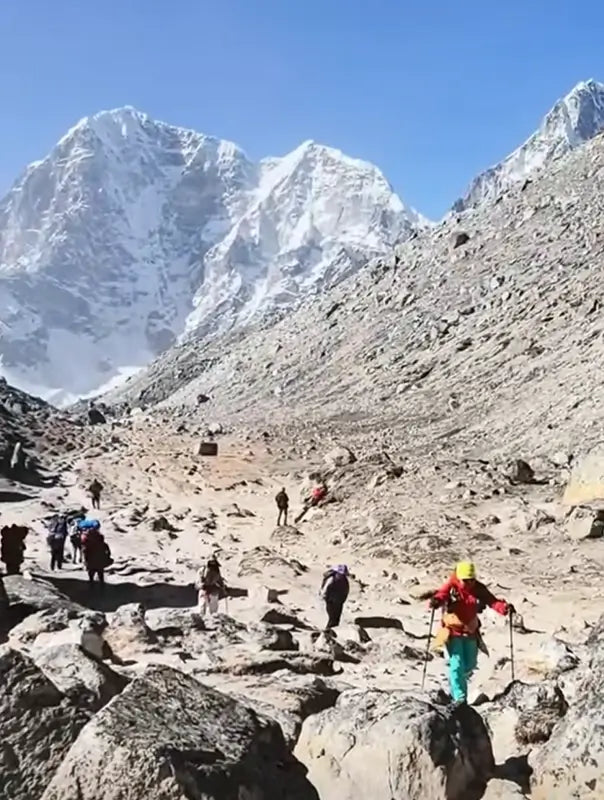
When people begin planning a trek in the Everest region, Everest Base Camp is usually the first name they hear. It has obvious power: walking to the foot of the highest mountain on Earth sounds like a life-list journey.
But after a little research, another name appears again and again: Gokyo Lakes.
Some trekkers say Gokyo is quieter than EBC. Others say Gokyo Ri gives a better Everest panorama than Kala Patthar. Some suggest combining Everest Base Camp, Cho La Pass and Gokyo Lakes into one loop. So which route should an ordinary trekker choose?
Quick Answer
If this is your first trip to the Khumbu and you have only 12 to 14 days, choose the classic Everest Base Camp Trek.
If you care more about lakes, wide mountain views and quieter trails, and you have at least 15 to 18 days, consider Gokyo Lakes or Everest Base Camp via Gokyo.
If you want both Base Camp and Gokyo Lakes, the classic choice is the EBC plus Cho La Pass plus Gokyo loop. But it is harder and needs better fitness, weather flexibility, guide support and extra time.
Simple version:
- For iconic meaning: choose Everest Base Camp
- For quieter scenery and lakes: choose Gokyo Lakes
- For the fuller Khumbu loop: choose EBC with Gokyo via Cho La Pass
- For a first high-altitude trek with limited time: do not rush into Cho La Pass
What Is the Classic EBC Route Like
The classic Everest Base Camp route usually starts in Lukla and passes through Phakding, Namche Bazaar, Tengboche, Dingboche, Lobuche and Gorak Shep before reaching Everest Base Camp. Most trekkers also climb Kala Patthar for sunrise views of Everest before descending.
The main attraction is reaching Base Camp. It is not the best viewpoint, but it is one of the most meaningful places in Himalayan trekking. You walk through Sherpa villages, monasteries, suspension bridges, moraine and high teahouses, then stand near the starting point of the south side Everest climbing route.
Classic EBC advantages:
- Mature route
- Strong teahouse and support system
- Easier guide and porter logistics
- Rich cultural experience
- More beginner-friendly for first-time EBC trekkers
- Usually possible in 12 to 14 days
Disadvantages:
- Crowded in peak seasons
- Return route repeats some sections
- Base Camp itself is not the best Everest viewpoint
- More commercialised than quieter routes
If your dream is to stand at Everest Base Camp, this route is hard to replace.
What Is the Gokyo Lakes Route Like
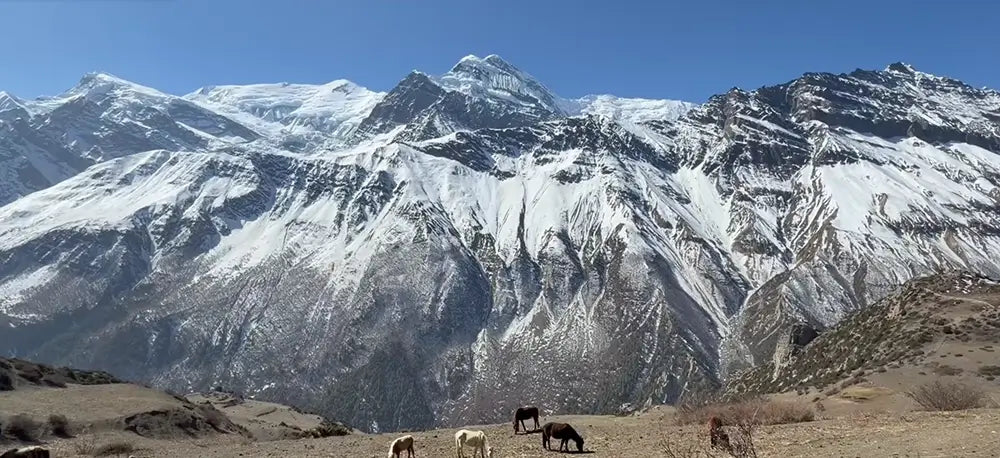
Gokyo Lakes sits on the western side of the Khumbu region. The route usually turns from Namche toward Dole, Machhermo and Gokyo, then climbs Gokyo Ri for mountain views. Lakes, glaciers and wide panoramas are the route’s signature.
Gokyo feels different from EBC. EBC has a pilgrimage feeling. Gokyo feels more spacious: turquoise lakes, the Ngozumpa Glacier and views of Everest, Lhotse, Makalu and Cho Oyu.
Magical Nepal’s route guide notes that Base Camp is the busiest trail, while Gokyo generally has quieter lodges and paths. For many trekkers, that matters. If you dislike crowded trekking seasons, Gokyo may feel better.
Gokyo Lakes advantages:
- Quieter trail
- Unique lake scenery
- Huge views from Gokyo Ri
- Fewer trekkers than classic EBC
- Excellent for photography
Disadvantages:
- Less iconic than Base Camp
- If you skip EBC, you miss the famous destination
- Altitude acclimatisation still matters
- Some areas have fewer services
- Combining with EBC usually involves Cho La Pass
If your goal is the best scenery in the Everest region, Gokyo deserves serious attention.
Gokyo Ri or Kala Patthar
This is a common question.
Kala Patthar, on the classic EBC route, is around 5545 metres. It gives a close view of Everest, Nuptse, Lhotse and Pumori, especially at sunrise.
Gokyo Ri is around 5357 metres and gives a wider panorama. You see Gokyo Lakes, the Ngozumpa Glacier and a broader sweep including Everest, Lhotse, Makalu and Cho Oyu. Many trekkers feel Gokyo Ri gives the better overall Everest region view.
Comparison:
- Kala Patthar: closer to Everest and more classic
- Gokyo Ri: wider, more layered and includes lakes and glacier
- Photography: Gokyo Ri often feels richer
- Emotional value: Kala Patthar belongs to the EBC story
If you want a close Everest viewpoint, choose Kala Patthar. If you want a broad Himalayan panorama, Gokyo Ri is excellent.
Difficulty Comparison
Classic EBC is already challenging, but Gokyo or EBC via Gokyo is usually harder.
Much Better Adventures notes that the Everest Base Camp trek takes around 11 to 12 days and covers about 106 km, while the route to Everest Base Camp via Gokyo Lakes takes about 15 to 16 days and covers around 135 km. The longer route is therefore harder and needs more time.
If you trek only to Gokyo Lakes without crossing Cho La Pass, the difficulty may be similar to EBC, though still high-altitude and demanding. If you combine EBC and Gokyo via Cho La Pass, the difficulty increases.
Reasons include:
- Longer itinerary
- More time at altitude
- Cho La Pass may have snow or ice
- More remote sections
- Weather matters more on high passes
- Glacier and rocky sections are more complex
- Stronger fitness is needed
Nepal Trekking Routes describes the Gokyo Cho La Pass EBC route as challenging because it crosses Cho La above 5400 metres and includes snowy pass terrain and high mountain paths.
Is Cho La Pass for Everyone
No.
Cho La Pass is usually listed around 5368 to 5420 metres depending on the source. It connects Dzongla and Dragnag and is the key high pass between EBC and Gokyo.
Cho La can involve:
- Very cold starts
- Snow and ice
- Loose rock
- Steep ascent and descent
- Icy trail conditions
- Changing weather
- Long walking hours
- High-altitude fatigue
In good weather with a competent guide, it can be a brilliant day. In poor weather, fresh snow, ice or weak team condition, it can become risky.
First-time high-altitude trekkers should not add Cho La only because it sounds more complete. Ask yourself:
- Do I have altitude trekking experience?
- Can I walk for 15 to 18 days?
- Can I accept a route change?
- Will I have a guide?
- Do I have enough warmth and grip?
- Will I skip the pass if weather is bad?
If the answers are uncertain, classic EBC or Gokyo Lakes without Cho La may be better.
How Much Time Do You Need
A rough guide:
Classic EBC
Usually 12 to 14 days from Kathmandu. Best for first-timers, limited time and iconic Base Camp goals.
Gokyo Lakes
Often around 12 to 14 days, depending on Gokyo Ri, Renjo La and pacing. Best for lakes, views and quieter trails.
EBC Plus Gokyo via Cho La Pass
Usually 15 to 18 days, and 18 to 20 days is more comfortable. Best for fit trekkers with altitude experience and extra time.
Traileasy’s Gokyo via Cho La account notes that a full Everest Base Camp plus Gokyo Lakes via Cho La itinerary usually takes about 15 to 18 days including acclimatisation; their full loop took 17 days. That is realistic.
Do not force a Gokyo loop into a classic EBC time frame. The scenery is worth time.
Crowds and Atmosphere
Classic EBC is busy in peak seasons. In spring and autumn, you meet trekkers, climbers, porters, yaks and full teahouses. Some people enjoy that shared energy.
Gokyo is usually quieter. Fewer trekkers, quieter lodges and more open valley sections suit people who like solitude and photography.
But quieter also means:
- Fewer service options
- Accommodation may need more planning
- Less support if plans change
- Weather alternatives may be more limited
Do you want the famous busy trail, or a quieter valley? Neither is wrong.
Scenery Comparison
EBC Route
Strong for culture, villages, monasteries, the symbolic Base Camp destination and Kala Patthar’s close Everest view.
Gokyo Lakes Route
Strong for lakes, glacier, wide mountain views, Gokyo Ri panorama and a quieter valley.
EBC Plus Gokyo Loop
The richest scenery, but also longer, harder and more weather dependent.
Some trekkers say EBC is the name and Gokyo is the view. That is not completely fair, but it captures the difference. Base Camp has meaning. Gokyo is often more visually beautiful.
Cost Difference
Classic EBC is usually cheaper because it is shorter and more established. Gokyo Lakes alone may be similar if the duration is similar. EBC plus Cho La Pass plus Gokyo costs more because it takes longer.
Extra costs come from:
- More guide and porter days
- More teahouse nights
- More meals and hot drinks
- Better gear for high pass conditions
- Weather buffer days
- Insurance that covers altitude and rescue
If budget is tight, classic EBC is easier to manage. The Gokyo loop is better when you have more time and flexibility.
Who Should Choose Classic EBC
Choose classic EBC if:
- It is your first Everest region trek
- Base Camp is your main goal
- You have about two weeks
- You want a simpler route
- You want mature logistics
- Your altitude experience is limited
- You can accept crowds
Classic EBC is the safest entry point. It is not the quietest or always the most scenic, but it is meaningful and well supported.
Who Should Choose Gokyo Lakes
Choose Gokyo if:
- Scenery matters more than the Base Camp name
- You love lakes and glaciers
- You prefer fewer people
- You have done EBC before or do not need Base Camp
- You have 12 to 14 days or more
- You accept fewer services
- You want the Gokyo Ri panorama
Gokyo is the quieter, more scenic choice.
Who Should Choose EBC Plus Gokyo
Choose the loop if:
- You have at least 15 to 18 days
- You are fit
- You have altitude trekking experience
- You will hire a guide
- You accept that Cho La may be skipped in bad weather
- You want Base Camp and Gokyo Lakes together
- You have buffer days
- Your insurance covers altitude and rescue
It may be one of the best Khumbu trekking experiences, but it is not for rushed or underprepared trekkers.
My Advice
For a first high-altitude trek in Nepal:
Less than 14 days: choose classic EBC.
15 to 18 days and good fitness: consider EBC plus Gokyo, but be ready to skip Cho La if needed.
Not attached to Base Camp and want quieter scenery: choose Gokyo Lakes.
Already done EBC: choose Gokyo or Three Passes next.
Worried about altitude and complexity: do not add Cho La on your first trek.
Do not be tempted only by the “more advanced” route. The right route is better than the impressive route.
Conclusion
Everest Base Camp vs Gokyo Lakes: which should you choose? It depends on your goal.
If you want the iconic Base Camp experience, choose EBC. If you want wider views, quieter trails and turquoise high-altitude lakes, choose Gokyo Lakes. If you have enough time, fitness and flexibility, the EBC via Cho La Pass to Gokyo loop can be extraordinary.
But whichever route you choose, remember that this is still high-altitude Himalayan trekking. Route choice is not about proving yourself. It is about walking safely, clearly and with enough energy to enjoy where you are.
The best Everest region trek is not always the longest one. It is the one that fits you well enough that, when you finish, you know you chose wisely.

Leave a comment
All comments are moderated before being published.
This site is protected by hCaptcha and the hCaptcha Privacy Policy and Terms of Service apply.