
Many trekkers preparing for Everest Base Camp spend days choosing boots, down jackets, sleeping bags and itineraries, but leave insurance until the last moment. Some even think: “It is only trekking, not climbing Everest. Surely normal travel insurance is enough?”
That can be a costly mistake.
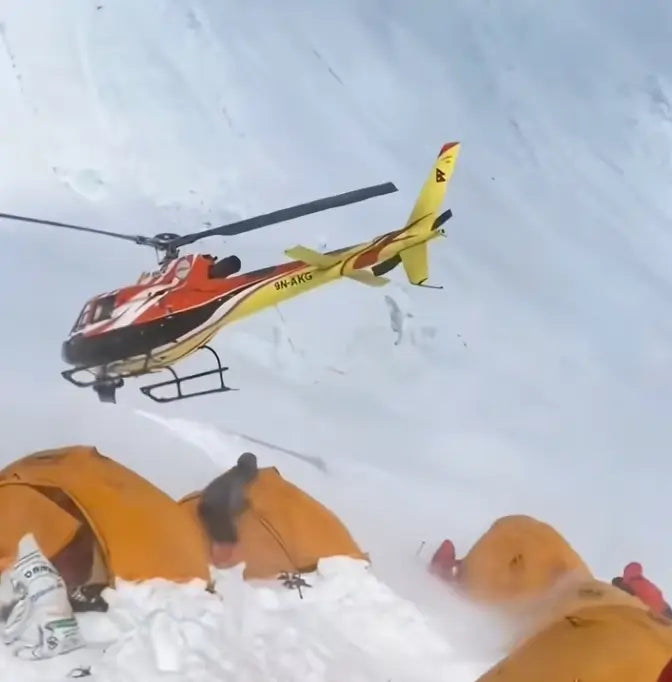
The Everest Base Camp Trek is not ordinary travel. Base Camp is around 5364 metres, Kala Patthar is around 5545 metres, and there are no roads to the higher villages. If severe altitude sickness, injury, infection, lung problems or inability to walk occurs, a normal vehicle cannot simply collect you. Descent or helicopter evacuation may be needed.
Insurance is not there to make you reckless. It is there so a medical emergency does not become a financial emergency too.
Quick Answer
Everest Base Camp Trek insurance should cover:
- Trekking above 5500 metres, preferably 6000 metres or more
- Altitude sickness, including AMS, HAPE and HACE
- Emergency helicopter evacuation in Nepal
- Medical treatment and hospital costs
- Medical repatriation or return transport
- Trip cancellation, interruption and delay
- Lukla flight delays or cancellations
- 24-hour emergency assistance
- Trekking clearly included, not excluded
- Clear claim documents and pre-authorisation process
In simple terms, ordinary travel insurance is often not enough. EBC needs insurance that clearly covers high-altitude trekking and helicopter rescue.
Why Normal Travel Insurance May Not Be Enough
Many standard travel policies are designed for city travel, sightseeing and light outdoor activity. EBC includes several factors insurers treat carefully:
- Altitude above 5000 metres
- Remote mountain terrain
- Possible helicopter evacuation
- Altitude sickness risk
- Trekking and backpacking activity
- Lukla flight disruption
Some policies say “hiking” or “trekking” but limit altitude to 3000, 4000 or 5000 metres. Adventure Master Trek’s 2026/2027 insurance guide warns that some standard plans cap trekking at lower altitudes and are not suitable for EBC.
Do not rely on marketing language. Read the altitude limit and activity exclusions.
What Altitude Should Be Covered
Everest Base Camp is around 5364 metres. Kala Patthar is around 5545 metres. For many trekkers, Kala Patthar is the highest point. Your policy should cover at least above 5500 metres.
A safer option is insurance covering trekking up to 6000 or 6500 metres. Many recent EBC insurance guides recommend 6000 metre cover because it includes Kala Patthar and gives a little margin.
Before buying, confirm:
- Does the policy cover trekking up to 6000m?
- Is a licensed guide required?
- Is Kala Patthar covered?
- Is mountaineering excluded?
- Are trekking poles and standard trail walking allowed?
- Are snow, ropes or non-standard routes excluded?
EBC is trekking, not technical climbing, but insurers may classify risk differently. Written confirmation is best.
Why Helicopter Evacuation Matters
Above Lukla, much of the EBC route has no road access. Namche, Dingboche, Lobuche and Gorak Shep cannot be reached by normal vehicles. If illness or injury becomes serious, helicopter evacuation may be the fastest option.
Adventure Altitude Treks notes that helicopter evacuation from the Khumbu region can cost around USD 5000 to 8000 without suitable insurance. Other recent guides mention several thousand dollars for evacuations from places such as Gorak Shep.
Exact cost depends on location, weather, operator, aircraft, medical needs and follow-up transport. The point is simple: one evacuation can cost more than the entire trek.
Is a Helicopter Always Available
No.
Helicopter rescue depends on:
- Weather
- Cloud
- Wind
- Visibility
- Landing location
- Patient condition
- Insurance pre-authorisation
- Communication
- Aircraft availability
Airdynasty’s Himalayan helicopter evacuation guide explains that rescue decisions depend on weather windows, medical assessment and insurance documentation. A helicopter is not a ride-share service. Even with insurance, rescue may require doctor approval, coordination and flyable conditions.
Do not treat helicopter cover as permission to take bigger risks. The safer strategy is early symptom recognition and timely descent.
Altitude Sickness Cover Is Essential
Altitude sickness is one of the main health risks on EBC. Mild AMS may mean headache, nausea and poor sleep. Severe illness can become high-altitude pulmonary edema or high-altitude cerebral edema, requiring urgent descent and medical care.
Your policy should clearly cover:
- Acute Mountain Sickness
- High Altitude Pulmonary Edema
- High Altitude Cerebral Edema
- Emergency evacuation due to altitude illness
- Medical treatment in Nepal
- Hospitalisation
- Medical repatriation
Nepal Hiking Team’s 2026 insurance guide recommends policies that clearly include 5500 metre plus coverage, AMS, HAPE, HACE, helicopter evacuation and 24-hour emergency support.
If your policy only says “medical emergency” without altitude or altitude sickness language, ask the insurer directly.
Medical Insurance vs Rescue Membership
Some travellers buy travel medical insurance. Others buy rescue memberships such as Global Rescue-style evacuation services. They are not always the same.
Travel Medical Insurance
This may cover medical bills, hospital care, emergency treatment, trip cancellation, interruption, baggage and some evacuation costs. Details vary widely.
Rescue or Evacuation Membership
This may focus on transporting you from a remote area to medical care. It may coordinate rescue and evacuation, but not necessarily pay every medical bill or travel loss.
Ideally, understand what each product covers. Do not assume a rescue membership pays for all treatment. Do not assume normal medical insurance automatically pays for mountain helicopters.
Will You Need to Pay Upfront
It depends on insurer, rescue provider, local helicopter company and policy wording. Some insurers or assistance companies can pay directly. Others may require you to pay first and claim later.
ASC360 and similar services advertise direct emergency evacuation payment, reducing upfront cash pressure. But execution varies by nationality, insurer and plan.
Before departure, ask:
- Is helicopter rescue pre-authorisation required?
- Is direct billing available?
- Must I pay first?
- Is emergency assistance 24 hours?
- Can contact happen by WhatsApp or satellite phone?
- What documents are required for claims?
- Can my guide call on my behalf?
Do not wait until you are sick at altitude to read the policy PDF.
Common Insurance Exclusions
Many problems hide in exclusions.
Check for exclusions such as:
- Altitude above a stated limit not covered
- Unguided trekking not covered
- Non-standard routes not covered
- Mountaineering or rope use excluded
- Pre-existing conditions excluded
- Alcohol-related incidents excluded
- Unauthorised evacuation not covered
- Failure to contact insurer promptly
- Natural disaster or political closure limitations
- Medical care covered but evacuation excluded
- Evacuation covered but follow-up treatment excluded
EBC is not technical climbing, but insurers may classify high altitude or remote trekking as adventure activity. Buy the EBC-appropriate version, not the cheapest general travel plan.
Buying Checklist
Before buying, ask the insurer and save written answers:
- Does this cover the Everest Base Camp Trek?
- Does it cover Kala Patthar at around 5545 m?
- What is the maximum trekking altitude?
- Does it cover helicopter evacuation in Nepal?
- Does it cover altitude sickness?
- Are HAPE and HACE covered?
- Is a licensed guide required?
- Are Lukla flight delays covered?
- Is trip interruption covered?
- Is rescue pre-authorisation required?
- Is direct payment to rescue providers possible?
- Is the emergency line available 24 hours?
- What claim documents are needed?
- Is medical repatriation included?
- Is there a deductible or excess?
If the answer is vague, keep asking. Vague answers are not useful in an emergency.
Documents to Prepare Before Departure
Buying insurance is not enough. Organise the details and save them offline.
Prepare:
- Policy PDF
- Emergency assistance phone number
- Policy number
- Passport copy
- Emergency contact
- Guide and agency contacts
- Medical history and allergy notes
- Medication list
- Credit card or backup funds
- Offline itinerary and maps
- Doctor letters or prescriptions if needed
Share key details with your trekking partner or guide. If altitude sickness becomes severe, you may not be able to call, explain policy wording or fill forms yourself.
What Happens During an Emergency
Every operator works differently, but the usual logic is:
- Symptoms or accident are identified
- Guide assesses whether walking descent is possible
- If serious, insurer or rescue coordinator is contacted
- Medical advice or pre-authorisation is obtained
- Helicopter or ground descent is arranged
- Patient is moved to Lukla, Kathmandu or medical facility
- Diagnosis, receipts, flight records and reports are saved
- Claim process begins
Often, the first response is descent, not helicopter. If you can safely walk lower, your guide may prioritise that. Helicopters are usually for serious cases or when walking descent is unsafe.
Insurance Is Not an Adventure Licence
Having insurance does not mean you should compress the itinerary, ignore altitude symptoms, trek in unsuitable weather, walk unknown routes alone or keep ascending when unwell.
Insurance is the last line of defence. The first line is still:
- Choose a sensible itinerary
- Keep acclimatisation days
- Walk slowly
- Hire a reliable guide
- Report symptoms honestly
- Descend early when needed
- Watch the weather
- Avoid pushing to collapse
The best insurance is the one you never need to use.
Common Mistakes
Buying Only by Price
Cheap policies may lack altitude cover, helicopter evacuation or altitude sickness coverage.
Missing the Altitude Limit
A policy may cover hiking only up to 3000 or 4000 metres. That is useless for EBC.
Not Confirming Helicopter Evacuation
Medical cover and evacuation cover are not the same. Look for helicopter evacuation.
Not Saving Emergency Contacts
Mountain internet is unreliable. Save contacts offline.
Trekking Independently When the Policy Requires a Guide
If the policy requires a licensed guide and you do not have one, claims may be affected.
Assuming Credit Card Insurance Is Enough
Many credit card travel policies exclude high altitude and adventure activities. Check line by line.
Conclusion
How do you choose insurance for the Everest Base Camp Trek? Do not look for the most expensive policy. Look for the right policy. It must match the reality of EBC: altitude above 5000 metres, Kala Patthar, acute mountain sickness, HAPE, HACE, helicopter evacuation in Nepal, medical treatment and emergency assistance.
Good insurance will not make you braver. It will make you calmer. It means you do not keep walking upward because you are afraid of rescue costs, and it gives your guide a clearer route if something goes wrong.
The best EBC trek is one where your insurance is properly prepared and never used. You walk slowly, acclimatise well, return safely to Lukla, and the policy stays quietly saved on your phone. That is the outcome you want.

Leave a comment
All comments are moderated before being published.
This site is protected by hCaptcha and the hCaptcha Privacy Policy and Terms of Service apply.