
Many people planning the Everest Base Camp Trek ask the same question: do I really need a guide and porter?
On a map, the EBC route can look fairly straightforward. Lukla to Namche, Dingboche, Lobuche, Gorak Shep and then Base Camp. There are tea houses, villages and other trekkers along the way. It is easy to think that carrying your own bag and walking independently will save money.
But the Everest Base Camp Trek is not an ordinary countryside walk. It takes place at high altitude, in remote terrain, with changing weather, unreliable flights and limited medical support. Hiring a guide and porter is not only about budget. It is also about safety, comfort and responsibility.
Quick Answer
If this is your first high-altitude trek in Nepal, hiring at least a licensed local guide is strongly recommended. If your budget allows, hiring a porter or porter-guide can make the trek safer and more enjoyable.
Reasons include:
- A guide helps with permits, accommodation, route decisions and problems
- A guide can recognise altitude sickness earlier
- A porter reduces load so you can acclimatise better
- Lukla flight delays and tea house shortages are easier with local help
- Nepal trekking rules have changed in recent years, so current advice matters
- Hiring local staff responsibly supports mountain communities
If you are experienced, familiar with Nepal and physically strong, a more independent style may be possible only if current rules allow it. For most ordinary trekkers, guide and porter support makes EBC more manageable.
Can You Trek to EBC Independently
This question has become complicated in recent years.
Since 2023, Nepal has strengthened guide requirements for many national park and conservation area treks. Enforcement and regional details can vary, and Everest region information is sometimes confusing because of Khumbu local permits and changes to TIMS card requirements.
As of 2026, many Nepal trekking operators say foreign trekkers on the EBC route should travel through a registered agency and with a licensed guide. Follow Alice’s 2026 permit guide notes that the EBC and wider Khumbu region no longer requires a TIMS card and instead uses local Khumbu permits. Other operators emphasise stricter limits on solo trekking.
The safest advice is this: do not rely only on old travel blogs. Before departure, confirm the latest rules with a registered Nepal trekking agency, local checkpoints or official tourism sources.
The fact that the rules change is itself a good reason to use local support.
What Does a Guide Actually Do
A good EBC guide does much more than walk in front of you.
Manages the Pace
One of the biggest EBC risks is going too fast. A guide helps set daily speed, rest stops, acclimatisation days and decisions about whether to continue. A good guide often tells you to slow down.
Handles Permits and Checkpoints
The Everest region requires national park and Khumbu local permits. A guide knows the checkpoints, documents and local procedures.
Arranges Tea Houses
In peak season, rooms can be tight in Namche, Dingboche, Lobuche and Gorak Shep. Guides know the lodges, call ahead where possible and help solve accommodation issues.
Watches for Altitude Sickness
This may be the most important role. Trekkers often dismiss early symptoms. A guide who has seen altitude sickness many times can tell when “normal tiredness” may be turning into a problem.
Deals With Flights and Delays
Lukla flights depend on weather. Delays, airport changes, new tickets and extra hotel nights can become stressful without local help.
Adds Cultural Context
The EBC route passes Sherpa villages, monasteries, mani stones and prayer flags. A guide helps you understand the valley instead of treating it as a GPS track.
What Does a Porter Do
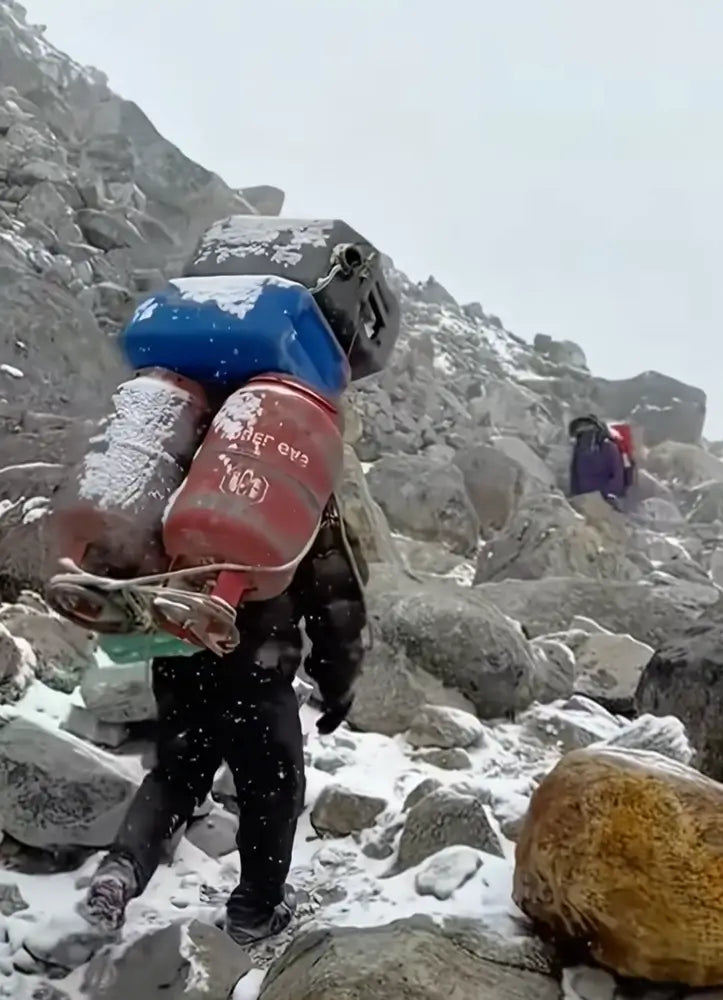
A porter’s job is simple but valuable: carrying your main luggage. But the benefit is not only comfort.
If you carry 12 to 15 kg or more for days of uphill and downhill walking, the extra effort becomes much harder above 4000 metres. By Dingboche, Lobuche and Gorak Shep, altitude makes the same weight feel heavier.
A porter carries your duffel or main bag, while you carry a daypack with water, snacks, rain gear, warm layers, medicine, camera and documents. This lets you spend more energy on walking and acclimatising.
Hiring a porter is not weakness. For many first-time EBC trekkers, it is sensible energy management.
Guide Porter or Porter-Guide
Guide
A guide focuses on route, communication, safety, accommodation, pacing and altitude monitoring. They usually speak better English and have more responsibility, but may not carry your main luggage.
Porter
A porter mainly carries luggage. English may be limited, and they may not provide route explanation or safety management, but their work is physically demanding and essential.
Porter-Guide
A porter-guide sits between the two. They may guide, communicate at a basic level and carry a limited load. This can be a good budget option for trekkers with lighter luggage.
But a porter-guide should not be treated as a cheap way to get a full professional guide and heavy load carrier in one person. Workload and weight must be fair.
How Much Do Guides and Porters Cost
Several 2026 Nepal trekking sources list EBC guide rates around USD 25 to 40 per day, porter rates around USD 20 to 30 per day, and porter-guide rates around USD 25 to 35 per day. Prices vary by experience, language ability, season, insurance and whether you hire through a company.
Typical reference ranges are:
- Guide: about USD 25 to 35 per day
- Porter: about USD 20 to 25 per day
- Porter-guide: about USD 25 to 35 per day
Do not choose only the lowest price. Confirm whether the rate includes staff food, accommodation, insurance, clothing and transport. A rate that is too cheap may mean someone else is paying the hidden cost.
How Much Should a Porter Carry
This matters.
Some sources mention porters carrying around 20 kg, while traditional loads in the region can be heavier. From a responsible travel perspective, lighter is better. Many reputable companies limit porter loads around 20 kg. If two trekkers share one porter, each main bag should often be kept around 10 kg.
Do not treat a porter as unlimited luggage storage. Every extra kilo is carried by another human being at altitude.
Benefits of Hiring a Guide and Porter
Better Safety
Someone is watching your condition, helping you slow down and responding to problems.
Less Stress
Permits, rooms, route choices, flights and tea house communication become easier.
Better Energy Management
A porter reduces load so you can focus on altitude and steady movement.
More Cultural Understanding
A guide can explain villages, monasteries, customs, mountain names and local stories.
Support for Local Economy
Hiring local staff responsibly helps keep trekking income in the Khumbu region.
Downsides of Hiring Support
There are also disadvantages:
- Higher cost
- Slightly less freedom
- Need to coordinate in advance
- A poor guide can affect the experience
- Tipping and expectations need clarity
So the real question is not only whether to hire someone. It is who you hire and how responsibly you do it.
How to Choose a Good Guide
Ask these questions:
- Are they licensed?
- Do they know the EBC route well?
- Do they have altitude sickness experience?
- How good is communication?
- Are they hired through a registered company?
- What is included in the fee?
- Do they have insurance?
- Will they insist on descent if needed?
- Will they walk at your pace?
- What do past clients say?
A good guide does not simply say, “No problem, we will reach Base Camp.” A good guide says, “If your body struggles, we slow down or descend.”
How to Treat Porters Responsibly
Basic respect includes:
- Keep luggage weight reasonable
- Tip fairly
- Confirm they have proper clothing and shoes
- Do not add extra weight at the last minute
- Pack wet or dirty items properly
- Respect agreed meeting times
- Remember they are workers, not servants
Porters often move quickly, but that does not mean the work is easy. Altitude, cold, load and repetition are real.
What If Your Budget Is Limited
If you cannot afford both guide and porter, consider:
- Hire a guide and carry a light bag yourself
- Hire a porter-guide with a strictly limited load
- Join a small group to share guide cost
- Pack less rather than underpay staff
- Choose standard tea houses instead of luxury services
Do not save money by overloading a porter, skipping tips or hiring uninsured staff. The saving is small, but the ethical cost can be high.
Who Should Definitely Hire Support
Guide and porter support is especially useful if:
- It is your first trip to Nepal
- It is your first trek above 5000 metres
- You are unsure about altitude sickness
- You have limited English communication confidence
- Your schedule is tight
- Your fitness is moderate
- You have knee or back issues
- You want cultural context
- You do not want to manage logistics every day
Even experienced trekkers should confirm current rules before choosing an independent style.
Conclusion
Do you need a guide and porter for the Everest Base Camp Trek? For most first-time EBC trekkers, yes, it is worth it. A guide makes route, safety and altitude management more reliable. A porter makes energy use more sensible and leaves you more capacity to enjoy the mountains.
Hiring support does not mean handing over all responsibility. You still need to train, walk slowly, report symptoms honestly, respect altitude and treat local workers fairly.
The best EBC arrangement is not the cheapest or the most luxurious. It is one where you, your guide, your porter and the trail have a clear and respectful relationship: safe, fair and steady, all the way toward Everest Base Camp.

Leave a comment
All comments are moderated before being published.
This site is protected by hCaptcha and the hCaptcha Privacy Policy and Terms of Service apply.