
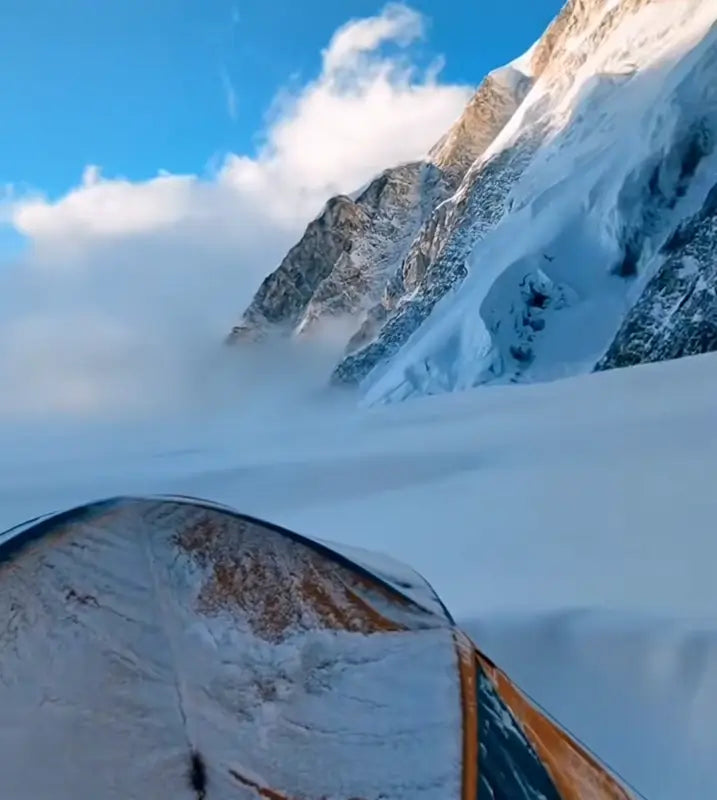
The Everest Base Camp Trek is not only for young backpackers. Every year, trekkers in their fifties, sixties and beyond reach EBC. Some families also complete the trek with older children or teenagers. It is not a technical climb. It does not require crampons, ropes or oxygen bottles. But it is also not an ordinary family holiday.
The real question is not simply whether seniors and kids can do it. The real question is whether they have suitable health, a slow enough itinerary, reliable guides, proper insurance and a family decision-making style that puts descent before pride.
Everest Base Camp is around 5364 metres, and Kala Patthar is around 5545 metres. That altitude is serious even for healthy adults, so seniors and children need extra caution.
Quick Answer
Seniors and children can trek to Everest Base Camp, but it should not be casual.
General advice:
- There is no simple upper age limit for seniors, but medical checks and a slower itinerary matter
- Children are generally better suited from around 10 to 12 years old and above
- A family EBC trek should usually take 14 to 16 days or more
- Namche and Dingboche acclimatisation days are essential
- A licensed guide and porter support are strongly recommended
- Insurance must cover above 5500 metres, altitude sickness and helicopter evacuation
- Kala Patthar should be optional
- If altitude symptoms worsen, stop ascending or descend
In simple terms, EBC can be a family journey, but it should not be planned like a normal holiday.
Is There an Official Age Limit
For the Nepal side Everest Base Camp Trek, there is usually no simple official minimum or maximum age. But no official age limit does not mean every age is suitable.
Highland Expeditions notes that while there is no official age limit, many experts do not recommend the standard EBC trek for children under 10 because they need enough maturity to understand safety rules, communicate symptoms and handle the physical and mental demands of high-altitude trekking. Trek Me Nepal also suggests that 10 to 12 years old is a more sensible minimum range for the standard route.
For seniors, there is no fixed upper limit. Many trekkers over 50 or 60 can consider EBC if they are healthy, trained and prepared. But older trekkers should take medical advice seriously rather than relying only on feeling “generally fit”.
Main Risks for Seniors
For seniors, the main concerns are not only fitness. Recovery, heart and lung health, joints and altitude response matter.
Key concerns include:
- Heart and blood pressure conditions
- Chronic illness
- Previous altitude sickness
- Knee and hip pain
- Stability on descents
- Sleep and recovery
- Cold tolerance
- Medication and insurance limits
Himalayan Hero’s recent guide for trekkers over 50 describes EBC as a long walk rather than a technical climb. It notes that trekkers may walk 5 to 6 hours daily while oxygen levels are much lower than at sea level. A longer itinerary, extra acclimatisation and patience make the trek more achievable for older trekkers.
For seniors, speed is not the strength. Stability is the strength.
Main Risks for Children
Children face different risks. They may have strong energy and recover quickly, but they may not describe body changes clearly.
A child might say:
“I don’t want to walk.”
“I feel sleepy.”
“My stomach feels bad.”
“My head feels weird.”
That may be ordinary tiredness, or it may be altitude sickness. Adults must observe carefully rather than dismissing it as moodiness.
Risks for children include:
- Poor symptom description
- Hiding discomfort to avoid disappointing parents
- Lower tolerance for cold and boredom
- Irregular eating
- Mood changes after poor sleep
- Reluctance to stop when the group continues
- Altitude symptoms mistaken for behaviour problems
A Reddit discussion about bringing 11 and 12 year olds to EBC included many warnings that this is not a normal holiday and that traditional EBC has many things that can go wrong. That does not mean no family should go, but the caution is worth hearing.
What Age Is Better for Kids
A practical recommendation is: around 10 to 12 years or older, with previous hiking experience and the ability to communicate clearly.
Better conditions for a child include:
- Previous multi-day hikes
- Ability to walk 4 to 6 hours
- Ability to carry a light daypack
- Acceptance of simple teahouses and shared toilets
- Regular eating and drinking
- Clear reporting of headache, nausea or dizziness
- No habit of hiding discomfort to compete
- Parents willing to change plans
If a child has little hiking experience or is too young to describe symptoms, EBC is not a good first choice. Consider Poon Hill, Langtang, a slow Annapurna Base Camp itinerary or lower family treks first.
How Should the Itinerary Be Planned
Family or senior EBC treks should not use the shortest itinerary. A standard 12 to 14 day plan is already moderate. With seniors or children, 14 to 16 days or more is better.
Best Heritage Tour uses a 16-day EBC itinerary for seniors and kids, treating the slower pace as a safety margin. That approach makes sense. Extra days are not wasted. They protect health, morale and flexibility.
Plan for:
- Two nights in Namche
- Two nights in Dingboche
- No rushing from Lukla to Namche
- Earlier starts and slower walking higher up
- Short stay at Gorak Shep
- Everest Base Camp and Kala Patthar depending on condition
- Kala Patthar as optional
- Buffer days for Lukla flights
A family EBC trek should be reassessed daily, not forced to match a rigid schedule.
Should You Hire a Guide and Porter
Yes, strongly.
For seniors and kids, a guide is especially valuable:
- Controls pace
- Watches altitude symptoms
- Arranges teahouses
- Adjusts itinerary
- Handles Lukla flights
- Coordinates rescue
- Helps cultural communication
- Gives professional advice when family emotions cloud judgement
Porter support also matters. Seniors and children should not carry heavy bags. Let porters carry main luggage while trekkers carry only water, warm layers, snacks, medicine and personal essentials.
Choose a small group or private guide willing to slow down for seniors and children, not a large group that pushes everyone on a fixed pace.
Insurance Is Essential
Every family member needs suitable insurance.
Check that it covers:
- Trekking above 5500 metres
- Kala Patthar
- Altitude sickness
- Age of children or seniors
- Pre-existing conditions
- Helicopter evacuation
- Medical treatment
- Return flight changes
- Trip interruption
- 24-hour emergency assistance
Seniors with chronic illness or medication must declare conditions honestly. Children must be covered for high-altitude trekking. Do not wait until a helicopter is needed to discover the policy excludes children at altitude.
Health Checks Before Departure
Seniors should consider:
- Heart and lung assessment
- Blood pressure check
- Chronic condition review
- Medication review
- Knee, hip and ankle assessment
- Doctor advice on high-altitude travel
Children should have:
- Paediatric consultation
- Suitability for altitude discussed
- Regular medicines prepared
- Advice on altitude medication
- Diamox or similar medication discussed only with a doctor
Do not give altitude medication to children or seniors based on tea-house advice from another trekker.
Training
Senior training should include:
- Regular brisk walking or low-intensity cardio
- Hill or stair training
- Leg strength
- Downhill knee control
- Trekking pole practice
- Light daypack walking
- Long walks in real boots
Child training should include:
- Weekend hikes
- Gradually longer walking days
- Light daypack practice
- Trekking pole practice
- Learning to describe symptoms
- Experience with simple outdoor food and toilets
- Building the habit of saying when something feels wrong
Families should try back-to-back hiking days before Nepal to see how everyone feels on the second day.
Watch Altitude Symptoms Closely
Seniors and children need careful daily observation.
Ask daily:
- Do you have a headache?
- Do you feel sick?
- Do you want to eat?
- How did you sleep?
- Are you walking steadily?
- Is breathing unusual?
- Is cough worse?
- Are hands and feet too cold?
- Is mood suddenly strange?
Children may not volunteer symptoms. Seniors may hide problems to avoid slowing the family. Agree before the trek that reporting symptoms is responsible, not disappointing.
Descend urgently if there is:
- Repeated vomiting
- Poor coordination
- Confusion
- Breathlessness at rest
- Worsening cough with chest tightness
- Blue lips
- Extreme weakness
- Worsening headache
Altitude sickness is not solved by encouragement. Descent is often the most reliable treatment.
Should Seniors and Kids Climb Kala Patthar
Kala Patthar should be optional.
It is around 5545 metres and usually involves a cold pre-dawn climb. The view is excellent, but it is not required to complete the EBC experience. If someone slept poorly, has headache, nausea or obvious fatigue in Gorak Shep, skipping Kala Patthar is sensible.
Decision guide:
- Strong condition: try Kala Patthar
- Moderate condition: walk partway and reassess
- Poor condition: skip and descend
- Child unwilling: do not force it
- Senior with knee or breathing issues: do not risk it
Everest Base Camp is meaningful enough. Do not push the family into risk for a viewpoint.
Practical Family Tips
Choose spring or autumn main seasons.
Use a private guide or small group.
Plan at least 14 to 16 days.
Do not let seniors or kids carry heavy packs.
Reach teahouses early.
Bring a few favourite snacks for kids.
Pack warmer gear than you think.
Record symptoms daily.
Do not treat the trek like a summit mission.
Buy proper insurance for everyone.
Teach children that descending is not failure.
The best family EBC atmosphere is not parents pushing children to reach a target. It is everyone learning to respect the mountain together.
Who Should Not Attempt Family EBC
Choose a gentler trek if:
- Children are too young to communicate symptoms
- A senior has uncontrolled heart, blood pressure or breathing problems
- Schedule is very tight
- You refuse to hire a guide
- Budget cannot cover proper insurance
- The family cannot accept turning back
- Fitness differences are too large
- The goal is only a photo
- Nobody has multi-day hiking experience
Nepal has many beautiful treks. EBC does not have to be the first one.
Alternative Routes
If EBC is too much, consider:
- Poon Hill Trek
- Ghorepani Ghandruk Trek
- Slower Langtang Valley trek
- Slower Annapurna Base Camp trek
- Everest View Trek to Namche or Tengboche
- Tibet side Everest Base Camp sightseeing if policy and health allow
The Everest View Trek is a good option for families who want to see Everest without going all the way to Base Camp. Namche, Tengboche and the Everest View Hotel area give strong mountain scenery with less altitude pressure.
Conclusion
Can seniors and children trek to Everest Base Camp? Yes, but carefully. Age alone is not the only limit. The real factors are health, experience, pace, guide support, insurance, altitude awareness and willingness to change plans.
For seniors, EBC requires medical checks, slow pacing and joint protection. For children, it requires enough age, communication ability, patience and conservative parental judgement. For the whole family, safety must come before reaching Base Camp.
A good family EBC trek should not feel like a forced victory. It should be a shared mountain experience: walking slowly, caring for each other, seeing a different world and learning when to give way gently to altitude.

Leave a comment
All comments are moderated before being published.
This site is protected by hCaptcha and the hCaptcha Privacy Policy and Terms of Service apply.