
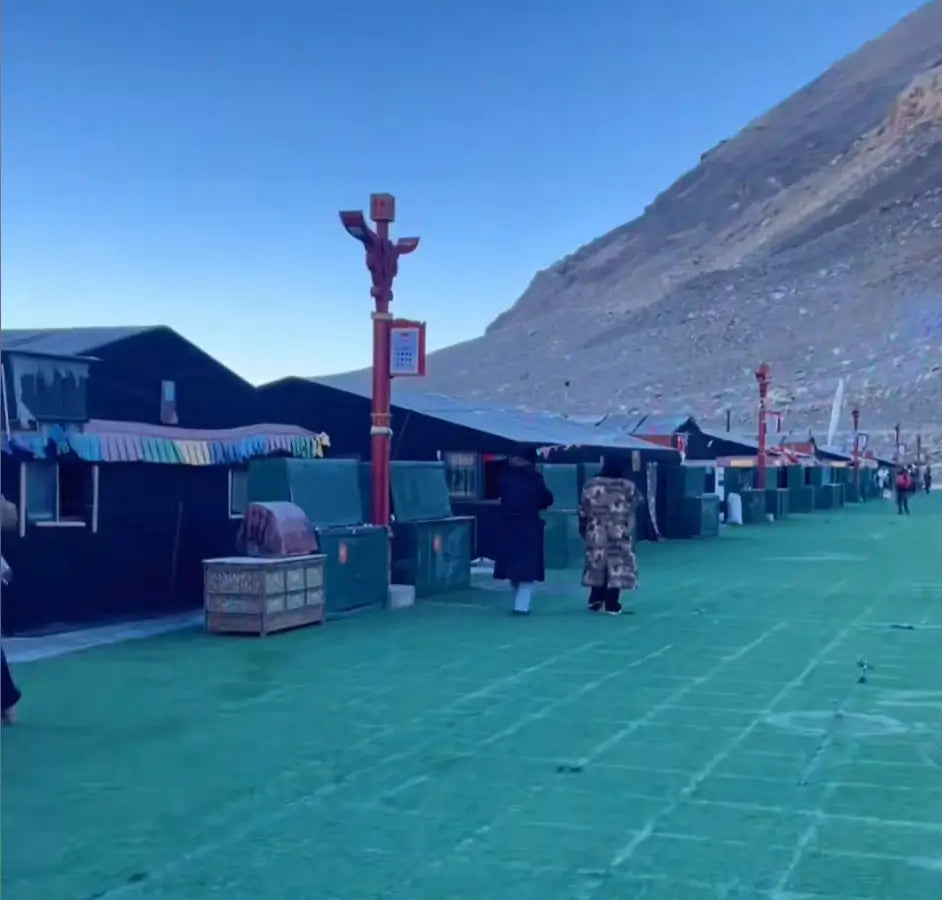
The Everest Base Camp Trek is not usually a camping trek. Most trekkers sleep in teahouses, the mountain lodges found in villages along the route. They usually offer simple rooms, a communal dining room, hot meals, hot drinks, toilets and sometimes showers, WiFi and charging.
But if you imagine EBC teahouses as hotels, you will be disappointed. They are more like a mix of guesthouse, restaurant and mountain community living room. Lukla, Phakding and Namche have better facilities. Higher up, rooms become simpler, toilets more basic, charging and hot water more expensive, and nights much colder.
Understanding teahouse life is part of preparing for EBC. How well you sleep, eat and stay warm affects your energy and acclimatisation.
Quick Answer
Teahouses on the Everest Base Camp Trek are usually like this:
- Simple twin rooms with wooden beds and thin mattresses
- Shared bathrooms, becoming more basic higher up
- A dining room with a stove, usually the warmest place at night
- Hot showers, WiFi and charging usually cost extra
- Prices rise and choices shrink with altitude
- Peak-season rooms in Namche, Dingboche, Lobuche and Gorak Shep can fill up
- A warm sleeping bag is strongly recommended
- Daily showers high on the route are not always wise
In simple terms, EBC teahouses are not luxurious, but they are practical. They allow ordinary trekkers to reach Base Camp without camping.
What Is a Teahouse
On the EBC route, teahouse and lodge often mean the same thing. Originally, many were simple places offering tea, food and basic beds. As the Everest Base Camp Trek grew, many became established mountain accommodation stops.
Ace the Himalaya describes teahouses as the backbone of Everest trekking accommodation, usually simple wooden buildings with a dining area and guest rooms. That is accurate. A teahouse is not only a place to sleep. It is a food stop, information point, social space and part of high-altitude life.
In the evening, trekkers gather around the dining room stove. Some read maps, some charge phones, some write journals, and some stare happily into a mug of hot lemon. Higher on the trail, a warm room and a bowl of soup can feel like real luxury.
What Are the Rooms Like
Most rooms are simple: two single beds, thin mattresses, pillows, blankets and sometimes a small table or hooks. Rooms usually have no heating. Walls are thin, and soundproofing is limited.
In lower villages such as Lukla, Phakding and Namche, you may find rooms with attached bathrooms, power sockets, hot showers and better bedding. Namche has some lodges that feel almost like small mountain hotels.
But in Tengboche, Dingboche, Lobuche and Gorak Shep, accommodation becomes more basic. Gorak Shep is high, remote and limited, and often has the simplest lodging conditions on the route.
The main value is not comfort in the hotel sense. It is having somewhere sheltered to sleep, eat and recover.
Why You Should Bring a Sleeping Bag
Many teahouses provide blankets, but you should not rely entirely on them.
First, rooms are very cold higher up. Dining rooms may have a stove, but bedrooms usually do not.
Second, blanket supply and quality can vary in busy seasons.
Third, your own sleeping bag is warmer and more hygienic.
Most EBC trekkers bring a warm sleeping bag. For main trekking seasons, a comfort rating around -10°C is often reasonable; cold sleepers and winter trekkers need warmer bags. A sleeping bag liner also adds slight warmth and improves cleanliness.
Putting a hot water bottle inside your sleeping bag is one of the small joys of teahouse life.
Toilets and Showers
Toilet conditions change with altitude.
Lower teahouses may have western toilets, flush toilets and cleaner shared bathrooms. Higher up, toilets may become manual flush, using a bucket of water. In more basic places, squat toilets or simpler systems are common.
The EBC Trek Guide notes that popular lower-altitude teahouses often have flush toilets and hot showers, while higher locations shift toward manual-flush toilets and eventually more basic facilities.
Hot showers usually cost extra. Recent traveller reports describe hot showers in places such as Deboche costing around NPR 600 to 800, with prices varying by altitude and lodge. Himalayan Glacier also notes that showers, charging and WiFi commonly involve extra charges.
A practical approach: take a shower in Namche or Dingboche if you want one; skip showers in Lobuche and Gorak Shep unless conditions are genuinely good. Getting chilled high on the route is worse than being unwashed for a few days.
Charging and WiFi
Many teahouses offer charging, but usually for a fee. The higher you go, the more it costs and the less reliable it becomes. Solar power, generators and battery systems all depend on weather and demand.
WiFi is similar. Namche usually has better connectivity. Higher up, it can be slow, expensive or unavailable. Next Trip Nepal’s 2026 teahouse guide notes that many teahouses above Namche use paid WiFi cards, often around NPR 500 to 1500 depending on altitude and lodge setup, with reliability dropping above Dingboche.
Tips:
- Bring a large power bank
- Use battery saver mode
- Download offline maps and documents
- Do not depend on daily internet
- Keep camera batteries warm inside your sleeping bag
- Save insurance and emergency contacts offline
EBC is a trail where internet may exist, but it is not a reliable office.
What Food Do Teahouses Serve
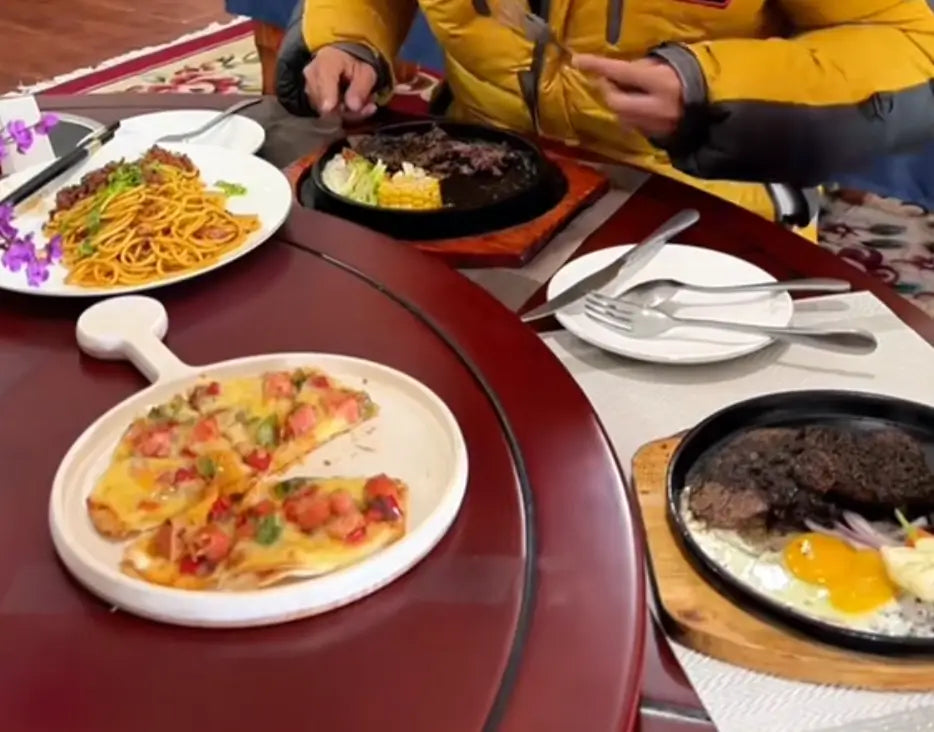
Teahouse menus are often more varied than first-time trekkers expect, especially lower down. Common foods include:
- Dal bhat
- Fried rice
- Fried noodles
- Vegetable soup
- Potatoes
- Pasta
- Eggs
- Porridge
- Tibetan bread
- Pancakes
- Tea, coffee, hot lemon and hot chocolate
Follow Alice notes that teahouse meals are often generous, while hot drinks are paid separately. That feels very true on the trail: hot drinks are tempting, and they quietly add to your budget.
Dal bhat is the classic reliable meal. It usually includes rice, lentil soup, vegetables and curry. In many places, refills are possible. Higher up, choices shrink, prices rise and fresh ingredients become less reliable.
Food Safety Tips
On the EBC route, simple habits help:
- Eat hot cooked food
- Be careful with raw food
- Consider avoiding meat higher up
- Do not rely only on snacks
- Eat something even when appetite is low
- Drink hot fluids, but budget for them
- Carry a few favourite bars or electrolytes
Food transport becomes harder with altitude. Many experienced trekkers eat mostly vegetarian or simple cooked meals to reduce stomach risk. A stomach problem is annoying anywhere. Above 4500 metres, it can seriously affect strength and altitude judgement.
Do You Need to Book Teahouses in Advance
April, May and October are busy. Namche, Dingboche, Lobuche and Gorak Shep can fill up. Mosaic Adventure notes that in busy months, private rooms can sell out early and some trekkers may need to share.
If you go with a guide or operator, they usually arrange or call ahead based on experience. If you travel independently where allowed, you need flexibility. High villages do not have endless rooms.
Peak-season advice:
- Finalise your itinerary early
- Let a guide help with rooms
- Accept simple or shared rooms
- Do not arrive very late
- Bring your own sleeping bag
- Bring earplugs for thin walls and snoring
EBC teahouses are not about perfect accommodation. At altitude, a bed and hot food are already valuable.
Why Everything Costs More Higher Up
Trekkers often notice that hot water, Coke, WiFi and charging become expensive higher on the trail. In the Khumbu, there is a real reason.
The higher you go, the harder transport becomes. Supplies arrive by people, yaks, mules or helicopters. Fuel, food, gas cylinders, drinks, tissue, bedding and building materials do not arrive by road.
So a pot of hot water high on the route is not just hot water. It includes fuel, transport, labour and scarcity. Understanding this makes the prices easier to accept and waste harder to justify.
Teahouse Etiquette
Teahouses are usually family or community-run, not chain hotels. A little respect matters.
- Eat dinner and breakfast where you sleep
- Do not book cheap rooms and bring all your own food
- Close doors to keep cold air out
- Do not occupy the stove area all evening if others need warmth
- Share charging space politely
- Do not leave rubbish in rooms
- Keep quiet at night
- Respect owners and staff
- Dispose of wet wipes and waste properly
Small behaviour says a lot about a trekker.
The Good Side of Teahouse Life
Teahouse trekking has many quiet pleasures.
You do not pitch a tent every night.
You get hot meals.
You meet trekkers from many countries.
You hear guides and locals talking.
You learn to live with fewer choices.
You discover how satisfying a cup of tea, a bed and a warm room can be.
Many people remember not only the mountains, but also the smell of a dining room stove, the wind outside the windows, and strangers discussing tomorrow’s route over soup.
The Hard Side of Teahouse Life
There are also discomforts.
Rooms are cold.
Toilets are basic.
Walls are thin.
WiFi is slow.
Showers cost extra.
Food repeats higher up.
Peak season is crowded.
Sleep may be poor.
Charging may require patience.
These are not necessarily signs of bad service. They are part of high-altitude mountain travel. Knowing this in advance makes the experience much easier.
How to Stay More Comfortable
Useful habits include:
- Bring a warm sleeping bag and liner
- Carry earplugs
- Use a headlamp for night toilet trips
- Keep water, tissues and warm clothes near your bed
- Use dry bags to organise clothing
- Shower less higher up
- Keep batteries in your sleeping bag at night
- Change into dry clothes after arrival
- Watch items near the stove so they do not burn
- Bring a few favourite snacks or tea bags
EBC does not require luxury. It rewards small practical systems.
Conclusion
What is accommodation like on the Everest Base Camp Trek? Simple, basic, sometimes cold, but good enough to support a remarkable journey. Teahouses offer beds, hot food, warm drinks, stove rooms, local knowledge and a little mountain hospitality. They are not hotels, but many trekkers remember them more clearly than hotels.
With the right expectations, you will not be disappointed by basic toilets, cold rooms or slow WiFi. You will understand that at around 5000 metres, sitting in a wooden dining room with a mug of hot lemon is already a serious comfort.
Teahouse life on the Everest Base Camp Trek teaches a quiet lesson: deep in the mountains, we need less than we think.

Leave a comment
All comments are moderated before being published.
This site is protected by hCaptcha and the hCaptcha Privacy Policy and Terms of Service apply.