
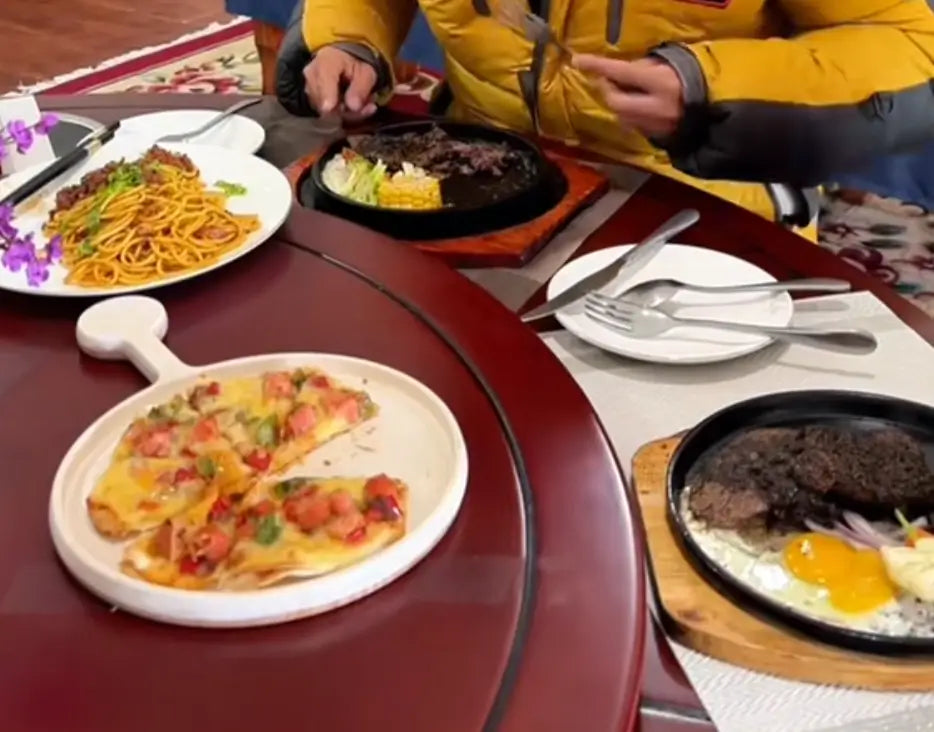
One of the simplest and most important daily questions on the Everest Base Camp Trek is this: what will you eat and drink?
At home, food may be a matter of preference. On the EBC trail, it affects energy, stomach comfort, altitude judgement and whether you can walk steadily the next day. You do not need to calculate every gram of nutrition like an athlete, but you do need to understand that altitude reduces appetite, increases fluid loss and makes the stomach less forgiving.
The good news is that the teahouse food system on the Everest Base Camp route is well developed. Most trekkers can eat three meals a day in teahouses, with hot drinks, soup, water and basic snacks available along the trail. The harder truth is that food becomes more expensive, less varied and sometimes less appealing as you climb higher.
Quick Answer
Typical Everest Base Camp Trek food and water looks like this:
- Breakfast: porridge, eggs, toast, pancakes, Tibetan bread, tea or coffee
- Lunch: dal bhat, fried rice, noodles, soup or potatoes at a teahouse on the trail
- Dinner: hot meals, soup, pasta or dal bhat at your overnight teahouse
- Water: choose boiled water, filtered water or water treated with purification tablets
- Daily fluids: many guides suggest around 3 to 4 litres including water, tea and soup
- Be careful with meat higher on the trail
- Bottled water becomes expensive and creates plastic waste
- Do not drink untreated tap water or stream water
In simple terms, EBC food should be hot, cooked, simple, clean and enough.
Can You Get Three Meals a Day
Most EBC trekkers can eat three seated meals per day in teahouses. EBC Trek Guide notes that for most of the route, trekkers can get breakfast, lunch and dinner in tea houses, with only occasional remote sections requiring adjustments.
The usual rhythm is:
- Breakfast at the teahouse where you slept
- Lunch at a village or teahouse along the route
- Dinner at the teahouse where you stay overnight
This is also why teahouses may offer cheap rooms but expect you to eat there. Much of their income comes from meals and hot drinks rather than the room itself.
If you walk with a guide, they will usually suggest lunch stops based on the day’s route. Do not skip lunch just to move faster. By the time you feel deeply hungry at altitude, you may already be running low.
What to Eat for Breakfast
EBC breakfasts are simple but usually enough to begin the day.
Common options include:
- Porridge or muesli
- Eggs
- Toast
- Tibetan bread
- Pancakes
- Potatoes
- Tea
- Coffee
- Hot lemon
- Hot chocolate
If your appetite is low, porridge, eggs and a hot drink are a steady combination. High mornings are cold, and warm food often feels much better than dry bread. Do not start a walking day with only coffee. Above 4000 metres, poor fueling catches up quickly.
What to Eat for Lunch
Lunch is usually taken in a teahouse along the trail. Lower down, menus are more varied. Higher up, choices become simpler.
Common lunch options include:
- Dal bhat
- Fried rice
- Fried noodles
- Vegetable soup
- Potatoes
- Pasta
- Momos
- Garlic soup
- Eggs or pancakes
Lunch should not be too heavy, oily or cold. You still need to walk in the afternoon. Many trekkers choose dal bhat, fried rice, noodle soup or potatoes because they are warm, steady and easy to digest.
What to Eat for Dinner
Dinner is usually eaten at your overnight teahouse. After a full walking day, a hot meal matters for both body and mood.
Good dinner choices include:
- Dal bhat
- Vegetable soup
- Noodle soup
- Fried rice
- Fried noodles
- Potato curry
- Pasta
- Porridge
- Hot drinks
Avoid very oily, spicy or unfamiliar meals if your stomach is uncertain. You need to walk again tomorrow. In places like Lobuche and Gorak Shep, appetite often drops, so soup, porridge and dal bhat can be more reliable than complicated dishes.
Why Dal Bhat Is So Popular
On the EBC trail, you will hear the joke: “Dal bhat power, 24 hour.”
Dal bhat is the classic Nepali meal, usually rice, lentil soup, vegetables, curry and pickle. It is popular because it works well for trekking:
- Good calories
- Plenty of carbohydrates
- Warm and soupy
- Usually easy to digest
- Available almost everywhere
- Often refillable
- Vegetarian friendly
Stingy Nomads and many EBC food guides describe dal bhat as a staple for porters and trekkers. It is not fancy, but on a cold trail, a hot plate of dal bhat can feel more useful than a stylish Western meal.
Can You Eat Meat
Yes, but be careful higher up.
Lower villages such as Lukla, Phakding and Namche have more food options, including meat. Higher up, refrigeration and transport become more limited, and freshness is harder to guarantee. Many experienced trekkers avoid meat above Namche and choose vegetarian or egg-based meals instead.
This does not mean every meat dish is unsafe. It means the consequences matter. A stomach problem in Kathmandu may cost half a day. A stomach problem in Dingboche or Lobuche may affect altitude decisions and descent safety.
When unsure, choose hot, cooked and simple vegetarian food.
Is Vegetarian or Vegan Food Easy
Vegetarian food is quite easy on the EBC route. Dal bhat, fried rice, fried noodles, soup, potatoes, Tibetan bread, porridge and vegetable curry are common. Vegan trekking is possible too, but you need to clearly request no eggs, milk, butter or milk tea.
Practical tips:
- Learn to say no egg, no milk, no butter
- Bring familiar energy bars or nuts
- Use dal bhat and soups as staples
- Do not depend too much on fresh vegetables higher up
- Watch protein and calorie intake
Vegetarian food is not the hard part. Eating enough when altitude reduces appetite is harder.
How Much Should You Drink
Hydration is one of the most important daily habits on the EBC trek. The air is dry, breathing is faster and walking uses fluid. Nepal Hiking Team recommends around 3 to 4 litres of fluids per day, including tea, soup and drinking water. Himalayan Trekkers gives similar advice and notes that frequent sipping is better than drinking large amounts at once.
A practical pattern:
- Drink something warm before starting
- Carry 1.5 to 2 litres during the day
- Have tea or soup at lunch
- Sip regularly in the afternoon
- Drink hot water or hot lemon in the evening
- Avoid drinking a huge amount right before bed
Do not wait until you are thirsty. At altitude, thirst can be unreliable.
Where Does Drinking Water Come From
There are several common options.
Boiled Water
Boiled water from teahouses is one of the most common and reliable options. Ace the Himalaya describes teahouse boiled water as a common safe choice. You can fill a heat-safe bottle, let it cool and drink it during the day. At night, a hot bottle can also warm your sleeping bag.
Purification Tablets
Tablets are light and inexpensive. The downside is waiting time and taste. Ace the Himalaya notes that common iodine or chlorine-based tablets often require around 30 minutes before drinking.
Filters or UV Purifiers
Filter bottles, compact filters and UV purifiers are common. They reduce bottled water use and can be cost-effective. But cold temperatures, batteries, frozen filters and cleaning requirements need attention.
Bottled Water
Bottled water is available but not ideal as your main option. It becomes expensive higher up and adds plastic waste. Some current water-cost guides report prices near Gorak Shep reaching several hundred Nepali rupees per litre, sometimes around USD 5 per litre. A reusable bottle with boiled or purified water is usually better.
Can You Drink Tap or Stream Water
No, not untreated.
Himalayan Recreation’s food and water guide advises against drinking untreated tap water or natural water sources, recommending bottled water, boiled teahouse water or water treated with tablets or filters. Clear mountain water is not automatically safe. It may contain bacteria, parasites or contamination.
A stomach illness can ruin the trek. Do not risk the whole journey for one untreated bottle.
Coffee Alcohol and Soft Drinks
Coffee is available, but do not treat it as hydration. Sleep is already poor at altitude, and afternoon coffee may make it worse.
Alcohol is best avoided, especially above Namche. It can affect sleep, dehydration and acclimatisation. Save the celebration beer for the way down.
Soft drinks are available but become expensive higher up and should not be your main fluid source. An occasional Coke is fine, but daily hydration should come from water, tea, soup and hot drinks.
How to Avoid Stomach Problems
On EBC, the two things trekkers fear most are altitude sickness and stomach trouble. Sometimes they overlap and make symptoms hard to interpret.
Reduce risk by:
- Eating hot cooked food
- Avoiding meat higher up
- Avoiding raw salad
- Not drinking untreated water
- Washing or sanitising hands before meals
- Avoiding very oily meals
- Carrying basic stomach medicine
- Avoiding unfamiliar foods
- Choosing soup, porridge and rice when appetite is low
Trip Nepal’s food safety advice also emphasises cooked food, soups, boiled water and mild meals as safer options. It is not glamorous, but it works.
What If You Lose Appetite at Altitude
Around Dingboche, Lobuche or Gorak Shep, many trekkers stop feeling hungry. The food may be fine, but swallowing it feels hard. This is common.
Try:
- Starting with soup
- Eating smaller amounts more often
- Choosing porridge or noodle soup
- Eating simple carbs like rice, potatoes and noodles
- Carrying a few favourite snacks
- Avoiding heavy oily food
- Telling your guide if appetite changes sharply
If you cannot eat at all and also have severe headache, nausea, vomiting or poor coordination, consider altitude illness. Do not dismiss it as pickiness.
Daily Food Budget
Food costs rise with altitude. Many trekkers budget around USD 25 to 50 per day for meals and hot drinks. A Reddit trekker report from the EBC and Cho La Pass area described dal bhat and meals becoming more expensive with altitude and suggested daily food spending around USD 25 to 30 as a starting point, with higher budgets for more drinks or larger meals.
This is not a fixed rule, but it shows the reality: EBC food should not be budgeted like cheap city street food. Every meal has been carried uphill.
What Snacks Should You Bring
You do not need to carry all your food from home, but a few familiar snacks are useful:
- Energy bars
- Nuts
- Electrolyte tablets
- Chocolate
- Dried fruit
- Ginger sweets or throat lozenges
- Favourite tea bags
- Small protein or drink mixes
Do not overpack. Teahouses provide real meals. Snacks are for low appetite, long gaps, early Kala Patthar starts and small energy boosts.
Conclusion
What should you eat and drink on the Everest Base Camp Trek? The most reliable answer is not fancy sports nutrition. It is hot meals, cooked food, clean water and a steady rhythm. Dal bhat, soup, rice, noodles, potatoes, porridge and hot drinks may sound simple, but they are the fuel that works on the EBC trail.
For water, use boiled teahouse water, purification tablets, filters or UV treatment, and try to avoid relying on bottled water. Sip regularly through the day, using tea and soup as part of your fluid intake.
EBC is not a food tour, but it may teach you the value of a hot meal better than any restaurant could. High on the trail, a bowl of soup, a plate of dal bhat and a warm bottle of water can feel like exactly enough.

Leave a comment
All comments are moderated before being published.
This site is protected by hCaptcha and the hCaptcha Privacy Policy and Terms of Service apply.