
Quick Answer
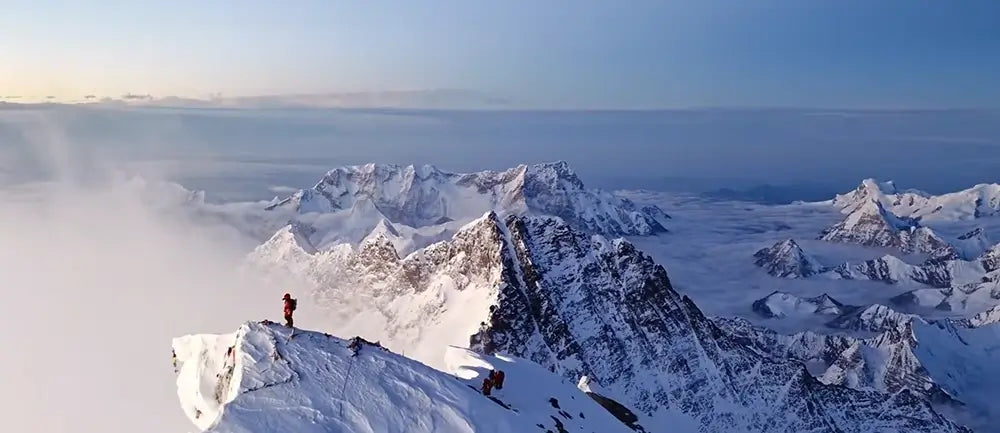
Mount Everest is called the highest mountain in the world because its summit reaches 8848.86 metres above sea level. That makes it the highest point on Earth when mountains are measured by elevation.
The important phrase is “above sea level.” Everest is not necessarily the tallest mountain from base to summit, and it is not the largest mountain by volume. It is the highest because its summit has the greatest elevation above mean sea level.
How Tall Is Mount Everest
The widely accepted height of Mount Everest is 8848.86 metres, or about 29031.7 feet. This figure was jointly announced by China and Nepal in 2020 after updated surveying work.
Older figures such as 8848 metres, 8848.13 metres or 8844.43 metres may still appear in books and online articles. These differences come from measurement methods, snow depth, survey technology and the reference system used.
So if someone asks how tall is Mount Everest, the best current answer is 8848.86 metres above sea level.
What Does Highest Mountain Mean
When people say Everest is the highest mountain in the world, they usually mean highest by elevation. Elevation is the height of a place above mean sea level.
By that standard, Everest is number one. Its summit rises from the Himalayas on the border between Tibet in China and Nepal. The mountain already stands in one of the highest regions on Earth, and its peak reaches higher above sea level than any other mountain.
This is why the question why is Mount Everest the highest mountain depends on the definition. If the standard is elevation above sea level, Everest wins.
How Is Everest Measured
Early measurements of Everest relied on trigonometric surveying. Surveyors observed the mountain from distant points, measured angles and distances, then calculated its height.
Modern surveys are more advanced. They can include:
- GNSS satellite positioning
- Gravity measurements
- Snow depth radar
- Levelling data
- Geoid models
- Summit observations
Measuring Everest is not as simple as taking a GPS device to the top and reading the number. Surveyors must account for the shape of the Earth, sea level reference systems, snow cover, gravity variation and measurement error.
That is why Everest’s official height is the result of careful geodetic work, not just a symbolic number.
Is Everest Still Growing
Mount Everest is part of the Himalayas, which formed as the Indian Plate collided with the Eurasian Plate. That tectonic collision is still happening, so the region remains geologically active.
Over long periods of time, parts of the Himalayas continue to rise. However, earthquakes, erosion, snow and ice changes, and measurement methods can all affect height readings.
So Everest is not completely frozen in time. It belongs to a living mountain system, though the changes are slow from a human point of view.
Why Not Mauna Kea or Chimborazo
This is where the word “highest” becomes interesting.
Mauna Kea in Hawaii is taller than Everest if measured from its base on the ocean floor to its summit. But its summit elevation above sea level is only about 4200 metres, so it is not the highest mountain by elevation.
Chimborazo in Ecuador is another special case. Because Earth bulges at the equator, Chimborazo’s summit is farther from the centre of the Earth than Everest’s summit. But its elevation above sea level is still lower than Everest.
So Everest vs Mauna Kea or Everest vs Chimborazo depends on what kind of measurement you are using. By the most common global standard, elevation above sea level, Mount Everest remains the highest mountain in the world.
Why Everest Is So Difficult to Climb
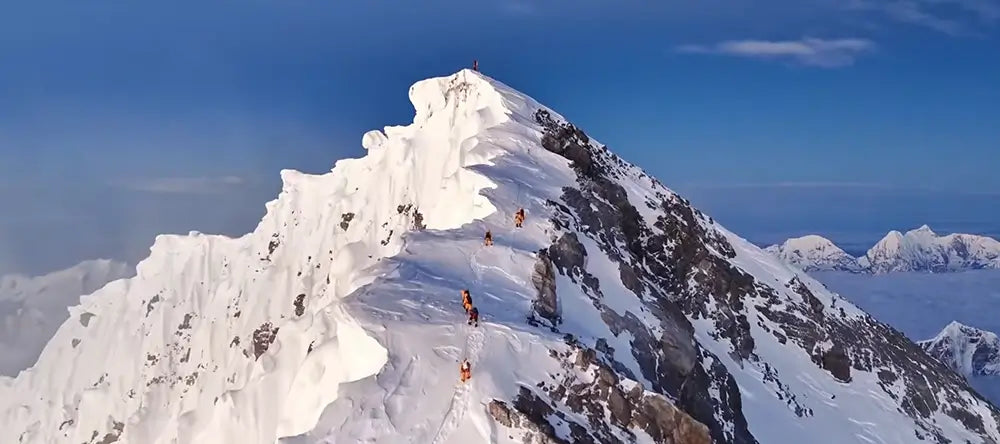
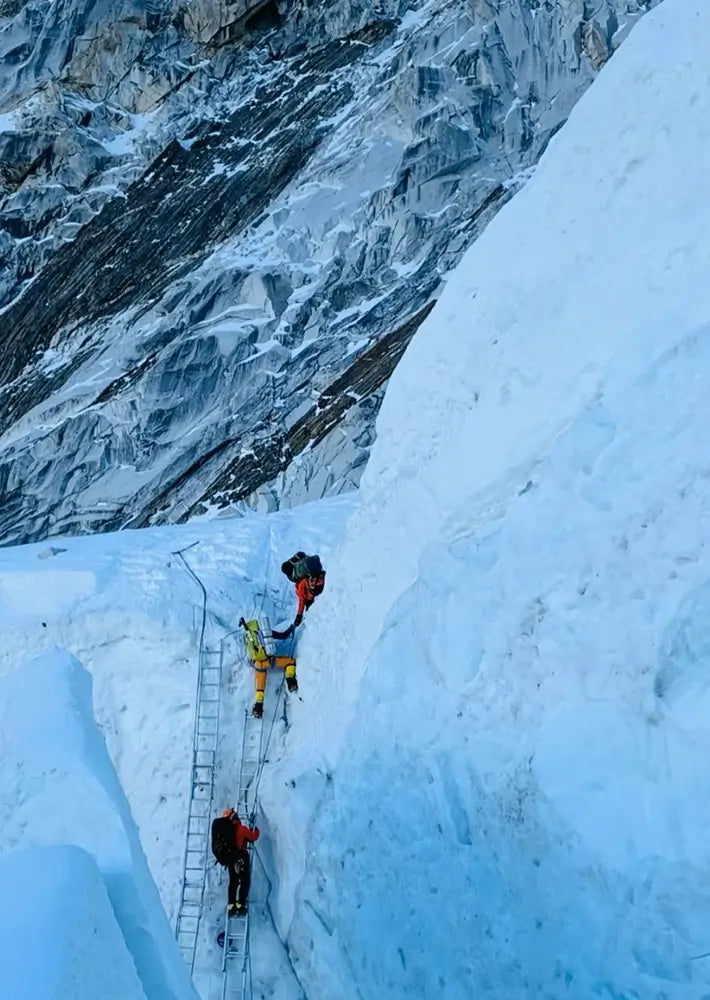
Everest’s height is not just a number. At 8848.86 metres, the air is extremely thin. Climbers face low oxygen, severe cold, high winds, fatigue, frostbite risk and altitude illness.
Above 8000 metres is often called the death zone. The human body cannot properly recover there for long. Even with supplemental oxygen, movement becomes slow, thinking becomes harder and small mistakes become serious.
This is why Everest is not just famous as a geographical point. It is also a symbol of high altitude risk.
What Ordinary Travellers Should Know
If you simply want to understand Everest, remember three things:
- Mount Everest is 8848.86 metres high
- It is the highest mountain by elevation above sea level
- It stands on the border between Tibet in China and Nepal
Travellers can visit the Everest region from Tibet or trek to Everest Base Camp in Nepal. Reaching the summit is different. That requires serious mountaineering experience, permits, equipment, guides, oxygen and weeks of high altitude exposure.
Final Thoughts
Mount Everest is called the highest mountain in the world because its summit reaches 8848.86 metres above sea level. It is not the tallest mountain by every possible definition, but by the standard most commonly used around the world, Everest is the highest point on Earth.
Its power is not only in the number. Everest represents geology, exploration, surveying history, mountaineering ambition and the human habit of looking upward and wondering what it would take to stand on top.

Leave a comment
All comments are moderated before being published.
This site is protected by hCaptcha and the hCaptcha Privacy Policy and Terms of Service apply.