
Quick Answer
Why is climbing Everest so expensive? Because an Everest expedition is not just a guided walk up a mountain. It is a temporary life-support system built above 8000 metres.
The cost includes permits, expedition administration, Sherpa and high-altitude support, oxygen bottles, masks, regulators, high camps, tents, fuel, food, fixed ropes, Icefall route fees, weather forecasts, communications, insurance, rescue planning, personal gear, travel and years of preparation.
As of 2026, the Nepal spring Everest permit for foreign climbers is USD 15000. That is only the permit. It does not include oxygen, support, equipment, insurance or logistics. Once everything is added, Everest becomes expensive very quickly.
Where the Money Goes
Everest is often described as a rich person’s adventure. There is some truth in that, but it is not the whole story.
Yes, Everest is commercialised. There are luxury Base Camps, private guides, premium operators and expensive add-ons. But the deeper reason for the high cost is that operating in such an extreme environment is expensive.
A normal backpacking trip needs food, clothing, shelter and navigation. Everest needs:
- Weeks of high-altitude living
- Multiple high camps
- Large oxygen supply
- High-altitude workers
- Route maintenance
- Medical and rescue planning
- Weather and communications
- Repeated transport and resupply
- Legal permits and environmental systems
So the Everest expedition cost is not one service fee. It is the cost of an entire operating system.
Permit Fees
On the Nepal side, the Department of Tourism lists the Everest normal route royalty for foreign climbers at USD 15000 in spring, effective from 1 September 2025. Autumn, winter and summer fees are lower, but spring remains the main climbing season.
This is a government fee, not an expedition company markup. Even a climber trying to organise things as cheaply as possible must still climb legally.
Teams may also have garbage deposits, liaison officer fees, registration costs, Icefall route charges and fixed rope related costs. They may not always be the most visible part of a website price, but they are built into the final expedition budget.
Oxygen
Oxygen is one of the largest and most important costs on Everest.
ExpedReview’s 2026 cost guide notes oxygen at around USD 650 per bottle, with many climbers using at least five bottles. That puts bottles alone above USD 3000. Add personal Sherpa oxygen, backup oxygen, transport to high camps, mask and regulator, and the total climbs quickly.
The oxygen system includes:
- Bottled oxygen
- Oxygen mask
- Regulator
- Spare oxygen
- Storage at high camps
- Sherpa transport
- Flow management on summit day
On Everest, oxygen is not just a comfort item. It affects warmth, judgement, movement speed, frostbite risk and descent safety.
Saving money by cutting oxygen is rarely smart. It reduces your safety margin when you need it most.
Sherpa and High Altitude Support
Modern commercial Everest climbing depends heavily on Sherpa and high-altitude workers.
They help with:
- Carrying oxygen
- Establishing high camps
- Setting tents
- Moving food and fuel
- Supporting climbers through fixed rope sections
- Summit day support
- Descent assistance
- Emergency response
Alan Arnette’s Everest 2026 coverage notes that 1.5 Sherpas per member has become common on the south side, with some teams operating at 2:1 or higher when using more supplemental oxygen.
More support means more wages, insurance, equipment, oxygen and logistics. It also often means a larger safety margin.
This cost should not be dismissed as “paying someone to carry your bag.” On Everest, high-altitude workers take on a significant share of the mountain’s risk.
High Camps and Logistics
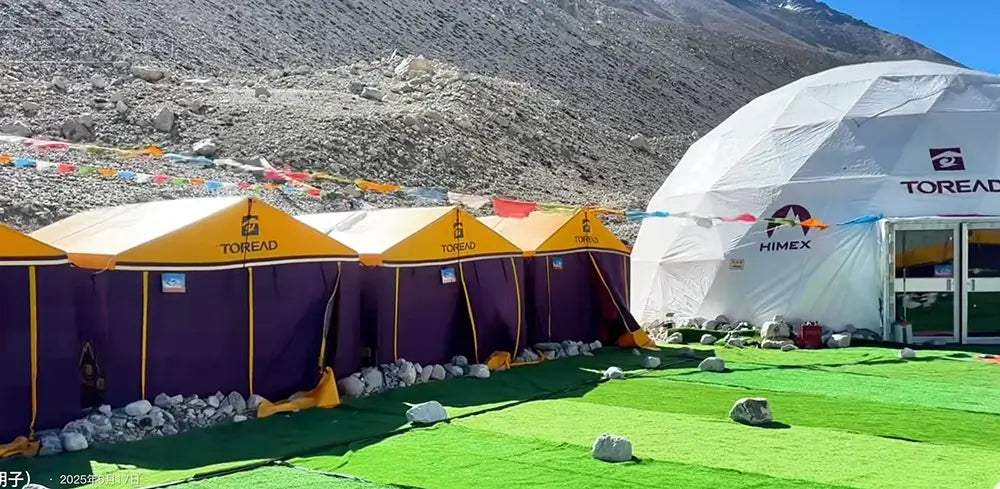
Everest is not climbed in a day. Climbers live at Base Camp for weeks and rotate through Camp 1, Camp 2, Camp 3 and Camp 4.
That requires:
- Base Camp tents
- Kitchen tents
- Dining tents
- Toilet systems
- High-altitude tents
- Stoves and fuel
- Food
- Snow tools
- Communications
- Power and charging systems
- Medical supplies
- Waste management
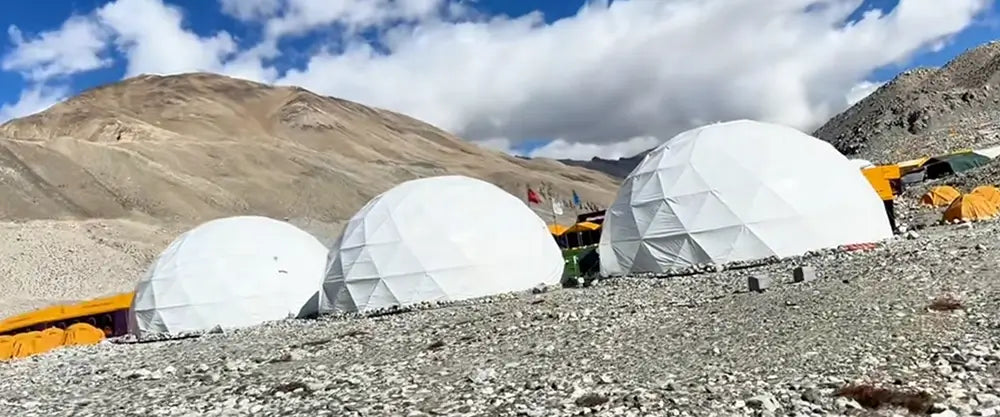
Alan Arnette’s cost breakdowns show that tents, cooks, food and fuel are serious expenses by themselves. Base Camp is not a random collection of tents. It is a temporary expedition village that has to be transported, maintained and removed.
The higher an item goes, the more expensive it becomes. Every gas canister, oxygen bottle, tent and food bag must be moved by people, yaks, porters, helicopters or multiple transport stages.
Personal Gear
Everest personal gear is expensive because normal outdoor gear is not enough.
A climber may need:
- 8000m boots
- High-altitude down suit
- Down mitts
- Multiple glove systems
- High-altitude sleeping bag
- High R-value sleeping pads
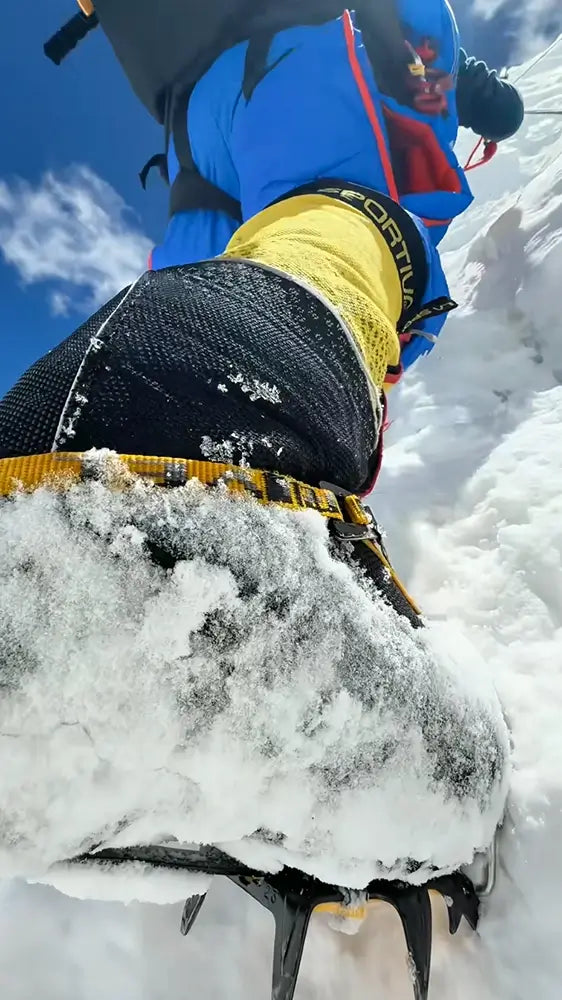
- Crampons
- Ice axe
- Helmet
- Harness
- Ascender
- Descender
- Locking carabiners
- Glacier glasses and goggles
- Layering system
- Duffel bags and dry bags
- Headlamp and cold-weather batteries
If starting from zero, gear can cost many thousands of dollars. Poor gear can mean more than discomfort. It can mean frostbite, hypothermia or failure to move safely.
Insurance and Rescue
Everest rescue is difficult and expensive. A helicopter is not a simple solution at extreme altitude. Weather, terrain and thin air all limit rescue options. Above 8000 metres, rescue may be extremely dangerous or impossible.
Climbers need insurance that may cover:
- High-altitude medical evacuation
- Helicopter rescue
- Accident cover
- Death and repatriation
- Worker insurance
- Trip interruption or cancellation
Insurance may look like a cost you hope not to use. On Everest, it is part of responsible risk management. Without proper insurance, a climber can create danger and cost for the whole team.
Training and Previous Experience
Many people count only the expedition fee. That is incomplete.
A serious Everest attempt often requires:
- Mountaineering courses
- Snow and ice skills training
- Fitness coaching
- 6000m peak experience
- 7000m peak experience
- 8000m peak experience
- Gear testing trips
- Time away from work
These costs may be spread over years, but they are part of the real Everest budget.
Why Expedition Prices Vary
Everest expeditions may be grouped roughly into:
- Budget local teams
- Standard commercial teams
- Premium international teams
- Private guide or custom expeditions
Budget teams may provide more basic service. Premium teams may include Western guides, more oxygen, higher support ratios, better communications, stronger medical support and more comfortable Base Camp systems.
Alpine Ascents lists its 2026 Everest South Col expedition at USD 80000, including Nepal administration fees, permit, team equipment, oxygen, medical supplies, Sherpa, porters, liaison officer and camp staff. CTSS lists a 2026 Western-guided Everest option starting at USD 74995.
These are high prices, but they show what premium operators include: not just guiding, but a large support structure.
Budget Everest Expedition Risk
A budget Everest expedition is not automatically unsafe, but it must be examined carefully.
A low price may reduce:
- Oxygen allowance
- Backup oxygen
- Sherpa support ratio
- High camp quality
- Weather forecasting
- Communication equipment
- Medical support
- Food and fuel reserve
- Insurance
- Retreat planning
If a lower price comes from efficient local operations, that can be reasonable. If it comes from cutting safety margins, it becomes dangerous.
On Everest, the most expensive problem is discovering too late that you bought too little backup.
What Can Be Cheaper
Some costs can be controlled:
- Avoid luxury Base Camp services
- Avoid private Western guiding
- Skip unnecessary comfort add-ons
- Buy gear gradually
- Choose a reputable local operator
- Share standard expedition support
The smart approach is to save money on comfort, not safety.
What Should Not Be Cut
Do not cut:
- Legal permits
- Oxygen and backup oxygen
- Qualified high-altitude support
- High-altitude insurance
- Mask and regulator quality
- Boots and cold-weather gear
- High camp fuel and food
- Weather forecasting
- Communications and rescue planning
These costs do not buy status. They buy descent options.
Final Thoughts
Why is climbing Everest so expensive? Because Everest is not a normal trip. The permit alone is costly. Oxygen is expensive. Sherpa and high-altitude workers need fair pay, insurance and equipment. High camps and logistics require huge effort. Personal gear, training, insurance and rescue planning all add more.
Everest commercialisation does create luxury tiers and brand premiums. But even without luxury, a legal and reasonably supported Everest expedition remains expensive.
The money does not only buy a chance at the summit. It buys a better chance of coming back alive from a place where humans cannot safely stay for long.

Leave a comment
All comments are moderated before being published.
This site is protected by hCaptcha and the hCaptcha Privacy Policy and Terms of Service apply.